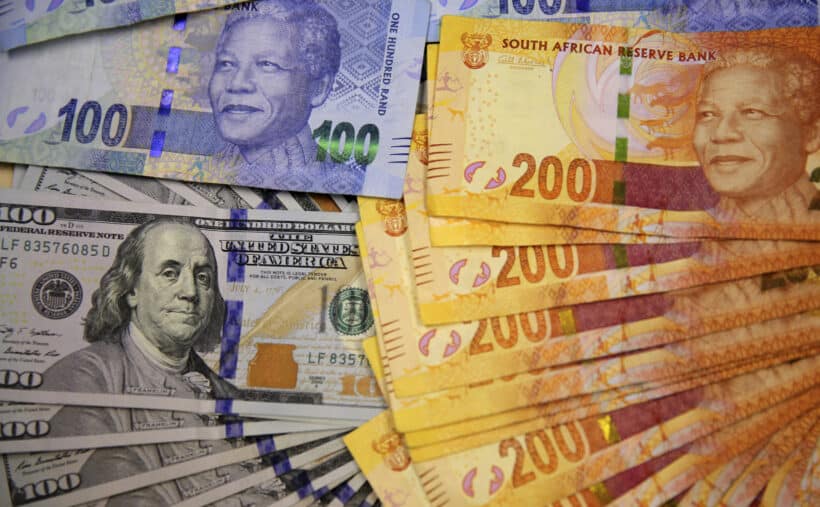
The South African rand showed little change in early trading on Thursday as financial markets anticipated the forthcoming interest rate decision from the South African Reserve Bank. Investors are closely monitoring the announcement, expected later in the day, to gauge the central bank's monetary policy direction and its implications for the nation's economic outlook. The currency's stability reflects a cautious, wait-and-see approach among traders and market participants ahead of this critical economic update, noting the significance of the central bank's upcoming policy stance. The South African rand was little changed in early trading on Thursday as investors awaited the South African Reserve Bank’s closely watched interest rate decision later in the day, which is expected to provide key guidance on the country's economic trajectory.
Inflationary Pressures and Rate Hike Expectations
The financial community is keenly focused on the South African Reserve Bank's deliberations, particularly in light of persistent inflationary pressures. A recent poll conducted by Reuters provided insight into the varied expectations among economic analysts. Specifically, sixteen of the 25 economists polled by Reuters anticipate the South African Reserve Bank will increase its benchmark lending rate by 25 basis points. This projected adjustment would move the rate to 7.25% from its current level of 7.00%. Conversely, the remaining economists surveyed by the news agency hold a different view, expecting the central bank to maintain the rate at its existing level, showing a division in expert opinion regarding the most appropriate immediate monetary policy action.
At its previous meeting, the South African Reserve Bank implemented a significant policy shift: its first increase to the main lending rate in three years. This decision positioned the bank among a select group of emerging market central banks that have proactively tightened their monetary policy in response to global economic shifts. This tightening has occurred amidst the backdrop of the ongoing U.S.-Israel conflict against Iran, which has introduced additional complexities and uncertainties into the global economic landscape, influencing commodity prices and supply chains.
Market Reaction and Analyst Outlook
At 0600 GMT, the rand traded at 16.3750 against the dollar, showing little change from its previous close. This specific trading level and the lack of significant movement show the current market sentiment, where participants are holding positions rather than making aggressive moves. The currency's stability reflects market participants awaiting clarity on the South African Reserve Bank's policy direction, as any deviation from expectations could trigger a more pronounced reaction in currency markets. The anticipation of the central bank's announcement is effectively pausing major trading activity, as investors prefer to react to concrete policy decisions rather than speculate heavily beforehand.
Beyond the currency market, South Africa’s benchmark 2035 government bond also exhibited movement in early deals, albeit a subtle one. The yield on the bond fell 5 basis points, settling at 8.66%. This marginal decline in yield suggests a cautious yet discernible positive sentiment among bond investors. Such a movement typically indicates that investors are slightly more willing to hold government debt, possibly anticipating that the central bank's decision will contribute to economic stability or offer a favorable risk-reward profile. This cautious optimism in the bond market precedes the central bank's announcement later today, further illustrating the widespread impact of the impending decision across different asset classes.
Expert Commentary on SARB's Stance
A primary driver for the South African Reserve Bank's policy considerations is the country's inflation trajectory. South Africa’s headline consumer inflation accelerated to a two-year high of 5.0% year on year in June, marking an increase from the 4.5% recorded in May. This acceleration in inflationary pressures was largely driven by price increases stemming from the ongoing conflict in Iran, which has impacted global energy and food prices, subsequently filtering into domestic consumer costs. The elevated inflation figures are a key consideration for the South African Reserve Bank as it deliberates its interest rate decision, as controlling inflation is a core mandate for central banks. The bank must weigh the need to curb rising prices against the potential impact of higher borrowing costs on economic growth and recovery. The decision will therefore reflect the central bank's assessment of these competing factors and its strategic approach to maintaining economic stability.