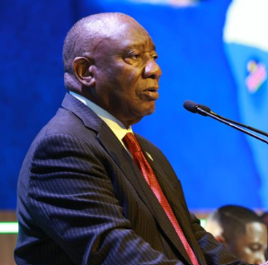
President Cyril Ramaphosa delivered the keynote address at the opening of the 9th Summit of the Southern African Customs Union (SACU) Heads of State and Government in Cape Town, urging the bloc to transform into an industrial hub. The gathering, a key moment for regional economic development, saw leaders converge to chart a course for enhanced industrialization across Southern Africa. Ramaphosa noted the continent's significant resource base, noting that Africa possesses approximately 30% of the world’s mineral reserves. This vast natural wealth, he argued, provides a strong foundation for an ambitious industrialization drive. He emphasized the critical importance of leveraging individual member states' unique strengths and competitive advantages to achieve this ambitious industrialization goal collectively. For instance, Ramaphosa cited Lesotho’s textile sector as a specific national competitive advantage, showing its established capacity and potential for further growth within the regional framework. He also pointed to Botswana’s established experience in diamond beneficiation as another key strength within the SACU region, noting its expertise in adding value to raw materials.
Vision for Industrial Powerhouse
The 9th Summit of the Southern African Customs Union (SACU) Heads of State and Government took place at the Cape Town International Convention Centre, a prominent venue that showed the importance of the discussions. The gathering focused intently on full plans for regional economic integration and accelerated industrial development. These discussions are set against a backdrop of optimistic economic forecasts for the region. Projections indicate that overall economic growth within the SACU region is expected to reach a strong 2.64% in 2026. This positive growth trajectory is anticipated to continue, albeit at a slightly adjusted rate, with a projected growth rate of 2.1% in 2027. Such economic expansion provides a fertile ground for the industrial transformation envisioned by President Ramaphosa and other regional leaders.
SACU, a 116-year-old institution, holds the distinct and significant recognition of being the oldest customs union in the world. This enduring organization comprises five member states: South Africa, Botswana, Lesotho, Namibia, and Eswatini. The summit discussions aimed specifically at leveraging this established and time-tested framework to foster greater industrialization across all member states. The long history of cooperation within SACU provides a strong foundation for future collaborative industrial initiatives, demonstrating a proven capacity for regional integration and economic partnership.
Leveraging National Advantages
President Ramaphosa articulated a clear strategy for industrialization, rooted in the principle of leveraging each member state's specific competitive advantages. South Africa, for example, contributes its well-developed automotive and steel manufacturing capabilities as a specific national competitive advantage within the Southern African Customs Union (SACU). These established sectors provide a key foundation for regional industrial growth and offer significant potential for enhanced value addition throughout the supply chain. The nation's advanced industrial infrastructure in these areas can support broader regional development initiatives, acting as an anchor for various manufacturing activities.
Eswatini possesses a significant manufacturing base, which is identified as another specific national competitive advantage for the customs union. This sector can contribute substantially to the diversification of the region's economy and its overall industrial output. Eswatini's existing manufacturing infrastructure offers tangible opportunities for increased production, job creation, and expanded regional trade, thereby strengthening the collective industrial capacity of SACU.
Namibia's immense potential in green hydrogen production and uranium processing is also noted as a specific national competitive advantage. The country's rich natural resources and emerging capabilities in these advanced fields present unique avenues for high-value industrial development. Namibia's strategic focus on green hydrogen aligns perfectly with global trends towards sustainable energy solutions, positioning the region as a leader in future energy markets. Meanwhile, its uranium processing potential offers significant strategic economic benefits within the SACU framework, contributing to energy security and technological advancement. Botswana's established experience in diamond beneficiation further exemplifies the regional capacity for adding value to natural resources, moving beyond raw material extraction to sophisticated processing and manufacturing. This expertise can serve as a model for other sectors within SACU. Similarly, Lesotho’s well-developed textile sector represents a vital component of the region’s manufacturing capabilities, providing employment and export opportunities.
Infrastructure and New Zones
The development of strong and interconnected infrastructure is critical to achieving SACU's industrial ambitions. The Trans-Kalahari Railway is cited as an exemplary model of the transformative infrastructure required for the Southern African Customs Union (SACU) region. This type of large-scale project is absolutely essential for facilitating efficient trade, reducing logistical costs, and stimulating industrial growth across member states, connecting key production hubs with markets and ports. The Lesotho Highlands Water Project also serves as a powerful model of shared infrastructure, demonstrating the long-term benefits of cross-border cooperation. President Cyril Ramaphosa specifically stated, "The Lesotho Highlands Water Project is a model of shared infrastructure that has served both Lesotho and South Africa for decades. Eswatini’s energy interconnections with South Africa and Mozambique demonstrate the same value." This statement shows the proven success of collaborative infrastructure development in the region.
Eswatini's energy interconnections with South Africa and Mozambique further show the tangible benefits of collaborative infrastructure development within the region. These vital connections facilitate enhanced energy security, ensuring a stable and reliable power supply that is critical for supporting industrial activities and economic growth across the connected nations. In a strategic move to bolster regional industrialisation, cross-border special economic zones are actively being launched. These innovative zones are specifically intended to act as nodal points, attracting significant foreign and domestic investment and fostering advanced manufacturing and processing capabilities across SACU member countries. The establishment of such zones is expected to streamline logistics, create economies of scale, and significantly enhance the competitive advantage of the bloc as a dynamic and integrated industrial hub. These initiatives collectively aim to transform SACU into a powerhouse of industrial production and economic prosperity.