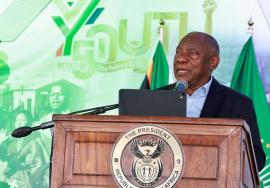
President Cyril Ramaphosa today outlined a multi-pronged strategy aimed at combating youth unemployment in South Africa, emphasizing expanded public employment and a re-envisioned skills system. These initiatives reflect a concerted effort by the government to address one of the nation's most pressing socio-economic challenges. Ramaphosa stated, "First, we are expanding public employment, youth service and workplace experience." He noted that "More than 5.7 million young people are now registered on the SA Youth.mobi platform," noting the digital infrastructure supporting these efforts. Through this platform, "more than 2 million young people have gained access to earning opportunities," demonstrating its effectiveness in connecting youth with economic prospects. He also declared, "Second, we are reshaping the skills system so that qualifications lead more directly to work and enterprise." Ramaphosa noted the importance of practical experience, stating, "Skills are not formed in classrooms alone. They are formed in workplaces, industries, communities and enterprises." This approach shows a shift towards more experiential learning and development. He further added, "Third, we are opening the productive economy to young people," which he expects will create "apprenticeships, artisan development, skills transfer and enterprise development for young people." This full strategy aims to integrate young people into various sectors of the economy, providing them with both skills and opportunities for growth.
Expanding Public Employment Opportunities
The expansion of public employment forms a cornerstone of the government's strategy. The Presidential Employment Stimulus has generated work and livelihood opportunities for more than 2.5 million unemployed South Africans. This significant intervention has provided key support to a large segment of the population. A substantial majority of those supported by the stimulus, 82 percent, were young people, showing the programme's focus on youth empowerment. 66 percent of the beneficiaries were women, noting the stimulus’s role in promoting gender inclusivity in the workforce.
In a related initiative, the pilot phase of the Jobs Boost Outcomes Fund has enrolled over 9,000 young individuals, providing targeted support for job seekers. More than 7,200 of these young people have been successfully placed into employment through the fund, demonstrating its efficacy in facilitating transitions into the labour market. This outcomes-based approach ensures that resources are directed towards programmes that deliver tangible employment results.
The revitalised National Youth Service has seen more than 130,000 young people placed in paid service opportunities to date. These opportunities offer valuable work experience and contribute to community development. The government has also made an additional 100,000 community service youth employment opportunities available, further expanding the scope of public service engagement for young people. These programs form part of the broader strategy to integrate young people into the workforce and provide practical experience, bridging the gap between education and employment.
Reshaping Skills and Economy
The South African government's overriding priority is to grow an inclusive economy that creates sustainable jobs at scale, according to official statements. The government's growth strategy centers on sectors identified as having the potential to generate employment on a large scale. These include manufacturing, mining beneficiation, digital infrastructure, agriculture, green industrialisation, energy, logistics, critical minerals, tourism, and the creative economy. By focusing on these key areas, the government aims to stimulate economic activity and create diverse opportunities for young people. This strategic focus is designed to ensure that the skills development initiatives are aligned with the demands of a growing economy.
The small business portfolio aims to support one million micro, small, and medium-sized enterprises over the current term of government. This extensive support is key for fostering entrepreneurship and creating new job avenues, particularly for young people. Additionally, the Employment Tax Incentive program is designed to share the cost with employers of bringing a young person into their first job. This incentive encourages businesses to hire young, first-time job seekers, thereby easing their entry into the formal economy. A significant investment of R1 trillion in infrastructure is planned over the next three years. This substantial capital injection is expected to create numerous job opportunities across various sectors, from construction to logistics, further contributing to economic growth and employment.
Digital platforms also play a key role in connecting young people to opportunities. More than 5.7 million young individuals are currently registered on the SA Youth.mobi platform. This digital hub serves as a central point for accessing information on employment, training, and entrepreneurial prospects. Through this platform, more than two million young people have gained access to various earning opportunities, showcasing the power of digital connectivity in addressing unemployment. These platforms streamline the process of matching young job seekers with available positions and development programmes.
Stakeholder Responsibility and Measurement
President Cyril Ramaphosa stated that South Africa’s progress in combating youth unemployment must be quantifiable. Ramaphosa asserted, "South Africa’s progress must be measured by whether young people are moving from school to skills, from skills to work, and from enterprise support to markets, scale and ownership." This emphasis on measurable outcomes ensures accountability and continuous improvement in the implementation of the strategy.
The government also aims to utilize legislative frameworks to support specific demographics. The Public Procurement Act, for example, is intended to leverage state buying power to back enterprises owned by young people, women, and persons with disabilities. This legislative tool provides a significant opportunity to channel government spending towards empowering these historically disadvantaged groups, fostering their participation in the economy. This approach seeks to integrate these groups more effectively into the economic landscape by providing them with preferential access to state contracts. Additionally, the President emphasized that the private sector holds a significant responsibility in contributing to the resolution of the unemployment challenge. Collaboration between government, civil society, and the private sector is deemed essential for a holistic and sustainable approach to creating jobs and opportunities for the nation's youth. The collective effort of all stakeholders is vital to achieving the ambitious goals outlined in the strategy.