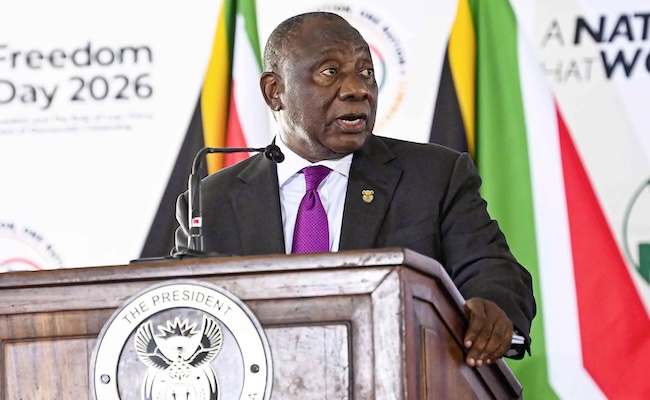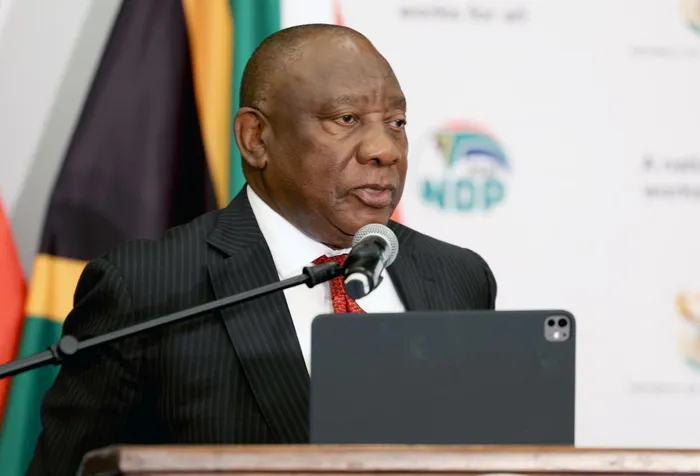
President Cyril Ramaphosa is scheduled to address the nation tonight at 8pm, following a recent court decision that overturned an impeachment vote against him. The address comes amidst ongoing political developments related to the Phala Phala farmhouse incident and the subsequent parliamentary proceedings. South Africans await President Ramaphosa's remarks, which are expected to clarify the government's stance and future actions in light of the High Court's ruling earlier today. The President's address is anticipated to provide much-needed clarity on the path forward, both for his administration and for the legislative body tasked with reviewing the allegations.
Court Reinstates Impeachment Process
The Constitutional Court has ordered that the independent panel's report regarding President Cyril Ramaphosa be referred to an impeachment committee. This decision effectively reinstates a process that could potentially lead to impeachment proceedings against the President. The court's ruling marks a significant turn in the protracted saga surrounding the Phala Phala incident. In 2022, Parliament had declined to open such proceedings, a move made when it was controlled by his African National Congress (ANC) party. This parliamentary decision had previously prevented the establishment of a committee to further investigate the findings of the independent panel, thereby quashing the opening of impeachment proceedings that could have forced him from office. The latest court ruling mandates that Parliament now reconsider the report and establish the necessary structures for review, ensuring that the allegations are thoroughly scrutinized as per constitutional requirements.
The Phala Phala Scandal Unpacked
An independent panel previously concluded President Cyril Ramaphosa "may have committed" serious violations and misconduct related to the Phala Phala incident. Ramaphosa faces accusations of hiding from police and tax authorities a 2020 break-in and subsequent theft. The theft involved substantial amounts of foreign currency, which were reportedly stored within furniture at his luxury Phala Phala farmhouse, located in the northern Limpopo province. Specifically, the scandal centers on a $4-million cash-heist. The alleged concealment of the break-in and the significant sum of foreign currency has been at the center of the ongoing legal and political challenges against the President, raising questions about his adherence to statutory obligations. The independent panel's findings showed the gravity of the accusations, pointing towards potential breaches of his oath of office and other legal statutes.
Reactions and Next Steps
The court's decision to reinstate the impeachment process stemmed from a complaint lodged by the Economic Freedom Fighters (EFF). The EFF had consistently called for accountability regarding the Phala Phala incident, leading to their legal challenge against Parliament's earlier dismissal of the independent panel's findings. Their persistent pursuit of the matter through legal channels notes the role of opposition parties in holding the executive accountable. The Presidency subsequently issued a statement indicating that it "noted the judgement." The statement further affirmed that President Cyril Ramaphosa respected the court's ruling, suggesting an adherence to the judicial process despite the implications for his presidency. This acknowledgment sets the stage for the parliamentary actions mandated by the Constitutional Court, signaling the executive's acceptance of the judiciary's authority in this matter. The next steps will involve Parliament's establishment of the impeachment committee and its subsequent review of the independent panel's report.
Constitutional Court's Stance
On Friday, the Constitutional Court overturned a parliamentary vote that had previously quashed the initiation of impeachment proceedings against President Cyril Ramaphosa. The court's decision relates to the $4-million cash-heist scandal, effectively paving the way for Parliament to reconsider the independent panel's report concerning the incident at the Phala Phala farmhouse. This ruling emphasizes the judiciary's role in upholding constitutional processes and ensuring accountability, even for the highest office in the land. The court's intervention shows the principle that no individual is above the law and that parliamentary procedures must align with constitutional mandates. The implications of this decision are broad, potentially reshaping the political landscape and setting a precedent for future accountability measures.