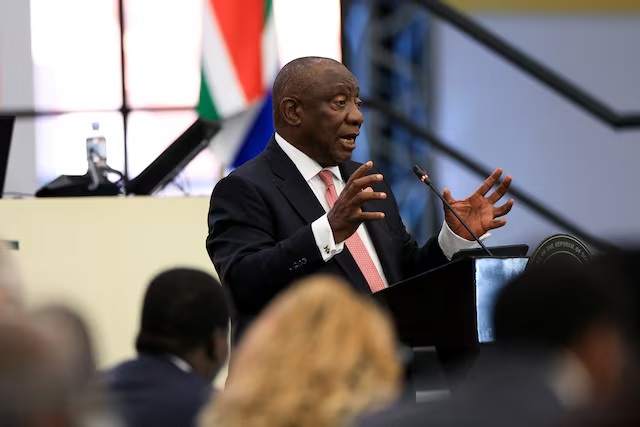
South African President Cyril Ramaphosa filed an urgent court application on Friday, seeking to halt a parliamentary impeachment process initiated over allegations related to his "Farmgate" scandal. The scandal involves the theft of $580,000 in cash from a sofa on his farm in 2020. This episode raised questions regarding why the money was concealed in furniture and whether Mr. Ramaphosa had properly declared it. The President's legal team submitted the application to prevent the parliamentary inquiry from proceeding while a separate legal challenge is pending.
Legal Maneuver to Block Inquiry
President Cyril Ramaphosa has requested the high court to first rule on a separate application he lodged to set aside the misconduct findings made by an independent panel concerning the scandal. This panel's findings were central to the initial momentum for the impeachment process. The high court is scheduled to hear Mr. Ramaphosa's case against these misconduct findings from September 2 to 4. His urgent application filed on Friday aims to ensure that the parliamentary process does not advance before the high court has deliberated on the validity of the panel's conclusions. The President's legal strategy appears designed to exhaust all judicial avenues to challenge the basis of the impeachment proceedings.
Background of the Scandal
The "Farmgate" scandal first came to light following allegations of the theft of a significant sum of cash from Mr. Ramaphosa's Phala Phala farm. Bundles of cash, specifically $580,000, were stolen from a sofa on his farm in 2020. The president has maintained that the stolen cash represented proceeds from the sale of buffaloes. This explanation, however, did not fully quell public and political scrutiny. The episode raised questions about why such a large amount of money was hidden in furniture on his property and whether he had properly declared it to relevant authorities, adhering to South African financial regulations. Cyril Ramaphosa has consistently denied any wrongdoing in the matter, asserting that the transactions were legitimate and above board.
South Africa's Constitutional Court last month revived impeachment proceedings against Mr. Ramaphosa. The court found that a parliamentary vote in 2022, which aimed to stop the impeachment process, was invalid. This ruling allowed the parliamentary inquiry into the scandal to move forward, leading to the President's current legal challenge to halt the process. The Constitutional Court's decision showed the seriousness with which the judiciary views the allegations and the procedural integrity of parliamentary oversight.
Presidential Tenure and Future
Cyril Ramaphosa, who is 73 years old, has served as South Africa's head of state since 2018. He initially ascended to the presidency following the resignation of his predecessor and was subsequently elected for his first full term. His current legal challenges emerge as he approaches the midpoint of his second presidential term, which is scheduled to conclude in 2029. The outcome of the court proceedings and the parliamentary inquiry could significantly impact the remainder of his tenure, potentially determining his ability to complete his term and shape the political landscape of South Africa. The legal battles add another layer of complexity to his leadership, diverting attention and resources from critical national issues.
Impeachment Process Details
South Africa's parliamentary rules stipulate a specific process for presidential impeachment. A motion for impeachment must first be supported by at least one-third of the members of the National Assembly. If this threshold is met, an independent panel is then appointed to investigate the allegations. This panel assesses whether sufficient evidence exists to proceed with an impeachment inquiry. Should the panel find grounds for impeachment, the matter then moves to a full debate and vote within the National Assembly. A two-thirds majority vote in the National Assembly is required to remove the president from office. This rigorous process is designed to ensure that any attempt to remove a sitting president is based on substantial evidence and enjoys broad parliamentary consensus.