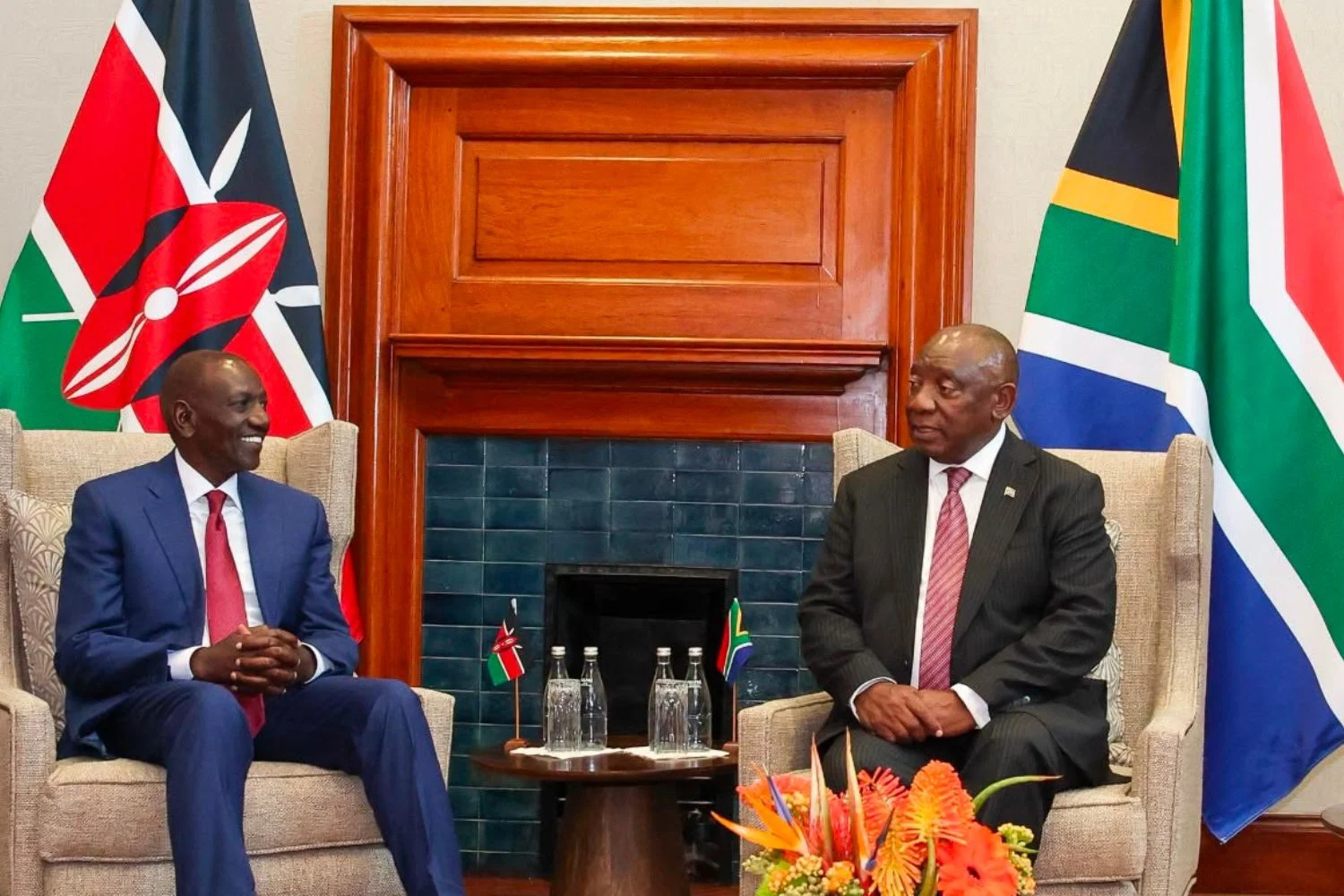
President Cyril Ramaphosa hosted Kenyan President William Ruto for a state visit on Thursday at the Union Buildings in Tshwane, where discussions included concerns over xenophobia. The high-level meeting showed the ongoing efforts by both nations to foster deeper collaboration across various sectors. Ramaphosa emphasized that most South Africans are not xenophobic, reiterating the government's commitment to resolving migration-related issues and restoring regional confidence. The state visit, held at the historic Union Buildings in Tshwane, served as a key platform for bilateral discussions on pressing regional challenges and opportunities.
President Ramaphosa stated, "South Africans are not xenophobic. South Africans are Africans; they want to live with other Africans peacefully, and our people are calling on us as leaders to resolve the many challenges that are brought to bear by the challenge of migration, and I did say that in South Africa, we are addressing this matter." He also mentioned that the visit "laid a firm foundation for deeper collaboration in trade, investment, industrialisation, infrastructure development, skills development and regional integration." Addressing the broader issue, Ramaphosa indicated, "There will be envoys, yes, there will be people that we will send around not only on the continent but also around the world," to tackle migration. This initiative reflects a proactive stance by the South African government to engage with international partners on the complexities of migration. He added, "What we seek to do is to get the issue of migration properly addressed... We should get as many key role players, countries, to work together." This collaborative approach aims to ensure a full and coordinated response to migration challenges.
Diplomatic Engagement on Migration
South Africa and Kenya are strengthening their partnership on migration and trade, with President Cyril Ramaphosa confirming that Kenya stands as South Africa’s largest trading partner within East Africa. This significant economic relationship forms a strong basis for broader diplomatic cooperation. President Ramaphosa announced plans to dispatch envoys across Africa and to other parts of the world, stating, "There will be envoys, yes, there will be people that we will send around not only on the continent but also around the world." This initiative aims to engage regional and international partners in efforts to manage tensions surrounding migration and attacks on foreign nationals. The deployment of envoys notes South Africa's commitment to addressing the root causes and consequences of migration-related issues through diplomatic channels. Ramaphosa emphasized the collaborative nature of this approach, saying, "What we seek to do is to get the issue of migration properly addressed... We should get as many key role players, countries, to work together." This strategy shows the belief that multilateral cooperation is essential for effective migration management.
The South African President asserted that his country is actively addressing migration challenges. "As South Africa, we are addressing this matter," Ramaphosa said, adding, "South Africans are not xenophobic. South Africans are Africans. They want to live with other Africans peacefully." He further elaborated that the South African populace expects leaders to resolve issues arising from migration. "South Africans are Africans; they want to live with other Africans peacefully, and our people are calling on us as leaders to resolve the many challenges that are brought to bear by the challenge of migration, and I did say that in South Africa, we are addressing this matter," Ramaphosa noted. He also indicated that the state visit "laid a firm foundation for deeper collaboration in trade, investment, industrialisation, infrastructure development, skills development and regional integration." This full agenda reflects a shared vision for economic growth and regional stability between South Africa and Kenya. The deepening ties between the two nations extend beyond trade to encompass critical areas such as industrialisation and infrastructure development, promising mutual benefits.
Regional Repatriation Efforts
Several African governments have initiated repatriation efforts for their citizens in South Africa amidst ongoing concerns. These efforts are a direct response to the safety concerns and socio-economic pressures faced by foreign nationals. Authorities reported that at least seven Mozambicans had died, with five killed in xenophobic attacks and two perishing in a road accident while attempting to return home. This tragic loss of life shows the severity of the situation faced by some foreign nationals. Hundreds of Mozambican citizens have already crossed back into Mozambique, and hundreds more are being repatriated from temporary shelters in South Africa, according to reports. The scale of these repatriations notes the significant impact of the unrest on communities of foreign nationals.
Malawi, Mozambique, and Ghana are among the nations that have begun repatriating citizens and offering assistance. Malawi announced plans for a voluntary repatriation exercise for its citizens wishing to return home from South Africa. Lilongwe, the capital of Malawi, stated that it was making arrangements to provide consular assistance and logistical support to affected nationals. This support is key for ensuring the safe and orderly return of Malawian citizens. Mozambique has also initiated the return of its citizens following the violence, demonstrating a commitment to the welfare of its diaspora. In a similar vein, Ghana has facilitated the return of hundreds of its citizens from South Africa, providing essential assistance to those affected. These actions by various African governments show a coordinated regional response to the situation, aiming to ensure the safety and voluntary return of their nationals. The efforts highlight the practical steps being taken by countries to address the impact of the unrest on their citizens residing in South Africa, emphasizing a collective responsibility for regional stability and human rights.
Historical Context of Violence
Recent anti-illegal immigrant protests across several South African provinces have escalated, prompting police intervention. These demonstrations reflect deep-seated frustrations and complex social dynamics within the country. These developments have recalled earlier waves of xenophobic violence in the country, specifically in 2008, 2015, and 2019. These previous outbreaks of violence resulted in dozens of deaths and the displacement of thousands of individuals, leaving lasting scars on communities and noting the recurring nature of this societal challenge. The historical patterns of violence show the ongoing challenges South Africa faces in managing immigration and social cohesion, requiring sustained efforts to address underlying issues.
Meanwhile, the organization March and March has issued a deadline for undocumented foreign nationals to depart South Africa by June 30. This ultimatum adds to the existing tensions surrounding migration in the country, further complicating the already precarious situation for many foreign nationals. The presence of such deadlines exacerbates fears and can lead to increased instability. The latest developments have revived memories of previous waves of xenophobic violence in South Africa, notably in 2008, 2015, and 2019, which left dozens dead and displaced thousands. These historical precedents serve as a stark reminder of the potential for escalation and the urgent need for effective interventions. The government's pronouncements and diplomatic initiatives aim to mitigate these tensions and prevent further outbreaks of violence, seeking to foster an environment of peace and mutual respect among all residents. The ongoing dialogue and efforts to manage migration responsibly are critical steps in addressing these complex and sensitive issues.