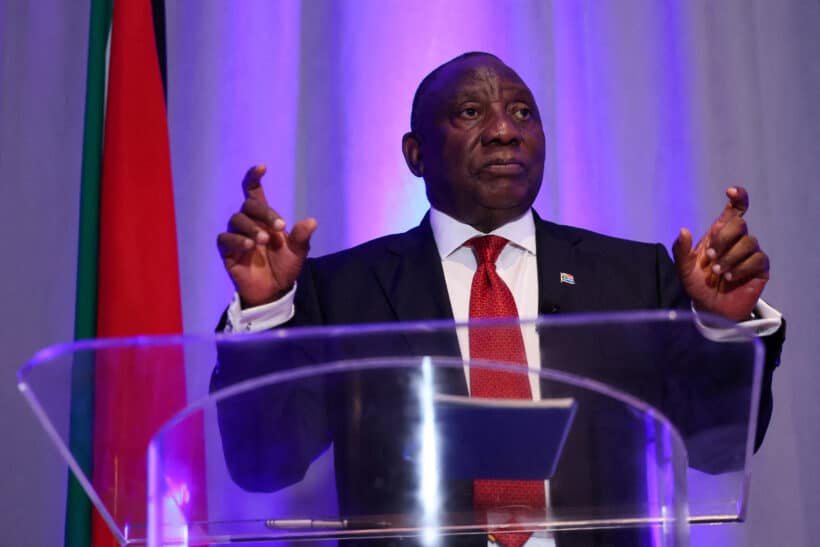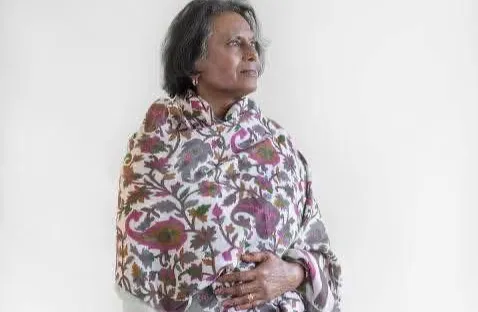
President Cyril Ramaphosa has expressed profound sadness at the passing of veteran anti-apartheid activist Shanthie Naidoo Tweedie, who died on Thursday at the age of 91. The news of her death, which occurred on Thursday, has resonated across South Africa, prompting many to reflect on her extraordinary contributions to the nation’s liberation struggle. President Ramaphosa extended his deepest and most sincere condolences to Dominic Tweedie, her beloved husband and fellow activist, as well as to the entire Naidoo family, her wide circle of friends, and her comrades in the struggle.
"The passing of Shanthie Naidoo Tweedie causes us to revisit and pay tribute to the extraordinary contribution she made to our struggle for freedom," President Ramaphosa stated in his tribute. He added, "Shanthie Naidoo Tweedie was a hero who followed in the footsteps of her politically active family and sacrificially devoted her extended life to fighting for a free, non-racial South Africa." Her dedication to justice and equality remained unwavering throughout her long and impactful life.
Activist's Life and Exile
Born in Pretoria in 1935, Shanthie Naidoo Tweedie endured significant hardship and persecution during the apartheid era. Her commitment to the anti-apartheid movement led to her facing numerous banning orders and multiple detentions at the hands of the apartheid regime. These detentions often included harrowing periods of solitary confinement, a cruel tactic used under the notorious Terrorism Act to break the spirits of activists. A notable instance of her unwavering defiance occurred when she was jailed for two months for refusing to testify against Winnie Mandela and 21 comrades, who were charged with furthering the aims of the African National Congress (ANC). This act of solidarity showed her profound courage and loyalty to her fellow activists.
Following her incarceration and continued persecution by the apartheid state, Ms. Naidoo Tweedie made the difficult decision to live in exile. She resided in the United Kingdom between 1972 and 1991, continuing her activism from abroad. Her ability to leave South Africa and escape further repression was significantly aided by a courageous campaign led by the late anti-apartheid Member of Parliament, Helen Suzman. Ms. Suzman played a leading role in advocating for Ms. Naidoo Tweedie to be permitted to depart the country, noting the international and domestic pressure exerted on the apartheid government.
Political Affiliations and Work
Shanthie Naidoo Tweedie became a prominent and influential member of several key anti-apartheid organizations, playing an active and determined role in the struggle for freedom. Her extensive involvement included the Transvaal Indian Youth Congress, where she helped mobilize young people against racial discrimination. She was also a dedicated member of the Federation of South African Women, an organization that championed women's rights and their key role in the liberation movement. Her commitment extended to the South African Congress of Trade Unions, where she fought for the rights of workers, and she was a recognized and respected figure within the African National Congress (ANC) itself.
During her time in exile, Ms. Naidoo Tweedie and her husband, Dominic Tweedie, continued their invaluable contribution to the educational efforts of the anti-apartheid movement. Both worked tirelessly at the Solomon Mahlangu Freedom College, which was strategically located in Tanzania. This vital institution served as an educational haven and a nurturing environment for South African exiles during the darkest days of the apartheid era, providing them with skills and knowledge to contribute to a future democratic South Africa.
Ramaphosa's Tribute and Legacy
President Cyril Ramaphosa observed that Ms. Naidoo Tweedie's passing shows the profound hardships and adversity endured by women under the brutal apartheid regime. Ramaphosa noted that her life and activism serve as a poignant reminder of the immense sacrifices made by countless women in the struggle against racial oppression in South Africa, often facing unique challenges and dangers.
The President also referenced the enduring legacy of the 20,000 women who marched to the Union Buildings, an iconic event that took place 70 years ago, demonstrating collective female power and resistance. He drew a powerful connection between Ms. Naidoo Tweedie's unwavering activism and the historical courage demonstrated by these women, emphasizing their collective and individual contribution to the nation's liberation. Ramaphosa's remarks linked Ms. Naidoo Tweedie's personal struggle with the broader historical narrative of women's resistance and resilience in South Africa's arduous fight for freedom and equality, solidifying her place among the nation's heroes.