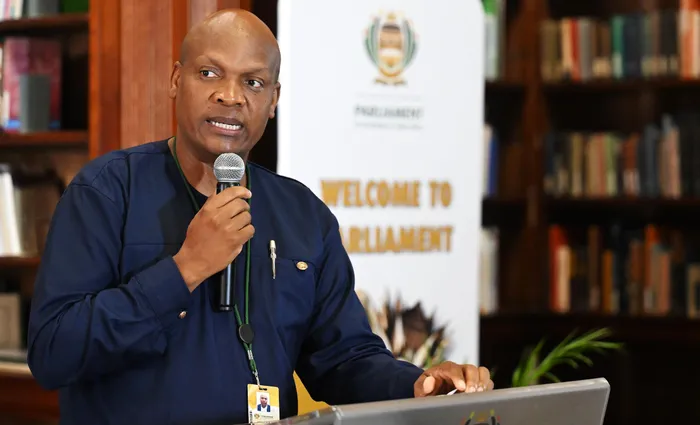
The Chairperson of the Select Committee on Agriculture, Land Reform and Mineral Resources, Mpho Modise, outlined the committee’s oversight findings on foot-and-mouth disease, mining issues, small-scale fisheries, and land claims at a briefing on Thursday. Modise stated that foot-and-mouth disease "impacts on the food security, export markets and livelihoods, particularly for small-scale and communal farmers." The committee’s workshop identified "inadequate facility capacity, weak enforcement of livestock movement controls, and disparate impact on communal family areas" as serious challenges.
Modise emphasized, "The committee stressed that focusing only on containment, without addressing the root cause, would undermine long-term costs and the success of that." While noting improvements in operational readiness, she added, "equitable and timely access to the vaccine, especially for communal and emerging farmers, must remain a priority." Regarding mining, Modise expressed concern that "tangible benefits remain elusive, and the mine is approaching closure" despite community initiatives. She noted an oversight in Madibeng, North West, revealing that a relocation for Ward 27 had not occurred in nearly three years. Modise criticized the lack of reporting from officials, noting, "only Sogima has submitted the report." She concluded, "if they can undermine parliament, what about ordinary people? And these officials, every month, they get paid while people in Madibeng are not employed and their mine is not working."
Foot-and-Mouth Disease Crisis
The Select Committee on Agriculture, Land Reform and Mineral Resources has characterized the ongoing foot-and-mouth disease outbreak as a national agricultural crisis. The committee stated that the disease significantly impacts food security, export markets, and the livelihoods of farmers, especially those operating on a small scale and within communal areas. The committee regards the outbreak of foot-and-mouth disease as a national agricultural crisis, showing its severe implications across the agricultural sector. This crisis particularly affects food security, export markets, and the livelihoods of farmers, with a disproportionate impact on small-scale and communal farmers who often have fewer resources to cope with such outbreaks.
To address these concerns, the committee conducted a two-day workshop in Gauteng. The workshop's objective was to evaluate the preparedness of provinces, the effectiveness of current containment measures, the status of vaccine programs, and the enforcement of livestock movement controls across the country. During this assessment, several critical challenges were identified. These challenges included inadequate facility capacity within veterinary services, weak enforcement of regulations concerning livestock movement which allows the disease to spread, and a disproportionate impact on communal family farming areas where resources are often limited and control measures are harder to implement. The workshop served as a key platform for stakeholders to discuss these pressing issues and strategize on more effective responses.
In a related effort, the committee undertook an oversight visit to Onderstepoort Biological Products (OBP) in Tshwane. This visit aimed to scrutinize various aspects of OBP's operations, including its capacity for vaccine storage and culture production, its distribution systems, the traceability of vaccines, and the level of coordination with provincial authorities. The committee observed improvements in OBP's operational readiness following the visit, indicating positive steps taken by the institution. However, the committee emphasized that ensuring equitable and timely access to these vaccines, particularly for communal and emerging farmers, must continue to be a primary focus. This ensures that all farmers, regardless of their scale of operation, have the necessary tools to protect their livestock and livelihoods. The committee stressed that focusing only on containment, without addressing the root cause, would undermine long-term costs and the success of any intervention efforts.
Mining and Land Claim Impasses
The Select Committee on Agriculture, Land Reform and Mineral Resources conducted oversight visits to Mpumalanga and the North West to examine issues related to mining operations. In Mpumalanga, the committee engaged with Thungela Resources and the Bathlakoane Ba Manzimnyama Community Land Trust concerning a land claim that was originally lodged in 2014. The committee determined that the prolonged delays in resolving this land claim have contributed to mistrust and uncertainty within the community. This protracted process has not only created a sense of distrust but also hindered potential development and stability for the community members involved. The committee expressed concern that tangible benefits for the community remain elusive, particularly as the mine approaches its closure. The lack of concrete advantages for the local population, despite the long-standing claim, was a significant point of contention for the committee. Consequently, both Thungela Resources and the Bathlakoane Ba Manzimnyama Community Land Trust were instructed to submit written reports detailing their plans to resolve the ongoing impasse. These reports are expected to outline clear strategies and timelines for achieving a resolution that benefits all parties, especially the affected community.
In the North West, specifically in Madibeng, the committee addressed a situation where a planned relocation in Ward 27 has not materialized, despite being scheduled for almost three years. This halted relocation has, in turn, suspended operations for Sogima Mining, leading to a deprivation of job opportunities and investment for the local community. The committee noted that the lack of progress on this relocation has directly impacted the economic well-being of the residents, preventing them from benefiting from potential employment and local economic growth. A report from the Housing Development Agency, the Department of Human Settlements, and Madibeng municipality's local economic development office was expected by March 31, 2026, to address the situation. However, the committee noted that only Sogima has submitted its report, while the other entities have yet to do so, raising concerns about accountability and inter-departmental coordination. This failure to submit reports by the other involved entities shows a critical lack of responsiveness from government bodies tasked with resolving the issue. The committee expressed strong disapproval of this inaction, with Chairperson Modise questioning the commitment of these officials. "If they can undermine parliament, what about ordinary people?" Modise asked, noting the broader implications of such bureaucratic failures. She further criticized the officials, stating, "And these officials, every month, they get paid while people in Madibeng are not employed and their mine is not working." This stark contrast between the officials' continued remuneration and the community's economic hardship showed the committee's frustration. The committee showed that this situation exemplifies a critical failure in public service delivery and accountability, demanding immediate attention to restore trust and facilitate the much-needed development in Ward 27.
Fisheries Sector Concerns
An oversight visit conducted in Saldanha Bay uncovered systematic failures within the small-scale fisheries licensing system. The Select Committee on Agriculture, Land Reform and Mineral Resources observed these issues directly during their assessment, pointing to deep-seated problems that hinder the sector's sustainability and equitable operation.
During the visit, fishers voiced significant concerns regarding the inadequacy of their fishing rights. They noted that the current allocation of rights often fails to provide sufficient access to resources, jeopardizing their livelihoods. They also noted issues with economically unviable risk baskets, which disproportionately affect poorer communities, making it difficult for them to sustain their fishing activities profitably. Fishers pointed to a lack of proper consultation processes, asserting that their traditional knowledge and community needs are often overlooked in policy decisions. These challenges collectively hinder the sustainability and equitable operation of small-scale fishing activities in the region, creating a cycle of hardship for many fishing communities. The fishers raised concerns about inadequate rights, economically unviable risk baskets for the poor, and poor consultation, which collectively undermine their ability to thrive.
Fishers also called for several improvements to address these systemic problems. They advocated for stronger common management approaches to ensure resource sustainability and equitable access, emphasizing the need for collaborative governance that includes local communities. They emphasized the need for better protection of their traditional fishing practices, which are often integral to their livelihoods and cultural heritage, and are threatened by modern regulations. The community also requested improved interdepartmental coordination to streamline regulatory processes and provide more effective support for the small-scale fisheries sector, ensuring that policies are coherent and responsive to their needs. These calls for stronger common management, protection of traditional practices, and better interdepartmental coordination reflect a desire for a more inclusive and sustainable future for small-scale fishing communities. The committee acknowledged these concerns and committed to advocating for policy changes that would address the systemic issues identified, aiming to foster a more resilient and equitable fisheries sector.