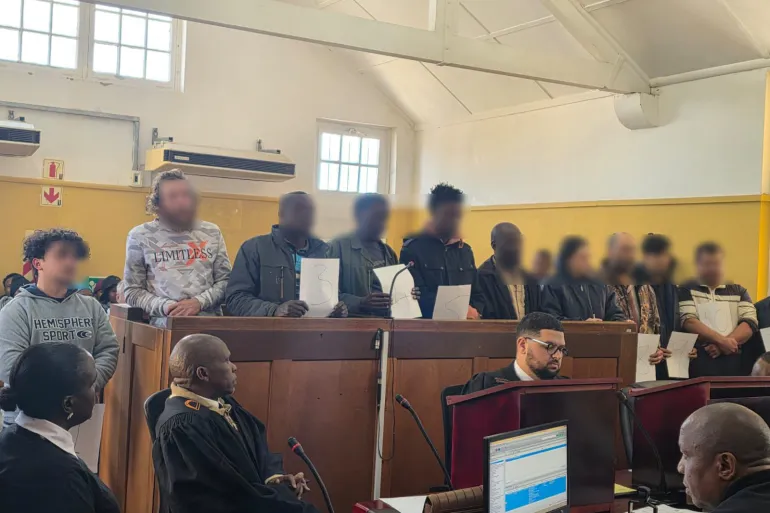
Opposition parties have intensified their calls for Parliament's Impeachment Committee to undertake a thorough review of the forensic and financial evidence that has been steadily emerging from the ongoing trial of suspects involved in the high-profile Phala Phala theft. This significant demand directly challenges and, according to the opposition, contradicts President Cyril Ramaphosa's previous assertion that only $580,000, an amount roughly equivalent to R10 million at the time, was stolen during the incident. The parties advocating for this review argue that the detailed evidence presented in the trial proceedings offers a far more full and potentially revealing picture of the events that transpired at President Ramaphosa's Phala Phala game farm than what has previously been acknowledged. They contend that this evidence is key for a complete and fair assessment by the parliamentary committee.
The request from these political factions aims to ensure a thorough and transparent assessment of the complex circumstances surrounding the theft, an event which has already been the subject of significant public debate and intense political scrutiny across the nation. Their persistent push for the committee to actively consider this new and evolving evidence suggests a deeply held belief that the ongoing trial proceedings may reveal critical information pertinent to the impeachment inquiry against the President. This move shows the opposition's commitment to leveraging all available information to hold high-ranking officials accountable, emphasizing that the judicial process could provide vital insights for the parliamentary oversight function.
New Financial Allegations Emerge from Court Testimony
Startling testimony presented in the Modimolle Regional Court has detailed how the accused mastermind behind the Phala Phala theft, Imanuwela David, allegedly acquired numerous luxury assets in a relatively short period following the incident. The State, during these court proceedings, has alleged that David spent a substantial sum of R1.5 million on a high-end Mercedes-Benz, indicating a rapid and significant increase in his financial capacity. Further allegations from the State detailed that David also spent R980,000 on the acquisition of a property located in Rustenburg, adding to the list of major purchases made after the theft. Additionally, the court heard that he reportedly spent R253,000 for an extensive dental makeover, noting a pattern of lavish spending.
These specific allegations from the Modimolle Regional Court align with and further substantiate earlier findings by Hawks financial analysts. These analysts had previously revealed that a staggering amount exceeding R15 million, which translates to more than $800,000, was directly linked to the suspects' accounts and their subsequent spending patterns shortly after the February 2020 break-in occurred at President Cyril Ramaphosa's Phala Phala game farm. This substantial figure considerably surpasses the President's initial stated amount of stolen funds.
Further examination of financial records provided key insights into David's financial standing both before and after the incident. Records indicated that Imanuwela David earned approximately R50,000 per month in his capacity as a bodyguard, a respectable but not exorbitant income. Prior to the February 2020 break-in at the game farm, David's bank balance reportedly stood at just over R100,000, reflecting a relatively modest financial position. However, following the February 2020 incident, David's accounts saw an immediate and highly significant increase, with his balance spiking to over R3 million in the course of 2020 alone. An additional bank record presented as evidence showed an even more dramatic influx of funds, indicating that David received R9 million in a single month, specifically in May 2020. The financial investigations revealed that David registered a total of R5.2 million in cash deposits during the calendar year 2020, painting a clear picture of an individual whose financial circumstances underwent a radical transformation in the period immediately following the Phala Phala theft. These financial movements form a core part of the evidence that opposition parties believe the Impeachment Committee must scrutinize.
Parliamentary Impeachment Process and Legal Maneuvers
The parliamentary impeachment process against President Ramaphosa was initiated following a critical development. An independent panel, tasked with investigating the allegations, previously found prima facie evidence suggesting that President Cyril Ramaphosa may have committed serious violations of both the Constitution and various anti-corruption laws concerning the 2020 theft of foreign currency from his Phala Phala game farm. This finding was a key moment, triggering further parliamentary action. Subsequently, a 31-member impeachment committee was formed, a direct consequence of a Constitutional Court ruling that determined Parliament's initial handling of the Section 89 independent panel report was unlawful and constitutionally unsound. This ruling necessitated a fresh approach to the inquiry. In a significant procedural step, Rise Mzansi MP Makashule Gana was elected to lead this key probe, taking on the responsibility of guiding the committee's investigation into the allegations.
In a parallel and equally significant development, President Ramaphosa has, on his own initiative, approached the Western Cape High Court. His legal objective is to seek a judicial review and ultimately to set aside the findings and recommendations of the independent panel report, which he contends is flawed. The review hearing for this high-stakes legal challenge is officially scheduled to take place from September 2 to 4, a period during which the court will hear arguments regarding the validity and fairness of the independent panel's conclusions. The outcome of this court case could have profound implications for the ongoing parliamentary impeachment proceedings.
Opposition and Legal Challenges Mount
The Phala Phala matter has also been the subject of various legal and administrative challenges initiated by opposition parties. ActionSA, for instance, previously submitted a full Promotion of Access to Information Act (PAIA) application. This application was specifically designed to seek access to a wide range of records related to the Phala Phala matter, aiming to bring greater transparency to the incident. However, this application was ultimately declined by the authorities. In response to this rejection, ActionSA publicly stated their disagreement, declaring, "We disagree with that decision and are obtaining legal advice to challenge it and secure access to the records." This indicates their resolve to pursue all legal avenues to uncover more information.
Further regulatory scrutiny has been applied to the Phala Phala incident by key financial institutions. In August 2023, the South African Reserve Bank (SARB) concluded its extensive investigation into the foreign currency transaction that took place at the Phala Phala farm. The SARB's determination was that the transaction was not "perfected" because certain conditions precedent, which are essential for the completion of such a transaction under financial regulations, remained unfulfilled. Separately, the South African Revenue Service (SARS) also conducted its own inquiry into the matter. Following its investigation, SARS announced that President Ramaphosa and his related entities were found to be tax compliant concerning the game sale, indicating no tax evasion or irregularities in that specific aspect.
Despite these findings from regulatory bodies, the National Prosecuting Authority (NPA) subsequently made a critical decision: it declined to prosecute President Ramaphosa and those implicated in the theft. This decision drew immediate and strong criticism from opposition parties. ActionSA, in particular, expressed profound disagreement with the NPA's stance. "ActionSA strongly disagrees with the NPA's decision not to prosecute the President," the party stated unequivocally. They further articulated their fundamental principle, adding, "We have consistently argued that no individual, regardless of office, should be treated differently before the law," thereby showing their belief in equal application of justice. This complex and multi-layered legal and regulatory landscape forms the intricate backdrop for the opposition's current, insistent demands regarding the impeachment committee's scope of review.
Broader Implications and Reactions to the Phala Phala Saga
The ongoing legal and parliamentary developments surrounding the Phala Phala incident continue to draw significant and unwavering attention from various political parties, civil society organizations, and the broader South African public. The opposition's persistent push for the impeachment committee to consider the detailed trial evidence notes a deeply ingrained and widespread scrutiny of President Cyril Ramaphosa's conduct and the circumstances surrounding the theft. This persistent demand for a thorough review shows a broader, concerted effort across various political groups, including prominent parties such as ActionSA, the Democratic Alliance (DA), and the Inkatha Freedom Party (IFP), all of whom are united in their commitment to ensuring accountability and transparency from high-ranking public officials.
The Phala Phala saga has evolved into a critical point of contention within the nation's political discourse, significantly impacting public trust in governmental institutions and leadership. As the legal challenges unfold in the courts and the parliamentary processes continue their investigations, the situation remains fluid and highly charged. The outcome of these parallel inquiries will not only determine the fate of President Ramaphosa's political standing but also set important precedents for accountability in South African governance. The political landscape is being actively shaped by these events, with implications reaching far beyond the immediate individuals involved, influencing public perception of justice, transparency, and the rule of law at the highest levels of government.