Nigeria's Foreign Ministry announced that two Nigerian nationals have been killed in South Africa, raising concerns amid ongoing tensions. One of the victims, Bishop Taiwo Michael Fakunle, was killed at his residence in Kensington, Johannesburg, on September 4. The ministry's statement confirmed the deaths without immediately providing further details on the circumstances surrounding the incidents or the identity of the second victim. This announcement by Nigeria's Foreign Ministry shows the escalating diplomatic tensions between the two nations following a series of incidents involving Nigerian citizens.
Details of Recent Killings
James Uchechukwu Nwankwo, the second victim, died in Cape Town on September 5, according to official reports. He was killed following "gruesome interrogation techniques" employed by South African police officers, the Nigerian Foreign Ministry stated. The ministry indicated that Mr. Nwankwo's death occurred one day after Bishop Taiwo Michael Fakunle was killed in Johannesburg. These incidents have prompted Nigeria to express deep concern regarding the safety of its citizens residing in South Africa. The details surrounding the specific circumstances of Mr. Nwankwo's interrogation and subsequent death have not been fully disclosed by South African authorities, leading to calls for a thorough investigation. Nigeria's government continues to monitor developments closely and is engaging with its South African counterparts on the matter, seeking clarity and accountability.
Context of Anti-Immigrant Sentiment
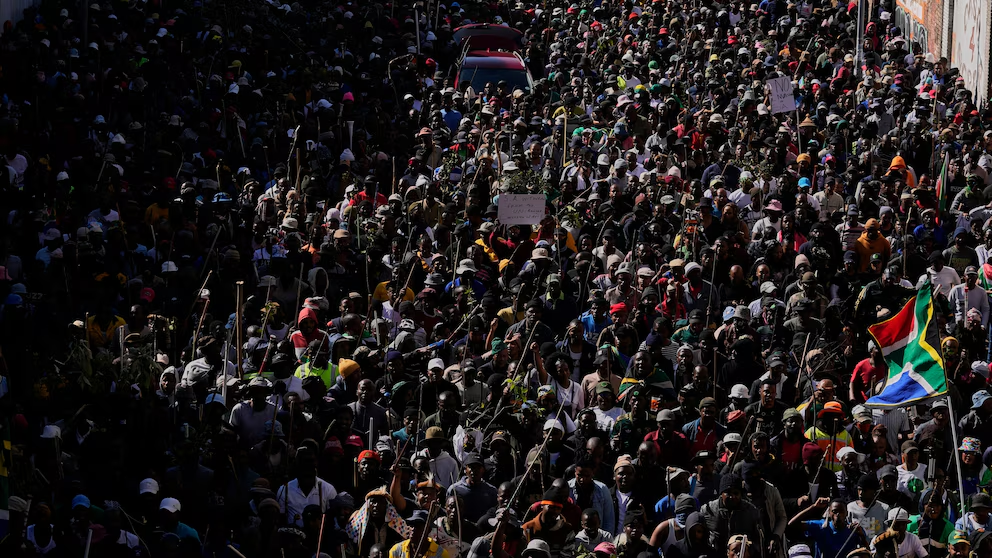
South Africa has long drawn foreign nationals from across the continent, including many Nigerians, due to its comparative wealth and economic opportunities. This influx has sometimes led to friction. South Africa has for years attracted foreign nationals from across the continent, including many from Nigeria, because of its relative wealth and opportunity. This has contributed to a diverse population but also, at times, to social unrest. In June, two Nigerian nationals were killed during anti-migrant violence, occurring just two days before an unofficial deadline established by protesters for foreigners to depart the country. Nigeria's government stated that one of the Nigerians who died in June was allegedly killed by police officers, while the other was reportedly killed by unidentified attackers. These previous incidents show the persistent tensions surrounding foreign populations in South Africa and the challenges faced by immigrants.
Nigeria's Official Response
Nigeria's parliament indefinitely suspended official visits and engagements with South Africa on Friday, a move signaling growing diplomatic strain. The decision follows reports that at least 98 Nigerians have been killed since 2022 in mob attacks, hate-related violence, and extrajudicial killings within South Africa. This suspension shows Nigeria's increasing concern over the safety of its citizens residing in the country. The parliamentary action affects all official interactions between the two nations, pending further developments and satisfactory resolutions to the ongoing issues. Nigeria's government has been vocal about protecting its nationals abroad, particularly in regions where they face security challenges, and this suspension is a strong signal of its commitment.
Broader Implications and Concerns
Protesters in South Africa attribute high levels of unemployment, crime, and pressure on public services to foreign nationals. This sentiment has frequently fueled anti-immigrant actions and contributed to the broader tensions observed in the country. Protesters in South Africa blame foreigners for high levels of unemployment, crime and pressure on public services, a narrative that often leads to xenophobic incidents. The ongoing grievances voiced by these groups show the complex socioeconomic factors impacting relations between South African citizens and foreign residents. Nigeria's government has consistently expressed concern over the safety of its citizens living in South Africa amidst these persistent challenges, calling for greater protection and justice for victims. The situation notes the need for effective measures to address both the root causes of anti-immigrant sentiment and the safety of foreign nationals.