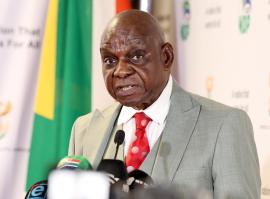
The Office of the Investigating Directorate Against Corruption (IDAC) Oversight Judge was operationalised in Pretoria on Sunday, July 19, 2026. This new judicial office, established under Section 22A of the National Prosecuting Authority Amendment Act, is set to provide independent oversight for anti-corruption efforts. The operationalisation marks a significant step in strengthening the framework for combating corruption within South Africa. Its mandate involves reviewing IDAC's investigations and decisions, ensuring adherence to legal procedures and constitutional rights. The establishment aims to enhance transparency and accountability in the fight against corruption, providing an essential layer of scrutiny over the key work of the Investigating Directorate Against Corruption. The Office's establishment under Section 22A of the National Prosecuting Authority Amendment Act shows its legal foundation and the legislative commitment to strong anti-corruption mechanisms.
Mandate and Scope
The newly established Office of the Investigating Directorate Against Corruption Oversight Judge is mandated to investigate complaints concerning alleged improper conduct by various personnel associated with the Investigating Directorate Against Corruption. This includes prosecutors, investigators, deputy directors, seconded officials, and other support staff. The Office will investigate complaints relating to alleged improper conduct by prosecutors, investigators, deputy directors, seconded officials, and other personnel appointed to support the Investigating Directorate Against Corruption, ensuring that all individuals involved in anti-corruption efforts uphold the highest standards of integrity and procedure. Individuals can submit these complaints electronically via [email protected]. This electronic submission method is designed to facilitate easy access for complainants and streamline the process of reporting alleged misconduct.
The Office's scope explicitly excludes intelligence matters, which remain under the purview of the Inspector-General of Intelligence. The Office does not investigate intelligence matters falling under the Inspector-General of Intelligence, respecting the distinct mandates of various oversight bodies. The Office does not supersede or replace the existing investigative powers of the South African Police Service or the Directorate for Priority Crime Investigation. The Office does not replace the investigative powers of the South African Police Service or the Directorate for Priority Crime Investigation, ensuring there is no duplication or conflict with established law enforcement agencies. Its role is distinct, focusing on internal conduct within IDAC rather than primary criminal investigations, thereby complementing existing structures rather than overlapping with them. This clear delineation of responsibilities ensures that the anti-corruption ecosystem operates efficiently and without jurisdictional ambiguities.
Judicial Independence and Accountability
The Office of the Investigating Directorate Against Corruption (IDAC) Oversight Judge reports to the Minister of Justice and Constitutional Development. This reporting structure establishes a direct line of communication and accountability between the judicial office and the executive branch of government. The Minister is responsible for overseeing the administration of justice and ensuring that judicial bodies operate within their mandates. This relationship helps to integrate the oversight function into the broader governmental framework while maintaining the judge's independence in specific investigations. The reporting mechanism to the Minister of Justice and Constitutional Development is key for administrative oversight and ensuring the Office's operations align with national justice priorities, without compromising its investigative autonomy.
Ultimately, the Office is accountable to Parliament through the Portfolio Committee on Justice and Constitutional Development. This parliamentary oversight mechanism ensures that the IDAC Oversight Judge's operations are subject to legislative scrutiny. The Portfolio Committee can review the Office's performance, budget, and adherence to its mandate, providing a key check on its powers and activities. This dual accountability to both the executive and legislative branches is designed to promote transparency and uphold the principles of good governance within the anti-corruption framework in South Africa. The ultimate accountability to Parliament through the Portfolio Committee on Justice and Constitutional Development reinforces the democratic principles of oversight and ensures the Office operates in the public interest.
Strengthening Public Confidence
The Office of the Investigating Directorate Against Corruption (IDAC) Oversight Judge's mandate specifically covers serious, high-profile, or complex cases of corruption, commercial crime, and financial crime. These cases can originate from various sources, including commissions of inquiry and referrals made by the National Director of Public Prosecutions. The mandate covers serious, high-profile or complex corruption, commercial crime or financial crime arising from commissions of inquiry, referrals by the National Director of Public Prosecutions, statutory referrals and complaints lodged by members of the public, ensuring a full approach to combating significant financial misconduct. Additionally, the Office addresses statutory referrals and complaints lodged directly by members of the public, broadening its scope of engagement. This full approach is designed to ensure that significant instances of malfeasance are subject to rigorous oversight. The inclusion of public complaints in the mandate aims to provide an accessible channel for citizens to report suspected improper conduct within the anti-corruption framework, thereby fostering greater transparency and trust in the system. By addressing a wide array of high-impact cases, the Office seeks to reinforce public confidence in the state's commitment to fighting corruption and holding powerful individuals accountable.