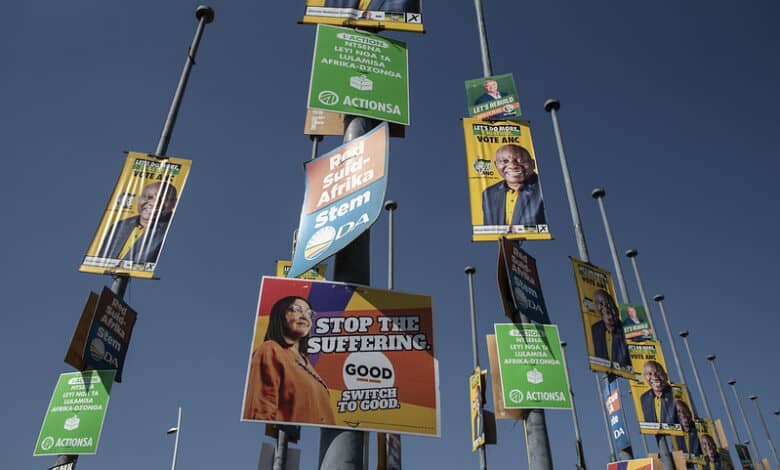
South Africa is scheduled to hold elections on 4 November, with political parties presenting their platforms to voters. These elections are a key moment for the nation, as citizens will cast their ballots to determine the composition of their local governments. The Economic Freedom Fighters (EFF) has characterized local government in the country as being in a "deep and worsening crisis," noting perceived failures in service delivery and the pressing need for effective governance. This strong critique from the EFF shows the significant challenges that municipalities face across the country, particularly in areas such as infrastructure maintenance, financial management, and the consistent provision of essential services.
For the first first time in its history, the South African Communist Party (SACP) is contesting the elections independently of its long-standing alliance with the African National Congress (ANC). This decision marks a significant shift in the political landscape, as the SACP, traditionally a key partner within the tripartite alliance, seeks to directly appeal to voters with its distinct policy agenda. The SACP stated its focus on fundamental services, declaring, "Reliable water is the first condition of dignity. We will end water tankers and dry taps. We will fight for fair, pro-poor tariffs for water and electricity, protect lifeline services, and stop punitive disconnections." This statement clearly outlines the party's commitment to addressing basic human needs and ensuring equitable access to vital resources, positioning these issues at the forefront of its campaign. Meanwhile, the ANC reviewed its commitments from the 2021 local elections, asserting significant progress. The party claimed advancements in various areas, including efforts to reduce electricity shortages across the nation, indicating a focus on demonstrating tangible results to the electorate.
The State of Service Delivery
An assessment by the auditor-general in June 2026 found that 39 of 257 municipalities, representing 15%, achieved clean audits. This finding offers a snapshot of municipal financial health and accountability across South Africa, indicating that a significant majority of local governments continue to grapple with issues of financial management and compliance. These clean audits are key indicators of sound financial practices and effective governance, yet the low percentage notes a broader challenge within the municipal sector. Johannesburg Executive Mayor Dada Morero stated in his 2026 city address that Johannesburg had replaced 20.4 kilometres of water pipes, an effort aimed at upgrading aging infrastructure and improving water supply reliability. However, Johannesburg Water has indicated that thousands of kilometres of the city's pipe network require renewal, suggesting that the work completed, while important, represents only a fraction of the total need. Morero acknowledged in February 2026 that approximately 2,600km of pipes needed urgent attention, further emphasizing the scale of the infrastructure challenge facing the city.
Mayor Morero reported that his 'Bomb Squad' addressed 724 service delivery cases over six weeks, resolving 86% of them. This initiative, designed to rapidly respond to and rectify pressing service issues, demonstrates a proactive approach to citizen complaints and operational failures. The high resolution rate suggests a degree of effectiveness in tackling immediate problems. However, the sheer volume of incidents reported by utility providers points to systemic issues. City Power documented around 1.3 million power interruptions during the second half of 2025, illustrating the widespread nature of electricity supply challenges in Johannesburg. These interruptions significantly impact residents and businesses, showing the ongoing struggle to maintain a stable power grid. Joburg Water also reported over 4,000 pipe bursts each month and more than 6,000 sewage blockages monthly in the latter half of 2025, painting a clear picture of an overburdened and deteriorating water and sanitation infrastructure. These frequent incidents contribute to water losses, environmental contamination, and significant inconvenience for residents. Compounding these issues, only 44% of water bursts were repaired within 48 hours, falling significantly short of the 90% target, noting operational inefficiencies and the slow pace of critical repairs.
Johannesburg cleared its R5.25 billion debt to Eskom in August 2026. This financial achievement was a critical step towards stabilizing the city's fiscal position and ensuring its ability to continue receiving bulk electricity supply. Morero described this as a "significant milestone in the city’s journey towards financial sustainability," indicating the importance of responsible financial management for the overall health of the municipality. In his 2025 state of the city address, Morero announced plans for a "Digital Public Infrastructure" that would use Artificial Intelligence (AI) to detect water leaks and manage electricity. This forward-thinking initiative aimed to leverage technology to address some of the city's most persistent service delivery problems, from conserving water to optimizing power distribution. This initiative evolved into a broader commitment in 2026 to employ AI to "better our services," signalling an expanded vision for technological integration across various municipal functions. Morero reflected on the city's status, stating, "Every time I hear someone say that Johannesburg remains Africa’s richest City, it warms my heart. It means we have not collapsed; we must be doing something right." This statement conveys a sense of pride and resilience, even amidst the acknowledged challenges.
Party Promises and Political Tactics
The Democratic Alliance (DA) has presented a Johannesburg campaign promise to attract at least 200,000 new jobs over a five-year period. This ambitious pledge aims to address the critical issue of unemployment within the city, positioning job creation as a central pillar of their electoral platform. This pledge comes as unemployment figures in the city remain significant. Stats SA's second-quarter survey, released in August 2026, recorded 1.07 million unemployed people in Johannesburg, illustrating the immense scale of the employment challenge. The same survey indicated that 1.91 million people were employed in Johannesburg during that period, providing context to the city's labor market. The city's unemployment rate stood at 35.9% in August 2026, which was higher than the national unemployment rate of 33.6% for the same month, noting Johannesburg's particular struggle with joblessness. Johannesburg's unemployment rate also marked an increase from 33% recorded a year earlier, indicating a worsening trend that demands urgent attention from political leaders.
In a separate development, Tambo Makoena reportedly called for harsh sentences for city officials who face corruption charges. This call reflects a broader public demand for accountability and a crackdown on corruption within municipal governance, a perennial issue in South African politics. Another political figure, Zwakele Mncwango, was quoted stating his intention to establish a dedicated unit specifically to address issues related to undocumented immigrants. This proposed unit indicates a focus on immigration enforcement and management at the local level, a policy stance that often resonates with certain segments of the electorate. The DA’s Johannesburg candidate Helen Zille has also promised “zero tolerance for illegal immigration,” aligning with Mncwango’s sentiments and further emphasizing this issue within the DA's local campaign.
On the national stage, President Cyril Ramaphosa addressed water reforms at an investment conference in March. His proposals included measures such as ring-fencing water revenues to ensure funds are reinvested directly into water infrastructure and services. This policy aims to improve the financial sustainability of water utilities and ensure that money collected from water tariffs is used specifically for the maintenance and expansion of water systems, rather than being diverted to other municipal expenses. This is a critical reform given the widespread challenges with water infrastructure. Another policy initiative, the proposal to establish a Human Settlements Development Bank, has shown an inconsistent presence in public discourse, appearing, disappearing, and resurfacing multiple times across various political cycles. This bank, intended to finance housing and human settlement projects, has been a recurring theme in national development plans. President Ramaphosa initially announced the Human Settlements Development Bank in early 2019, indicating its long-standing consideration within government planning. The Human Settlements Development Bank also appeared again in the ANC’s 2024 manifesto, suggesting its continued relevance to the party's housing policies and its re-emphasis in the current electoral cycle. In August, the DA also announced its intention to ring-fence water revenue, mirroring President Ramaphosa's proposal and indicating a bipartisan recognition of the importance of this financial mechanism for water security.
Understanding Municipal Authority
The Constitution of South Africa grants municipalities authority over a defined range of local functions. This foundational legal framework establishes the powers and responsibilities of local government, ensuring that they are equipped to manage affairs directly affecting their communities. This framework delineates responsibilities, distinguishing between local, provincial, and national government spheres, creating a clear division of labor within the country's governance structure. This separation is key for understanding which level of government is accountable for specific services and policy areas. For instance, the police service operates as a national entity, falling outside the direct control of municipal authorities. While local governments may contribute to local safety initiatives, the primary responsibility for law enforcement and policing remains with the national government. Similarly, the provision and management of schools and hospitals are predominantly responsibilities assigned to provincial governments. Municipalities typically do not have direct control over educational or healthcare institutions, although they may play a supporting role in local infrastructure or land provision. Electricity generation and the management of the national grid are under the purview of Eskom, a national state-owned enterprise, rather than individual municipalities. This means that while municipalities are responsible for local electricity distribution and billing, the core issues of power generation capacity and grid stability are managed at a national level. This division of powers means that while local governments are responsible for specific service delivery aspects, such as waste removal, local roads, and water distribution, other critical services remain managed at higher levels of government. Understanding these constitutional delineations is essential for voters to accurately assess the promises made by political parties at the local level and to understand the limitations of municipal authority.
How to Evaluate Claims
The Democratic Alliance (DA) manifesto frequently employs "rock-bottom framing," a rhetorical strategy that emphasizes a perceived low point in current conditions. This approach is designed to highlight the urgency of change and to position the party as the solution to severe problems. This framing often involves painting a stark picture of decline or crisis, thereby making the party's proposed solutions appear more vital and impactful. Both the DA and the African National Congress (ANC) have included promises of "reliable water and electricity" in their campaigns for Johannesburg, showing the universal importance of these basic services to residents. This shared commitment reflects the critical nature of these issues, which are consistently identified as top concerns by the electorate. Helen Zille, the DA's Johannesburg candidate, has pledged a policy of "zero tolerance for illegal immigration," a position that appeals to voters concerned about immigration issues and border control at the local level. In August, the DA also announced its intention to ring-fence water revenue, a measure designed to ensure that funds generated from water services are reinvested directly into water infrastructure and provision. This policy aims to improve the financial health and operational capacity of water utilities, ensuring that essential resources are dedicated to maintaining and upgrading water systems. The proposed Human Settlements Development Bank, a policy initiative that has appeared and disappeared in public discourse multiple times, resurfaced in the ANC’s 2024 manifesto. Its re-emergence indicates a continued focus on addressing housing shortages and promoting sustainable human settlements, a key area of public concern. Voters are encouraged to critically assess these promises, considering the feasibility of their implementation given the constitutional division of powers and the financial realities faced by municipalities.