Mpumalanga Province emerged victorious at the 2026 South African Youth Water Prize national competition, held on May 29, 2026. The competition, which saw Mpumalanga Province triumph, took place in Kempton Park, Gauteng, bringing together young innovators from across the country. The province's win at the 2026 South African Youth Water Prize national competition marks a significant achievement in youth engagement with water-related challenges, showcasing the talent and dedication of its young scientific minds. The annual event serves as a key platform to encourage scientific research and innovation among high school students, specifically addressing critical water issues in South Africa. The victory positions the Mpumalanga representative for further international recognition and competition, noting the national effort to nurture future leaders in environmental science.
National Competition Details
As the national winner, Sinenhlanhla Sikhulile Nkosi is set to represent South Africa at the prestigious Stockholm Junior Water Prize competition in Sweden this August. This international competition, formally known as the Stockholm Junior Water Prize, offers a global stage for young innovators to present their solutions to water challenges. The Department of Water and Sanitation (DWS), in partnership with the Water Research Commission (WRC), jointly hosted the South African Youth Water Prize (SAYWP) annual national competition. This collaborative effort shows the commitment of key governmental and research institutions to foster water-related innovation among the youth. The event saw participation from learners across all nine provinces, each having secured a win at their respective regional levels to qualify for the highly competitive national stage. This tiered competition structure ensures that only the most promising projects advance, bringing together the best young minds from across the nation.
An adjudication panel, responsible for evaluating the projects, included representatives from various esteemed organizations. These included the Department of Water and Sanitation, the Water Research Commission, Nelson Mandela University, Rand Water, and Thungela Resources. The diverse expertise of the panel members ensured a full and rigorous evaluation process for all entries, drawing on a wealth of knowledge from both public and private sectors. The collaboration among these entities shows the broad institutional support for youth engagement in water conservation and innovation, recognizing its importance for the nation's future. The competition aims to foster a new generation of scientists and engineers dedicated to addressing South Africa's pressing water challenges through innovative and sustainable solutions, thereby contributing to national development goals.
Recognition for Top Entrants
Alyssa Pillay, representing Star College Durban in KwaZulu-Natal, secured second place in the national competition, demonstrating the high caliber of projects submitted from across the country. Her achievement notes the widespread talent nurtured through the SAYWP program. Moegamat Panker and Rylee Joseph from Kimberley Technical High School in the Northern Cape were awarded third place for their project, further noting the widespread talent engaged in the SAYWP. The competition acknowledged the efforts of all participants in fostering innovative solutions for water-related issues, emphasizing the collective impact of their contributions. All national finalists received bursaries to support their further education and laptops, providing essential tools for their academic and scientific pursuits. These awards highlight the commitment of the organizers to invest in the next generation of water scientists and engineers, ensuring they have the resources needed to continue their valuable work and contribute to future water management strategies.
Context and Encouragement
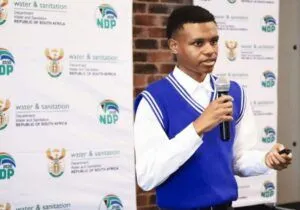
Sinenhlanhla Sikhulile Nkosi, a 17-year-old Grade 11 learner from Sintintile Secondary School in Mbombela, Mpumalanga, was named the national winner of the competition. Her winning project focused on a critical environmental issue, titled "Barrier coatings for reducing microplastic release and chemical leaching in plastic containers." This innovative project addresses a significant global concern regarding plastic pollution and its impact on water quality, offering a practical approach to mitigate environmental harm. The competition structure allowed learners to present their projects across two distinct categories: the Awareness Category and the Innovation Category. This dual approach ensures that both educational outreach and practical solutions are recognized and encouraged, fostering a holistic understanding of water challenges. An evaluation panel comprising seven adjudicators was responsible for assessing the learners’ projects, meticulously reviewing each submission. Their work determined the national winner and other top entrants in the annual event, culminating in a celebration of youth-led scientific achievement and dedication. The dedication of these young scientists offers a hopeful outlook for future water management and environmental protection efforts in South Africa and beyond.