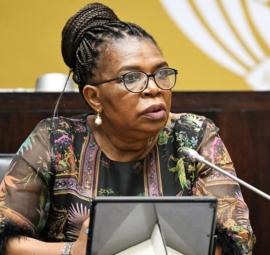
Newly appointed Social Development Minister Dina Pule announced a strategic shift to redefine her department's role beyond social grants, emphasizing self-reliance and sustainable development for beneficiaries. The initiative, revealed in South Africa, aims to empower individuals and communities through skills development and enterprise support. This move shows Minister Pule's commitment to transforming public perception, addressing the common belief that the Department of Social Development's sole function is the provision of social grants. The Minister's vision seeks to broaden the department's impact by fostering economic independence among those it serves, thereby creating a more strong and self-sufficient society.
"People believe we are only a welfare department, and that is all we do on a daily basis," Minister Pule stated, directly addressing the perception she aims to change. She noted the National Development Agency's (NDA) key role in working with communities facing significant challenges, illustrating how the department’s mandate extends far beyond simply distributing funds. "The temptation is that every month people receive the money, spend it and wait for the next payment," Pule explained, noting the NDA's vital function in teaching savings, collaboration, and business establishment to generate additional income. This approach is central to the department's commitment to helping beneficiaries become self-reliant. "We want to help some people move beyond depending on grants so that they can become self-sufficient, while creating space for others who need support." The department seeks to implement child protection and social welfare programs, encouraging beneficiaries to leverage support for greater self-sufficiency. "When communities organise themselves into groups and develop viable projects, the National Development Agency provides assistance," Minister Pule added, emphasizing the collaborative nature of this empowerment drive. This full strategy is designed to equip individuals with the tools and knowledge necessary for long-term economic stability.
Departmental Structure and Roles
The Department of Social Development implements its mandate through various entities, including the South African Social Security Agency (SASSA) and the National Development Agency (NDA). These two key agencies work in concert to deliver the department’s broad spectrum of services and initiatives across the country. SASSA is primarily responsible for the administration of social grants across the country, ensuring that financial aid reaches eligible individuals and families who rely on this essential support. In contrast, the NDA focuses on community development initiatives and economic empowerment programs for communities, playing a key role in the strategic shift towards self-reliance. This division of labor allows the department to address both immediate welfare needs and long-term development goals effectively.
Empowerment Through Skills and Enterprise
The National Development Agency (NDA) works directly with social grant beneficiaries to help them establish sustainable livelihoods, moving them towards economic independence. The agency provides instruction on financial literacy, teaching individuals how to save and collaborate effectively, which are fundamental skills for managing personal finances and undertaking collective ventures. It also guides the establishment of businesses capable of generating additional income, transforming beneficiaries into active participants in the economy. The NDA's programs are specifically designed to empower grant beneficiaries by providing them with the necessary skills and resources to create their own economic opportunities. This includes teaching people how to save, work together, and establish businesses that can generate additional income, thereby fostering a culture of entrepreneurship and self-sufficiency.
In Sebokeng, a group of young people successfully established a bakery after receiving assistance through the NDA. This initiative exemplifies the program's focus on practical skill development and enterprise creation, demonstrating how targeted support can lead to tangible economic success. Similar projects have emerged in various regions, demonstrating the breadth of the NDA's efforts and the adaptability of its empowerment models to diverse local contexts.
Limpopo has seen the development of poultry and vegetable farming projects, contributing significantly to local food security and economic activity. These agricultural initiatives not only provide income for participants but also strengthen local food systems. In KwaZulu-Natal and Mpumalanga, beneficiaries have launched cattle farming and dairy production enterprises, showcasing the potential for large-scale agricultural ventures that create sustainable income streams for participants. Beneficiaries in the North West province established a fishing enterprise. They harvest fish from a local dam and supply it to surrounding communities, showcasing a localized approach to economic empowerment that leverages natural resources for community benefit. These diverse projects highlight the NDA's success in tailoring its support to regional opportunities and needs, fostering a wide range of sustainable livelihoods.
Child Protection and Adoption
Minister Dina Pule encouraged South Africans willing and able to provide loving homes for children to consider adoption, showing a critical aspect of the department’s mandate. The department emphasized its ongoing commitment to child protection and support for prospective adoptive parents, ensuring the well-being of the nation's most vulnerable. Pule stated, "Our first responsibility is always to ensure that every child is protected," noting the unwavering dedication to safeguarding children. She added, "We encourage people who would like to adopt, or who are already in the process, to contact the department." The department aims to provide advice, counselling, and necessary support to ensure prospective parents understand the process and are equipped to offer children safe, loving, and supportive homes. The department remains committed to protecting children and supporting prospective adoptive parents throughout this sensitive and important journey.
Minister's Vision and Motivation
Social grants continue to act as a vital safety net for millions of vulnerable South Africans, providing essential support to those who need it most. However, according to the Department of Social Development, these grants are envisioned as a stepping stone rather than a permanent source of income for those individuals capable of becoming economically active. This perspective underpins the strategic shift announced by Minister Dina Pule, which aims to empower beneficiaries to transition towards self-reliance. The department's focus is on enabling individuals to move beyond grant dependency, thereby creating opportunities for others who require social assistance. This approach seeks to transform the role of social grants from mere welfare provision to a catalyst for sustainable development and economic participation within communities, ultimately fostering greater self-sufficiency across the nation. The department is committed to helping beneficiaries become self-reliant through skills development, enterprise support, child protection, and social welfare programmes, ensuring a holistic approach to social development.