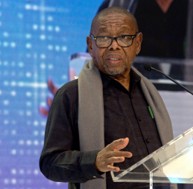
South Africa's Minister of Higher Education, Science and Innovation, Professor Blade Nzimande, recently addressed the Coega Special Economic Zone (SEZ) in Gqeberha, Eastern Cape, discussing the need for a more equitable distribution of research funding. Approximately 63% of National Research Foundation (NRF) funding is currently allocated to the 10 universities with the highest research output. The ceremony, which noted these disparities, was held under the theme, "Building an Inclusive, Impactful and Transformed Research Future," a message that showed the minister's broader objectives for the sector. Discussions at the SEZ are set to include examining the proposed establishment of a Science and Innovation Park, aiming to broaden research capabilities across the country and foster regional development.
Addressing Funding Inequality
The current allocation of research resources further illustrates existing disparities within the higher education landscape, with 83% of South African Research Chairs Initiative (SARChI) chairs hosted by top-output universities. This significant concentration of research capacity in a limited number of institutions prompted a targeted intervention earlier in 2026. During this period, 41 new SARChI chairs were specifically awarded to historically disadvantaged institutions, universities of technology, and new universities. This strategic move aims to broaden the geographical and institutional spread of research excellence, fostering a more diverse and inclusive research ecosystem across the nation. The goal is to ensure that research opportunities and resources are not confined to a few established centres but are instead distributed more widely to cultivate new hubs of innovation.
Beyond research funding, the growth in public investment has been slow, particularly since the onset of the COVID-19 pandemic. This constraint has directly impacted the number of financially disadvantaged students able to benefit from the full-cost funding model, which was initially introduced in 2020. The model was designed to provide full financial support, covering tuition, accommodation, and living expenses, thereby removing significant barriers to higher education for deserving students. However, its reach has been limited by the available public funding, necessitating a careful balance between broad access and the depth of support provided.
Progress in Inclusivity
Despite funding challenges, notable progress has been made in enhancing inclusivity within research funding initiatives. In 2025, the proportion of Black South African National Research Foundation (NRF)-funded students increased significantly to 86%, marking a substantial rise from 46% recorded in 1999. This demonstrates a clear shift towards greater representation and access for historically underrepresented groups in postgraduate studies. Concurrently, the representation of South African women among postgraduate bursary recipients also saw a substantial increase, climbing from 40% in 1999 to 60% in 2025. These figures collectively indicate a positive trajectory towards greater inclusivity within the NRF's student funding initiatives, reflecting a commitment to demographic transformation in the academic pipeline.
Further reflecting this trend, the NRF awarded bursaries to 5,951 postgraduate students during the 2025/2026 financial year, showing the foundation's continued investment in human capital development. Of these recipients, a significant 77% received full-cost-of-study support, aiming to alleviate financial barriers for a majority of the funded students and allow them to focus on their academic pursuits without undue economic strain. This full support is key for ensuring that talent is nurtured regardless of socio-economic background.
Among NRF-funded researchers, Black representation expanded from 15% in 1999 to 57% in 2025, indicating a substantial increase in the diversity of the research community. Similarly, women's representation within the NRF-funded researcher pool grew from 17% in 1999 to 47% in 2025, demonstrating significant progress in gender and racial equity among research professionals supported by the foundation. To further support these objectives and build on the momentum of these positive trends, the NRF has begun implementing its University Programmes and Collaborations initiative, which seeks to foster partnerships and capacity building across institutions.
Broader Innovation Landscape
The 2026 National Research Foundation (NRF) Awards ceremony was held in Gqeberha, serving as a platform to celebrate research excellence and discuss future directions. Minister Nzimande is also scheduled to visit the Coega Special Economic Zone (SEZ) on Friday, where further discussions on innovation and economic development are anticipated. During his address, Minister Nzimande stated that South Africa currently incurs higher costs for foreign intellectual property compared to the revenue generated from its own innovations. He elaborated on the imperative for a more representative scientific community, stating, "If science, technology and innovation is to serve society, then the people who produce knowledge, the institutions that host research and the students who enter the research pipeline must reflect the full diversity and potential of the whole of our country."
Minister Nzimande emphasized the critical need to bridge the gap between academic research and commercial application to foster economic growth and technological sovereignty. He added, "South Africa pays far more for foreign intellectual property than it generates from its own innovations. We must bridge the gap between academic research and commercial application by, among others, co-funding early-stage tech development with private industry, driving venture capital into local start-ups and turning indigenous discoveries into market-ready products." He noted that geopolitical rivalries are increasingly focused on critical sectors such as semiconductors, algorithms, energy, telecommunications, and defence systems, noting the strategic importance of domestic innovation.
Minister Nzimande explained that this evolving global landscape has intensified the urgency for developing local capabilities. "This has increased urgency for governments in the Global South to cultivate domestic technological capabilities to reduce critical dependencies on foreign adversaries for energy, telecommunications, and defence systems." He further stated that initiatives like the Science Granting Councils Initiative will be key in establishing a sovereign research and development agenda for Africa, ensuring that the continent's research priorities are internally driven. Minister Nzimande concluded, "For too long, Africa’s research priorities have been dictated by external donor funding rather than continental needs. Initiatives such as the Science Granting Councils Initiative will be critical in this regard," showing the importance of self-determination in scientific advancement.