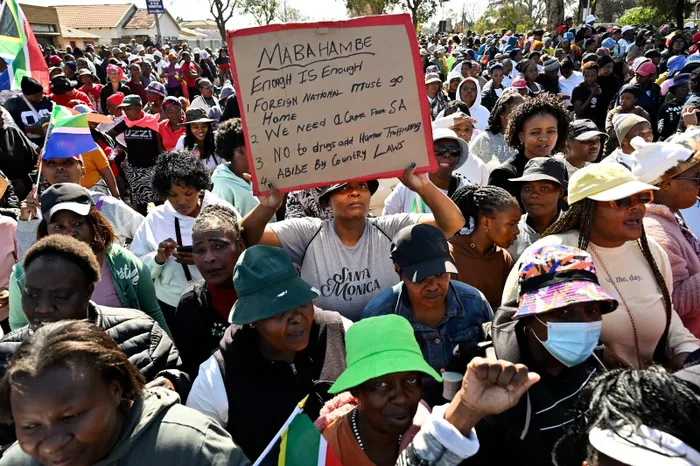
Thousands of demonstrators marched in cities and towns across South Africa the week of June 30, 2026, calling for foreigners to leave the country. The demonstrations represented a significant public expression of sentiment regarding immigration in the nation. Tuesday’s nationwide marches were largely peaceful, though pockets of attacks on foreigners and looting of migrant-owned businesses were reported across various locations. These incidents showed the underlying tensions despite the generally orderly nature of the larger protests. The protests occurred as the overall immigrant population in South Africa stands at approximately 3-million, representing 4% of the total population. This figure provides context to the scale of the foreign national presence in the country.
Nationwide Protests and Attacks
Helana Wolde, who left Ethiopia 21 years ago to escape political persecution, expressed increased fear amidst the current unrest. Her journey to South Africa began two decades ago, seeking refuge from conditions in her home country. "We’re all extra-scared," Wolde stated, reflecting the anxieties of many migrants who feel increasingly vulnerable. She has personally endured significant violence in South Africa, a testament to the risks faced by some foreign nationals. Wolde survived a shooting incident in 2008, a traumatic event that left a lasting impact. Her business has been targeted by xenophobic looting on two separate occasions, first in 2015 and again in 2021, noting a recurring pattern of economic disruption and personal loss for her and her family. The recent protests have reignited these fears, bringing back painful memories of past incidents.
The organization March and March, a prominent voice in the protests, asserted that its objections are solely directed at illegal immigration, denying accusations of xenophobia. The group maintains that its actions are not motivated by animosity towards foreign nationals but rather a concern for the rule of law regarding immigration status. March and March emphasized that their focus is on ensuring that all individuals residing in South Africa do so through legal channels. This distinction, they argue, is key to understanding their position and differentiates their movement from xenophobic attacks. They believe that upholding immigration laws is essential for the stability and well-being of the nation.
Migrant Lives and Contributions
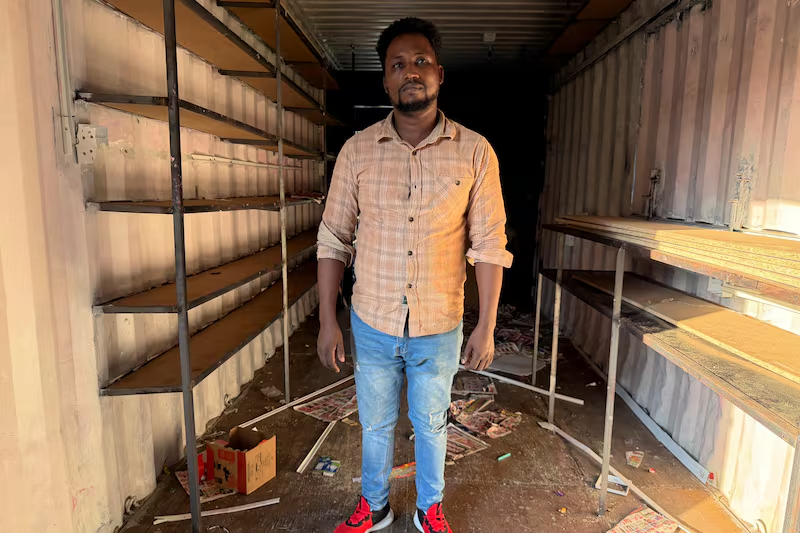
Helana Wolde, an Ethiopian refugee, supports a wife and three South African-born children in the country. Her family's situation shows the deep personal ties many migrants have established within South Africa, with children born and raised in the nation. The presence of her wife and children, who are South African citizens by birth, further illustrates the integration of migrant families into the social fabric. Daniel Abide, 33, who arrived from Ethiopia a decade ago, operates two shops, contributing to the local economy. Mr. Abide's entrepreneurial endeavors exemplify how foreign nationals often establish businesses that serve local communities and create economic activity. His shops, like many others run by foreign nationals, have faced challenges, including the recent looting of shops operated by people from Somalia and Pakistan in Clermont. These incidents affect not only the business owners but also the communities they serve, disrupting local commerce and access to goods.
Mr. Abide stated that migrants are not competing for jobs with South Africans, but rather creating opportunities. This perspective challenges the narrative that foreign nationals are a burden on the job market. "Foreigners are not taking jobs from South Africans," he said, directly addressing a common grievance voiced during the protests. "We are starting some small jobs here in South Africa. We are paying rent. If you want to open a shop, you must open a shop like us." He added that his small business directly employs one South African, demonstrating a tangible contribution to local employment. This notes the role foreign entrepreneurs play in employment and economic activity, often filling niches and generating income that benefits the broader community. Despite these contributions, Helana Wolde expressed ongoing apprehension, stating earlier, "We’re all extra-scared." This sentiment reflects the heightened anxiety among migrant communities amidst the recent protests and incidents of violence, showing the personal toll these events take on individuals and families. The fear of further attacks or displacement remains a constant concern for many.
Context and Comparisons
Thousands of immigrants departed South Africa prior to the protests on June 30, according to reports. This pre-emptive movement suggests a significant level of concern and uncertainty among foreign nationals even before the large-scale demonstrations began. This movement occurred as the country hosts more than 167,000 refugees and asylum-seekers, a figure reported by the United Nations. This number represents a portion of the total foreign population, indicating the diverse reasons for migration to South Africa. In comparison to other African nations, this number is significantly lower than those recorded by the UN refugee agency for countries like Uganda, which hosts 1.8 million refugees, or Chad, with 1.2 million. Kenya also accommodates a substantial refugee population, totaling 850,000. These figures provide a broader regional context regarding refugee resettlement, illustrating that while South Africa hosts a notable number, it is not among the continent's largest refugee-hosting nations. Domestically, the protests and migration discussions unfold against a backdrop of high unemployment in South Africa, where one-third of its citizens are currently jobless. This economic reality often fuels public discourse and grievances surrounding immigration, as competition for resources and opportunities becomes a more pressing concern for many South Africans. The complex interplay of economic challenges, social tensions, and humanitarian considerations continues to shape the national conversation around migration.