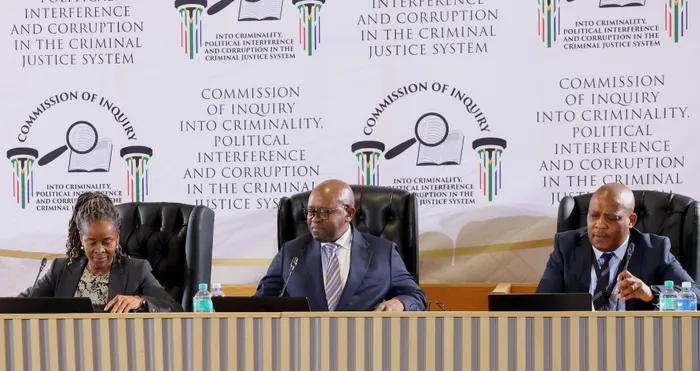
The Madlanga Commission, established to investigate systemic issues within South Africa's criminal justice system, has now completed its first 100 days of operation. This milestone marks a significant point in its mandate to review and recommend reforms for various state institutions. The Commission's work focuses on the South African Police Service (SAPS), the National Prosecuting Authority, the Department of Correctional Services, and the State Security Agency. Its inquiries are aimed at addressing deficiencies and improving the overall effectiveness and integrity of justice delivery across the country. The Madlanga Commission has reached the symbolic milestone of 100 days in operation, a period characterized by intensive investigations and public hearings.
Commission's Genesis and Scope
President Ramaphosa's proclamation officially established the commission, granting it a broad mandate to investigate various components of the criminal justice system. Its scope includes the judiciary, the National Prosecuting Authority, the State Security Agency, the Department of Correctional Services, and metropolitan police departments such as the Ekhurhuleni metro police department and the Tshwane metro police department. This extensive remit positions the Madlanga Commission alongside significant past inquiries. According to observers, the Madlanga Commission shares similarities with the Farlam Commission, which investigated the Marikana massacre, and the Zondo Commission, which focused on state capture, particularly in their shared emphasis on examining the South African Police Service. This focus on the South African Police Service (SAPS) is a recurring theme in major national commissions, showing persistent concerns within the institution.
One of the Commission's initial points of focus involved the decommissioning of the Presidential Protection Services' Special Task Force, known as the PKTT. This action was reportedly undertaken by the Police Minister, his chief of staff, and several senior South African Police Service generals. The decommissioning of the PKTT by these high-ranking officials became a critical area of inquiry early in the Commission's proceedings. The Commission's work is proceeding at a deliberate pace, with plans for its conclusion in the near future. Officials anticipate that by the end of its next 100-day period, the Commission will be nearing the completion of its investigative proceedings and report compilation. This timeline suggests a focused effort to deliver its findings and recommendations efficiently.
Transparent Hearings and Public Confidence
The Madlanga Commission, initially set to conclude its work by mid-March, received an extension until the end of August. This extension provided additional time for thorough investigation and the full gathering of evidence. During its proceedings, a constitutional and administrative law matter emerged concerning the authority to dissolve the Presidential Protection Services' Special Task Force, known as the PKTT. The question centered on whether the Minister of Police or the South African Police Service (SAPS) National Commissioner held this power. This particular legal question noted potential overlaps or ambiguities in authority within the criminal justice system. Actions taken by the Minister in relation to the PKTT created significant suspicions, which contributed to his subsequent placement on extended special leave. This development showed the gravity of the issues being investigated and the Commission's impact on high-level officials.
Hearings within the Commission prominently featured testimonies from Kat Matlala and TK Molefe, with senior SAPS officials linked to their involvement. The Commission structured its hearings into three distinct phases. The first phase involved testimonies from Lieutenant General Nhanhla Mkhwanazi and other related individuals. This initial stage set the factual groundwork for the subsequent proceedings. The second phase permitted persons named or implicated in the evidence to present their own cases, offering them an opportunity to respond to allegations. This provision ensured a measure of fairness and due process for those whose conduct was under scrutiny. Finally, the third phase allowed Lieutenant General Mkhwanazi and others to provide their concluding responses, bringing a structured closure to the testimonial process.
Justice Mbuyiseli Madlanga and his two commissioners, Adv. Sesi Baloyi, SC, and Adv. Sandile Khumalo, SC, have, through the commission's work, created an impressive impression regarding the criminal justice system. This has fostered confidence in the judiciary, demonstrating the effectiveness of independent inquiry. The commission's public hearings, which are broadcast daily, have served to expose secrets and lies, thereby increasing public knowledge of SAPS functions and problems. This transparency is key for accountability and public trust. Parallel to the Commission's efforts, Parliament also constituted an ad hoc committee. This committee was established to engage in a process similar to the work undertaken by the Madlanga Commission, indicating a broader focus on criminal justice system reform across different branches of government. The establishment of this parliamentary committee signals a multi-pronged approach to addressing systemic issues within the criminal justice sector.
Swift Action and Evolving Justice
The Madlanga Commission's proceedings were catalyzed by revelations made by KZN provincial commissioner, Lieutenant General Nhanhla Mkhwanazi, on July 6, 2025. Lieutenant General Mkhwanazi's testimony focused on the Political Killings Task Team (PKTT), which was managed by Crime Intelligence head, Lieutenant General Khumalo. This specific testimony provided critical insights into the operations and management of a sensitive unit within the SAPS. The Commission has intensively investigated several components of the criminal justice system, including the Ministry, the South African Police Service (SAPS) top structure, the Ekhurhuleni and Tshwane metro police departments, and individuals linked to "Top 5" criminal syndicates. This broad investigative scope indicates a systemic approach to uncovering corruption and malfeasance at various levels.
The nature of evidence utilized in criminal justice procedures has shifted significantly, with a growing reliance on electronic evidence, particularly WhatsApp messages. This change reflects modern communication patterns and their role in criminal activities. A notable pattern observed during the Commission's hearings is that witnesses appearing before it are frequently arrested soon after their testimony, followed by subsequent court appearances. This swift response is attributed to two factors: the detailed evidence emerging from testimonies and the continuous presence of the Investigative Directorate against Corruption (IDAC) during the proceedings. The immediate legal consequences for witnesses show the potency of the evidence being presented and the proactive stance of law enforcement. Prosecutors are now acting on this information without waiting for the Commission's final report, indicating a dynamic and responsive criminal justice process. This immediate action notes a departure from previous practices where judicial processes often awaited the full findings of such commissions.
National Commissioner Gen Fannie Masemola appeared in court on charges related to the Public Finance Management Act and for alleged lack of oversight over departmental contracts. This high-profile court appearance further demonstrates the broad impact of the Commission's work and the heightened scrutiny on senior officials within the criminal justice system. The ongoing proceedings of the Madlanga Commission continue to shed light on critical issues, prompting immediate action and contributing to significant reforms within South Africa's justice institutions.