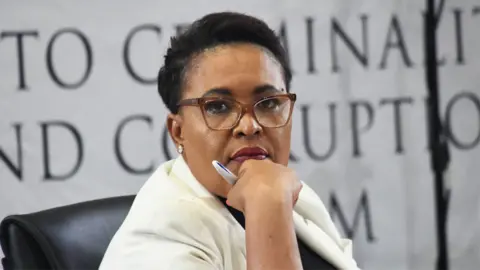
The Madlanga Commission is currently investigating allegations of widespread police corruption in South Africa, a probe that delves into the very fabric of law enforcement and its susceptibility to external influences. The full inquiry includes scrutiny of high-ranking officials, such as Brigadier Rachel Matjeng, who oversaw a significant tender awarded in 2024. This tender, granted to Vusimuzi 'Cat' Matlala's company, Medicare24 Tshwane District, was intended for providing key health services to the police force. The commission's mandate extends beyond individual cases, examining systemic failures and potential complicity within various police units. This investigation also touches upon significant incidents that have shaken public trust, such as the July 2021 seizure of an unprecedented 700kg of cocaine. The substantial narcotics haul, valued at an estimated $17.3 million, was discovered at a warehouse located in southern Johannesburg, raising serious questions about the scale of organized crime operations within the country and the police's response.
Tender Award Scandal Unfolds
The first season of the Madlanga Commission's inquiry, which ran from September to December, laid the groundwork for understanding the complex web of alleged infiltration of police and government by organized crime groups. This initial phase set the stage for subsequent revelations concerning specific instances of corruption. Brigadier Rachel Matjeng, a central figure in the ongoing investigation, testified before the commission regarding the controversial contract awarded to Vusimuzi 'Cat' Matlala's company, Medicare24 Tshwane District. The contract, which was intended to provide vital health services to police personnel, became a focal point of the inquiry due to irregularities surrounding its procurement. Notably, this contract was subsequently cancelled one year after its initial award, indicating significant issues with its legitimacy or execution.
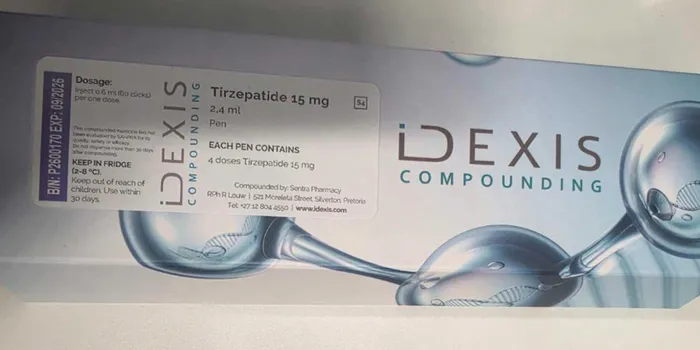
The gravity of the allegations surrounding the tender is showed by the fact that a dozen senior police officers, including Brigadier Matjeng herself, have been formally charged in connection with their roles in awarding the contract. These charges highlight the commission's commitment to holding individuals accountable, regardless of their rank. During her compelling testimony, Brigadier Matjeng disclosed a deeply personal aspect of her involvement, stating that she had maintained an on-off romantic relationship with Vusimuzi 'Cat' Matlala until his arrest last year. This revelation immediately raised concerns about potential conflicts of interest and undue influence in the awarding of the tender. She further stated that she had received gifts from Matlala during their relationship, including doses of the medication Ozempic, adding another layer of complexity to the ethical considerations surrounding the contract.
Vusimuzi 'Cat' Matlala, the beneficiary of the now-cancelled contract and Brigadier Matjeng's former romantic partner, is currently in custody, facing an extensive list of criminal charges. He stands accused of a total of 25 criminal offenses, which notably include attempted murder, among other serious allegations. The sheer number and nature of these charges paint a picture of a significant figure within organized crime networks. The commission continues its diligent investigation into the tender award and related allegations, seeking to uncover the full extent of the alleged corruption and the mechanisms through which organized crime may have sought to exploit public resources and infiltrate law enforcement.
Botched Drug Raids and Disappearances
The Madlanga Commission has meticulously investigated two major drug operations that occurred in 2021, scrutinizing not only the initial police handling of these high-stakes seizures but also the subsequent, alarming disappearances of key evidence. These incidents have cast a shadow over the integrity of drug enforcement efforts. In June 2021, police successfully intercepted a substantial 541kg of cocaine in Durban. The illicit consignment was cleverly concealed within a shipping container carrying animal bone meal, a common tactic used by drug traffickers to evade detection. The seized narcotics were valued at over 200 million rand, an amount equivalent to approximately $12 million or £9 million, noting the significant financial stakes involved in these criminal enterprises.
However, a mere five months after the impressive Durban seizure, a shocking development occurred: the confiscated drugs were stolen from a building owned by the Hawks, the Directorate for Priority Crime Investigation, which is South Africa's elite crime-fighting unit. This audacious theft raised immediate questions about security protocols and potential inside involvement. Major-General Hendrik Flynn, a key witness before the commission, detailed a series of critical missteps by officers that contributed directly to the theft of the Durban cocaine haul. His testimony painted a troubling picture of negligence or, more disturbingly, deliberate actions that facilitated the crime. Flynn stated, with a clear implication of deliberate intent, "I am of the view that it is no coincidence and and that the sequence of events is indeed... By design." Further compounding the issue, by February 2025, an additional 136kg of cocaine had mysteriously disappeared from a forensic science laboratory, indicating a systemic problem extending beyond specific incidents.
Regarding a separate, equally troubling incident, Lieutenant Colonel Nkoana Sebola testified that the circumstances surrounding the July 2021 Johannesburg cocaine seizure were profoundly suspicious. The seizure involved 700kg of cocaine, valued at an estimated $17.3 million, found in a warehouse in southern Johannesburg. Marumo Magane, an analytics officer involved in the operation, admitted to significant blunders in handling the scene of the Johannesburg cocaine seizure. These errors included tampering with exhibits and, astonishingly, loading drugs onto his personal vehicle, a blatant violation of established protocols for handling evidence. When directly questioned by the commissioner about his actions, Magane offered a stark confirmation, responding simply, "That is correct, commissioner."
Magane and others were subsequently arrested for their roles in the compromised Johannesburg operation, facing charges related to their conduct. However, in a development that further fueled public skepticism, the charges against them were controversially dropped in 2022. The commission continues its rigorous examination of these incidents as part of its broader inquiry into police corruption and organized crime links. The objective is to uncover systemic failures, identify potential complicity within law enforcement, and recommend measures to prevent future occurrences. The investigation has unequivocally noted significant irregularities in the management of high-value drug seizures and the subsequent handling of evidence by various police units, eroding public confidence in the criminal justice system.
Allegations of Infiltration and Threats
Oupa 'Brown' Mogotsi, described as an alleged police informant and political fixer, provided key testimony before the Madlanga Commission. His statements delved into purported infiltration within law enforcement agencies and, dramatically, an assassination attempt he claimed to have survived. Mogotsi recounted the harrowing incident, stating, "I ran for my life," conveying the immediate danger he perceived. His testimony, while offering insights into the shadowy world of informants and criminal networks, also contained elements that later proved contentious. During his appearance, Mogotsi notably retracted earlier, sensational claims he had made, specifically that General Nhlanhla Mkhwanazi and the Zulu king were operating as CIA spies. This retraction cast a shadow of doubt over the veracity of some of his prior statements. The Commission's Recommendations Task Team (CRTT) subsequently arrested Mogotsi. He now faces accusations of faking the attempt on his life, bringing into question the credibility of his earlier statements to the commission and complicating the commission's efforts to discern truth from fabrication in the intricate landscape of alleged corruption and infiltration.
Commission's Progress and Future
The diligent work of the Madlanga Commission continues to unfold, with significant milestones being reached in its full investigation. An interim report on the commission's second season was officially delivered to President Cyril Ramaphosa on Friday, marking a key step in the ongoing inquiry into police corruption and the deep-seated links to organized crime. This submission provides the President with an early overview of the findings and progress made during this key phase. The second season of hearings, which concluded recently, was an intensive period of investigation, spanning a total of 64 days and featuring testimony from 32 witnesses. These individuals provided extensive evidence and diverse perspectives on the complex allegations, contributing to a more complete understanding of the issues at hand. This particular phase of the commission's work has focused on various critical aspects, including alleged police involvement in botched raids, as detailed in the drug seizure incidents, and the persistent ties between law enforcement personnel and criminal networks.
Looking ahead, the commission's final report is highly anticipated and is currently expected to be submitted in August. This forthcoming document is poised to be a landmark publication, synthesizing findings from both the initial and subsequent phases of the inquiry. It will offer full recommendations for addressing the systemic issues identified within law enforcement, aiming to foster greater accountability and integrity. The public release of this final report is set to provide much-needed transparency regarding the commission's conclusions and the proposed measures to combat corruption and bolster police integrity across South Africa. The findings and recommendations are expected to inform policy changes and operational reforms designed to restore public trust in the country's police force and strengthen its ability to combat organized crime effectively.