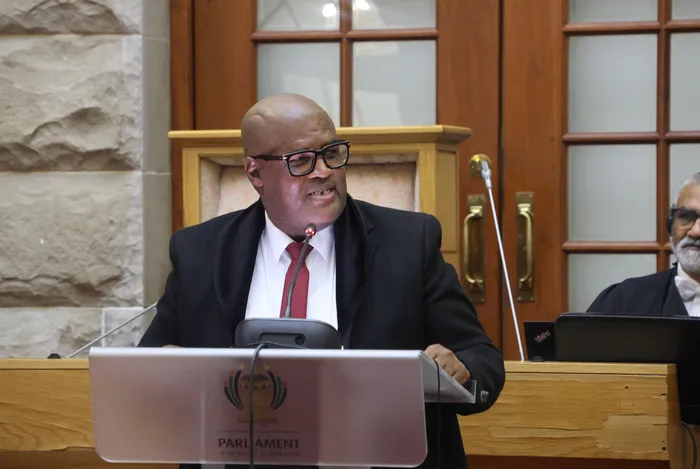
Minister Mzwanele Nyhontso and Deputy Minister Stan Mathabatha recently delivered the Land Reform Department's Budget Vote and Policy speeches in Parliament, outlining the ambitious 2026/27 budget and legislative agenda. The speeches detailed the department's plans for the upcoming fiscal year, emphasizing its strategic priorities and commitment to addressing historical land injustices. Throughout the presentation, land reform was consistently described as both a constitutional imperative and a developmental necessity for South Africa, showing its foundational role in the nation's progress and stability. Minister Nyhontso affirmed the department's commitment to ongoing progress, stating, "We recognise the need to improve further." The department aims to build upon existing initiatives while introducing new measures to accelerate land redistribution and rural development, ensuring that the benefits of land ownership and access are extended to a broader segment of the population. This full approach reflects a dedication to transforming the land landscape and fostering inclusive growth.
Budget Allocation and Land Acquisition
The Department of Land Reform and Rural Development has received an allocation of R10.336 billion for the 2026/27 financial year, a substantial sum designed to fuel its extensive land reform and rural development initiatives. A significant portion of this budget, R630 million, is specifically earmarked for the acquisition and allocation of approximately 57,751 hectares of land. This land is intended for redistribution to eligible beneficiaries and to enhance tenure security, providing stability and opportunities for those who have historically been dispossessed. Additionally, R388 million has been allocated to provide key post-settlement support, including the development of essential infrastructure and direct assistance for agricultural production, for land already distributed to beneficiaries. This funding ensures that recipients are not only granted land but also equipped with the resources needed to make it productive and sustainable.
During the previous reporting period, the department demonstrated tangible progress by acquiring approximately 53,000 hectares of land. Following this acquisition, more than 35,000 hectares were subsequently allocated to qualifying individuals and communities, marking a significant step towards equitable land distribution. This allocation included over 20,000 hectares designated specifically for women beneficiaries, noting the department’s commitment to empowering women in rural areas. 13,000 hectares were allocated to youth beneficiaries, supporting the next generation of farmers and land managers. These targeted efforts reflect a strategic approach to addressing historical imbalances and fostering economic participation among vulnerable groups. In addition to these allocations, more than 700 farm dwellers and labour tenants received land during this period, directly addressing the land rights of those who have long resided on and worked the land.
The department also reported substantial progress in resolving long-standing labour tenant matters, a critical aspect of land reform aimed at securing the rights of those who have historically worked on farms without formal ownership. With the invaluable support of the Special Master, 61 labour tenant cases were successfully finalized, bringing resolution and security to these families. In a separate, but equally impactful initiative, an additional 206,000 hectares of land were transferred from the department to affected communities. This significant transfer was carried out under the provisions of the Transformation of Certain Rural Areas Act, contributing broadly to land reform objectives by formalizing communal land ownership and management. These efforts collectively show the department's multifaceted approach to land acquisition, allocation, and the resolution of complex land rights issues.
Key Legislative Reforms Ahead
Two significant pieces of legislation, the Equitable Access to Land Bill and the Communal Land Tenure and Administration Bill, are on track to be presented to Cabinet and subsequently opened for public consultation by June 2026. This ambitious legislative initiative forms a core component of the Land Reform Department's agenda, signaling a concentrated effort to overhaul existing land laws and introduce more equitable frameworks. These Bills are designed to provide strong legal foundations for the department's ongoing efforts in land redistribution and tenure security.
The department aims for the complete parliamentary process for both Bills to conclude by mid-2027. This ambitious timeline indicates an accelerated push to enact these reforms, which are expected to profoundly shape the future of land ownership and access in the country. The successful passage of these Bills is seen as key for addressing systemic issues that have historically hindered effective land reform.
A primary objective of the Communal Land Tenure and Administration Bill is to establish legal tenure for a substantial portion of the population. This legislation is specifically designed to secure the land rights of millions of South Africans residing in former homelands and various communal areas, addressing long-standing issues of insecure land occupancy. The Bill's provisions are anticipated to formalize and protect the land rights of these communities, providing greater stability, fostering economic development, and enhancing their ability to leverage their land assets. The introduction of these Bills shows the department's focus on legislative solutions to land reform challenges, aiming to create a more just and equitable land system for all citizens. The Equitable Access to Land Bill, in particular, is expected to streamline processes and establish clear guidelines for land redistribution, ensuring fairness and efficiency in the allocation of land resources.
Rural Renewal and Development Initiatives
The Land Reform Department has allocated a substantial R723 million for its Rural Development Programme in the 2026/27 financial year, demonstrating a strong commitment to uplifting rural communities. This allocation is part of an even larger medium-term commitment, with a projected allocation of R2.658 billion over the medium term, signaling sustained investment in rural upliftment. This significant funding supports various initiatives aimed at improving rural infrastructure, enhancing service delivery, and creating economic opportunities in underserved areas. Over the medium term, approximately R1.6 billion is earmarked specifically for new infrastructure projects, which will include critical developments such as roads, water systems, and community facilities, all essential for improving the quality of life in rural regions.
The National Rural Youth Service Corps (NARYSEC) is set to receive R291 million, reflecting continued and significant investment in youth development and skills training within rural areas. This funding will enable NARYSEC to expand its programs, providing vital training and support to young people. Through NARYSEC, the department projects to link 1,227 young people to employment or small enterprise opportunities, directly addressing youth unemployment and fostering entrepreneurship in rural communities. Additionally, a technology research and development partnership, currently involving the Council for Scientific and Industrial Research (CSIR) and the Department of Basic Education, will be expanded to encompass five rural schools. This expansion aims to enhance educational opportunities and technological access in these communities, bridging the digital divide and preparing students for future challenges.
The department is also actively developing a National Rural Development Policy and a corresponding Rural Development Bill. These full legislative and policy frameworks are intended to provide a structured, coherent, and long-term approach to rural development efforts across the country. The direction and priorities for these initiatives were recently reinforced and confirmed at the Rural Development Indaba in Mangaung, where a broad national consensus on development priorities was established. This consensus reflects a shared vision among various stakeholders for a vibrant and prosperous rural South Africa.
Minister's Vision and Imperative
A full national land audit is also underway, according to the department, which will provide key data to inform future land reform strategies and ensure transparency. The Equitable Access to Land Bill, once enacted, will establish a dedicated Land Reform Agency to streamline processes, improve efficiency, and ensure equitable access to land for all qualifying South Africans. This agency is expected to play a key role in accelerating the pace of land redistribution and resolving land-related disputes. Additionally, the National Rural Youth Service Corps (NARYSEC) is projected to link 1,227 young people to employment or small enterprise opportunities, showing the department's commitment to empowering the youth and stimulating rural economies. Minister Nyhontso's vision for land reform extends beyond mere redistribution; it encompasses holistic rural development, economic empowerment, and the establishment of secure land rights for all citizens, recognizing land reform as a fundamental pillar for South Africa's continued progress and stability. The combined efforts in legislative reform, budget allocation, and targeted development initiatives demonstrate a strong and forward-looking strategy to address one of the nation's most pressing challenges.