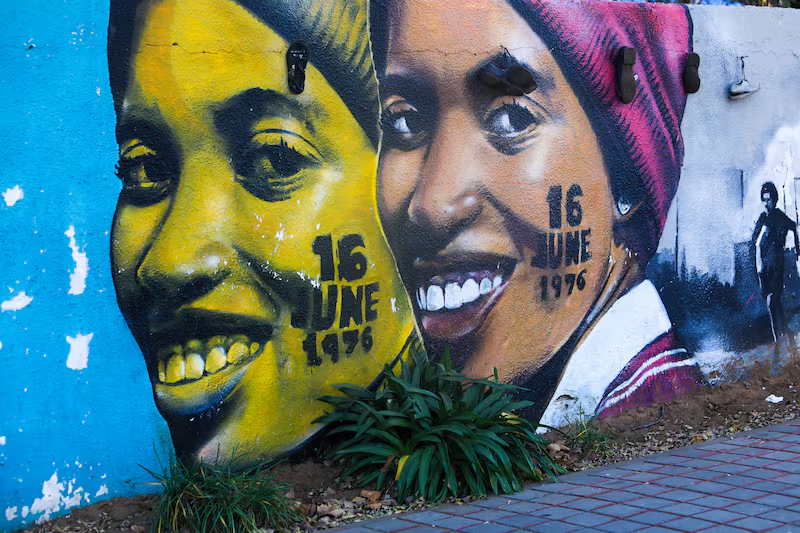
On June 16, 1976, an estimated 15,000 children gathered in Soweto, South Africa, to protest a government plan stipulating that half their school subjects would be taught in Afrikaans. This specific demand from the apartheid regime ignited widespread anger among students and their communities. The demonstration marked a key moment against the apartheid state, as students mobilized to oppose the imposition of the language, which many viewed as the tongue of their oppressors and a symbol of their subjugation. The mass protest aimed to challenge the educational policies of the National Party, which enforced racial segregation and inequality throughout the country. This significant event in Soweto drew international attention to the injustices of the apartheid regime, exposing the brutal realities faced by black South Africans.
Seeds of Discontent
The apartheid state was at its zenith in self-confidence in 1975, projecting an image of unwavering control and stability both domestically and internationally. This period of perceived strength, however, masked deep-seated discontent and simmering tensions within the segregated society. Amidst this period, a "multinational" football tournament took place in 1974 at the Rand Stadium in Joburg, featuring four teams representing white, black, Indian, and coloured populations. The tournament was an unusual attempt by the regime to showcase a form of controlled interaction, yet it meticulously maintained racial divisions. The matches drew significant public interest, drawing large crowds that were, however, fully segregated, with 50% white spectators and 50% "non-white" attendees. Despite the rigid segregation, the tournament proceeded peacefully, perhaps offering a false sense of security to the apartheid government regarding its ability to manage racial interactions. This fragile peace, however, would soon be shattered by the events of June 1976.
Soweto Uprising Erupts
Police opened fire on June 16, 1976, as students gathered to protest educational policies in Soweto, specifically the mandatory use of Afrikaans in their schooling. The initial student demonstration, which began with thousands of schoolchildren marching peacefully, quickly escalated into widespread violence when confronted by security forces. The police response was immediate and lethal, turning a student protest into a bloody confrontation. As security forces confronted the protestors, hundreds of children were reportedly wounded or killed, marking a tragic and brutal suppression of dissent. The events marked a significant escalation in the confrontation between the apartheid state and its opponents, transforming the nature of resistance. The violence intensified as the day progressed, spreading beyond the initial protest sites and drawing international attention to the unrest in South Africa. Images and reports of the casualties, particularly of young children, galvanized global condemnation. The incident in Soweto became a symbol of resistance against the National Party's policies, which mandated the use of Afrikaans in schools, and a stark reminder of the regime's brutality. The response by the police to the student protest led to further widespread condemnation and galvanized anti-apartheid movements both within South Africa and across the world, intensifying calls for sanctions and boycotts against the regime.
Enduring Legacy of Resistance
June 16, 1976, marked the beginning of the National Party's countdown to its loss of power, according to historical assessments. The brutal suppression of the Soweto Uprising fundamentally altered the political landscape, igniting a new wave of resistance and exposing the regime's inherent instability. The government never fully regained its confidence after the Soweto Uprising, despite continued official pronouncements to the contrary and attempts to project an image of control. The events of that day shattered any illusions of passive acceptance of apartheid, demonstrating the profound determination of the oppressed to fight for their rights. The legacy of the Soweto Uprising continues to inspire movements for justice and equality, serving as a powerful reminder of the consequences of state-sponsored oppression and the enduring spirit of resistance.