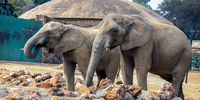
The continued confinement of Lammie, Ramadiba, and Mopane at the Johannesburg Zoo relies on the assumption that their needs can be adequately met within the facility. However, available evidence indicates that this assumption is no longer secure. This critical assessment challenges the long-held belief that a traditional zoo environment can sufficiently cater to the complex requirements of these highly intelligent and social animals. Lammie, Ramadiba, and Mopane are the last elephants held in a zoo in South Africa. The Johannesburg Zoo elephants are now the only remaining elephants of their kind housed in a traditional zoo setting across the country, making their situation particularly unique and subject to intense scrutiny regarding their welfare.
Financial Distress Threatens City Operations
Finance Minister Enoch Godongwana recently warned that Johannesburg’s financial turmoil now threatens not only the city itself, but potentially the broader national economy. This warning notes the deepening financial challenges faced by the city, which could inevitably impact its ability to fund non-essential services, including the upkeep of its zoo. Treasury reportedly described Johannesburg as being in “severe financial distress,” with liabilities vastly exceeding immediately available cash reserves. This assessment from Treasury shows the precarious fiscal situation within the municipality, suggesting a significant strain on public resources. The city's financial instability could have wider implications beyond its immediate jurisdiction, potentially leading to cuts across various departments and services. Godongwana's statement emphasized the potential for Johannesburg's economic difficulties to impact the national financial landscape, drawing attention to the systemic risks involved. The reported lack of sufficient cash reserves to cover liabilities indicates significant budgetary pressures on the city's administration, raising questions about the long-term sustainability of maintaining facilities like the Johannesburg Zoo to the required standards for elephant welfare.
Welfare Concerns in Captivity
Observations at the Johannesburg Zoo frequently indicated that the elephants were not provided with fresh browse on most days, despite its central role in their natural diet. This lack of dietary enrichment and natural foraging opportunities is a significant concern for their overall health and psychological well-being. Documentation revealed indicators such as inactivity, stereotypic movement, and prolonged immobility among the elephants, particularly in Lammie, the oldest of the three. These behaviours are often associated with stress and boredom in captive elephants, pointing to an environment that may not be sufficiently stimulating or appropriate for their species-specific needs. Reports further noted inadequate shade within the enclosure, which limits the elephants’ capacity to regulate their exposure to heat. This deficiency can lead to significant discomfort and potential health issues, especially given the climate of Johannesburg.
Concerns have also been raised regarding the design and safety of the elephant enclosure. This includes fencing that permits close contact between elephants and visitors, alongside internal features inside the enclosure that may present direct risks to the animals. Such design flaws not only compromise the safety of the elephants but also raise questions about the zoo's adherence to modern welfare standards for large, potentially dangerous animals. One incident involved Lammie reportedly being pushed into a moat, an event that potentially contributed to ongoing effects on her mobility. This specific incident notes the physical dangers that may exist within the enclosure, showing the need for a thorough review of its safety protocols and structural integrity. The combination of dietary deficiencies, behavioural indicators of distress, inadequate environmental provisions, and safety concerns paints a challenging picture of the elephants' current living conditions.
Viable Alternatives Exist
An alternative to the elephants' current situation at the Johannesburg Zoo exists, according to advocates, suggesting that their continued confinement is not the only option. The relocation of Charlie, now known as Duma, from the Pretoria Zoo several years ago serves as a concrete example, countering claims that captive elephants cannot be successfully moved into more natural environments. This prior relocation demonstrates that such transfers are feasible and have been executed within the region, providing a practical blueprint for similar initiatives. The successful integration of Charlie into a more natural setting offers a compelling counterpoint to arguments that relocation is too complex or risky for elephants accustomed to a zoo environment. This precedent suggests that the challenges associated with moving large animals can be overcome with proper planning and resources, ultimately leading to improved welfare outcomes. The existence of such a successful model strengthens the argument for exploring similar opportunities for Lammie, Ramadiba, and Mopane, offering a pathway towards a future where their needs are met in an environment more conducive to their natural behaviours and well-being.