Johannesburg has seen a notable reduction in power disruptions, bringing a measure of relief to residents and businesses alike. The latest data indicates a significant positive shift in the city's electricity supply reliability. Specifically, unplanned outages have fallen by approximately a fifth compared to the previous quarter, signaling a tangible improvement in grid stability and maintenance efforts. Concurrently, the average duration customers spend without electricity has also decreased dramatically, dropping from just over 24 hours to around 14 hours. This reduction in downtime means that when disruptions do occur, residents are experiencing shorter periods without power. City Power reports that outages are becoming less frequent, and restoration times have improved dramatically across the City of Johannesburg. This efficiency is further showed by the fact that almost 97% of power faults are now repaired within 24 hours, indicating that more faults are being resolved within a day. These statistics point to a concerted effort to enhance the resilience and responsiveness of the city's power infrastructure.
The Financial Toll of Blackouts
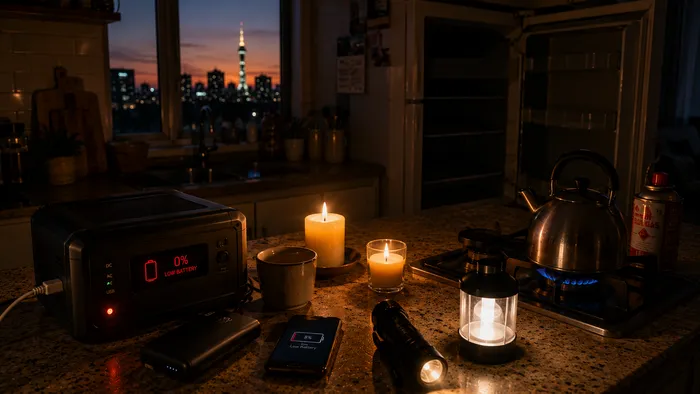
Despite these improvements in overall power reliability, Johannesburg residents continue to face significant costs associated with outages. The ongoing threat of electricity interruptions compels households to frequently invest in backup power solutions to mitigate the impact of disruptions on their daily lives and protect their assets. For instance, a typical 100Ah lithium battery, when powering essential loads such as lights and charging devices, can sustain a household for approximately eight hours, provided electricity use is carefully managed. However, reliance on such systems often notes the transient nature of their benefit; a refrigerator, for example, will only retain its cold temperature for a few hours without continuous power, putting perishable goods at risk.
More extensive solutions are available for those seeking greater resilience and longer-term independence from grid failures. A rooftop solar system combined with battery storage offers a more strong alternative, capable of powering essential appliances long after a standard inverter battery might have depleted its charge. Such an integrated system provides a more full safeguard against prolonged outages, ensuring continuous operation of critical household functions. These long-term solutions, however, represent a substantial financial outlay, often requiring significant upfront investment. Beyond the cost of backup systems, the financial burden is compounded by the cost of replacing appliances damaged by power fluctuations or surge-related issues. A mid-range television alone could cost between R8,000 and R15,000 to replace, representing a considerable unplanned expense for many families. Similarly, a desktop computer, essential for many in today's digital world, may cost between R15,000 to R35,000 to replace if damaged by power surges. For some households, the cumulative impact of appliance damage, lost perishable goods, and other related expenses from a single power outage can result in losses well beyond R50,000, showing the severe economic consequences of even temporary grid instability.
Navigating Compensation Claims
Customers seeking compensation for items damaged during power outages face a structured claims process that requires diligent documentation and adherence to specific guidelines. To initiate a claim, individuals are typically required to provide several pieces of documentation. This often includes an outage reference number, which is key for linking the damage to a specific power disruption event and verifying the timing of the incident. Claimants must also submit photographic evidence of the damaged item to substantiate the claim, providing visual proof of the extent of the damage. Further requirements involve obtaining quotations for the repair or replacement of the affected goods, allowing City Power to assess the financial impact accurately. Crucially, proof of ownership for the items in question is also required, ensuring that claims are legitimate and made by the rightful owner.
Navigating compensation for spoiled food presents additional hurdles for residents, noting a significant gap in the claims process. Unlike damaged appliances or electronics, proving the monetary value and direct loss of perishable goods can be more challenging. The absence of specific proof of purchase for individual food items, such as detailed grocery receipts for every affected product, complicates the claims process significantly. This difficulty often means that even when significant food spoilage occurs due to prolonged outages, residents may struggle to recover these costs through formal compensation channels, leading to unrecouped losses.
Resident Experiences and Backup Solutions
The impact of power outages on household goods varies depending on the nature of the item and the duration of the disruption. For instance, a full freezer can typically maintain food in a frozen state for approximately 48 hours, provided its door remains closed during a power outage, offering a limited window of safety for frozen provisions. In contrast, a refrigerator will stay cold for only a few hours, necessitating quick action or reliable backup to prevent spoilage. For households seeking immediate and flexible power during disruptions, a small petrol generator offers a practical solution capable of running essential appliances, including a refrigerator, lights, a television, and Wi-Fi. This provides a temporary but effective means of maintaining critical services. However, the financial repercussions of prolonged outages can be substantial; a spoiled freezer full of food can cost around R2,000 to replace, a direct and immediate financial hit for affected families. Beyond food items, the damage extends to electronics and other household goods, as previously noted. A desktop computer, for instance, represents a significant investment, with replacement costs ranging from R15,000 to R35,000. These substantial expenses show the ongoing financial burden faced by residents despite improvements in overall power grid reliability in Johannesburg, illustrating that the cost of outages extends far beyond the inconvenience of lost electricity.