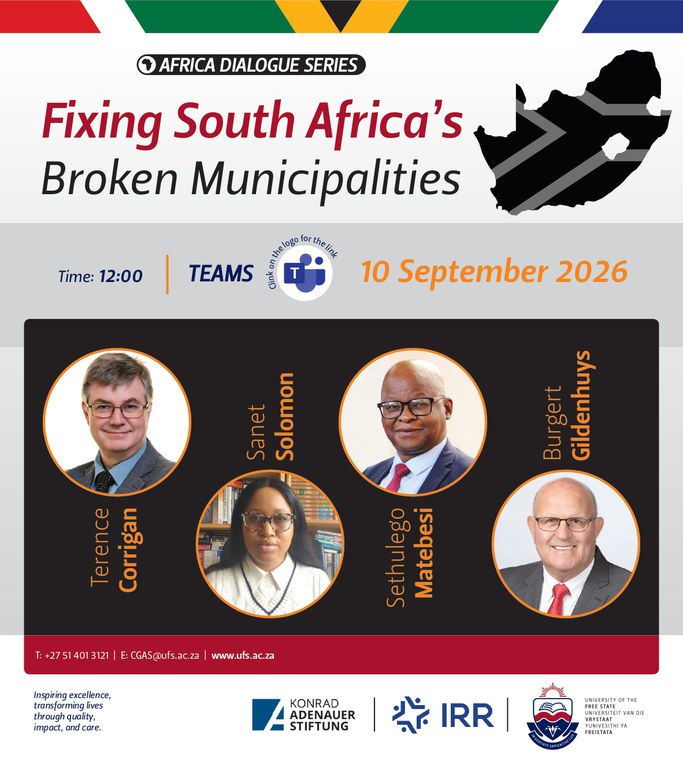
A new study from the Institute of Race Relations (IRR) asserts that South Africa requires a radical overhaul of its local government system. The report notes that successful reform hinges on institutional differentiation, proposing that municipal powers, responsibilities, and fiscal autonomy be structured according to the specific circumstances and capacity of individual municipalities. This approach aims to move away from a uniform system towards one that is more responsive to diverse local needs. The IRR study suggests this differentiation is key for improving governance and service delivery across the country.
System's Fundamental Flaws
Municipalities across South Africa exhibit vast differences in economic foundation, institutional capacity, revenue-raising potential, infrastructure requirements, and the specific functions they are equipped to perform. The current local government system, however, has imposed broadly uniform responsibilities and institutional arrangements on these diverse entities. According to the Institute of Race Relations (IRR) study, this uniform approach fails to account for the inherent disparities among municipalities. Some municipalities are deemed inherently and structurally unviable, lacking a sufficient rates base, essential skills, municipal expertise, and a strong local economy. This fundamental mismatch between the diverse realities of local government and the standardized system contributes significantly to widespread service delivery failures and financial distress. The IRR analysis indicates that addressing these structural flaws is critical for any meaningful reform effort.
Proposed Solution: Differentiation
The Institute of Race Relations (IRR) study argues that South Africa’s current model of "wall-to-wall" municipalities, which come with extensive developmental mandates, is no longer fit for purpose. This uniform approach, which assigns similar responsibilities to all municipalities regardless of their capacity or economic base, is identified as a core contributor to systemic failures. The IRR proposes a differentiation framework that would allow for varying levels of autonomy, responsibilities, and fiscal arrangements based on each municipality's unique characteristics. This system would acknowledge the vast differences in economic foundation, institutional capacity, and revenue-raising potential that exist across the country's local government entities. By moving away from a one-size-fits-all model, the study suggests that a more tailored approach could enhance governance and improve service delivery outcomes. This proposed solution aims to match municipal functions with actual capabilities, fostering more sustainable and effective local administration.
Broader Challenges and Support
The Institute of Race Relations (IRR) study notes the damaging effects of politicisation within local government administrations, identifying it as a significant challenge. This study, which advocates for a radical overhaul of South Africa's local government system, received generous support. The Konrad Adenauer Stiftung provided funding for the research and production of the report, enabling the IRR to conduct its analysis on municipal reform.
Expert Commentary
The Institute of Race Relations (IRR) study, titled "Local government: crises decades in the making and how to deal with them," examines the foundational issues plaguing South Africa's municipal system. This analysis delves into problems that have developed over an extended period. The current local government system, which the IRR's report scrutinizes, has been operational for close to three decades.