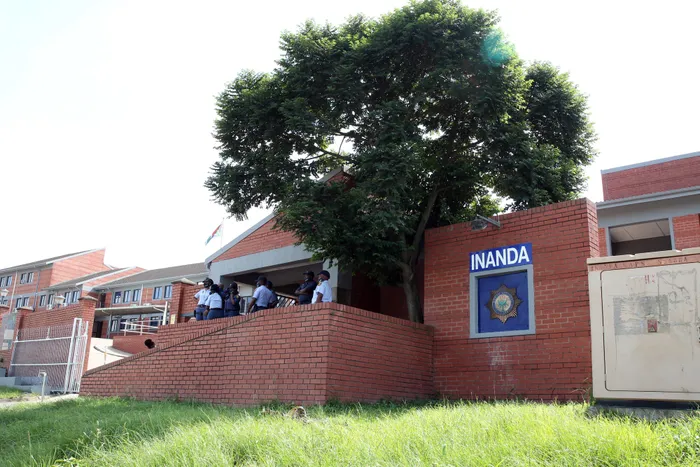
The Inanda police station recorded the highest number of contact crimes across South Africa during the fourth quarter of the 2025/26 financial year, which spanned January to March 2026. During this three-month period, the station, located in KwaZulu-Natal, reported a total of 1,156 contact crimes. This figure places Inanda at the top nationally for this category of offenses, according to the latest crime statistics released by the authorities. The data shows significant crime challenges in specific areas, with Inanda emerging as a critical focal point for law enforcement efforts.
KwaZulu-Natal's Crime Hotspots
KwaZulu-Natal province demonstrates a disproportionate representation in the national crime landscape. Nine of the 30 police stations reporting the highest number of contact crimes or offenses against a person are located within KwaZulu-Natal. This concentration notes particular areas within the province that are struggling with high rates of direct interpersonal violence. Beyond Inanda, other police stations in the province included in the top 30 for contact crimes comprise Plessislaer, Umlazi, KwaDukuza, Chatsworth, Ntuzuma, Durban Central, Empangeni, and Verulam. These stations contribute significantly to the provincial crime statistics in this category, indicating widespread issues beyond a single locality.
Further illustrating the provincial crime burden, KwaZulu-Natal also accounts for a third of the top 30 police stations that reported 17 community-reported serious crimes. This broader category of serious offenses reflects a wide array of criminal activities impacting communities. The provincial stations listed among the top 30 for these community-reported serious crimes consist of Inanda, Durban Central, Phoenix, Plessislaer, Chatsworth, KwaDukuza, Pinetown, Empangeni, Umlazi, and Verulam. The inclusion of multiple stations from the province in both contact crime and community-reported serious crime categories indicates a broad distribution of serious crime across various communities within KwaZulu-Natal, necessitating full crime prevention and intervention strategies.
Defining Contact Crimes
Contact crimes are clearly defined by police as offenses involving direct interaction between the perpetrator and the victim. This category encompasses a range of severe criminal acts, noting the violent nature of these incidents. Critical offenses such as murder and attempted murder fall under this classification, reflecting direct threats to life. Various sexual offenses are also included, emphasizing crimes that involve direct physical violation. Contact crimes incorporate assault with intent to inflict grievous bodily harm, indicating severe physical aggression, and common assault, which covers less severe but still direct physical violence. Robbery involving aggravating circumstances, where force or threats of force are used directly against a victim, also forms a part of this category.
Beyond these direct interactions, contact-related crimes are classified separately to distinguish them from offenses where direct personal contact between the perpetrator and victim is central. These contact-related offenses include arson, which involves the deliberate setting of fires, and malicious damage to property, which refers to the intentional destruction or damage of property. While serious, these crimes typically do not involve the same direct, interpersonal violence characteristic of contact crimes, hence their distinct classification.
Broader Crime Trends Across South Africa
Nationally, the crime statistics for the first three months of 2026 present a mixed picture. Murders, a key indicator of violent crime, decreased by 9.5% during the first three months of 2026, according to official statistics. This national decline offers a glimmer of positive news amidst the challenges. Geographically, several major provinces contributed to this national improvement. Gauteng, the Western Cape, Eastern Cape, and KwaZulu-Natal all recorded notable decreases in murders during this period, suggesting that crime reduction efforts in these populous regions may be having an impact.
Despite the national decrease in murder rates, a closer look at the per capita figures reveals significant provincial disparities. Across South Africa, there were 8.2 murders per 100,000 people during the first three months of 2026, providing a national benchmark. However, certain provinces continue to experience exceptionally high rates. The Eastern Cape registered the highest murder rate in the country, with 14.3 murders per 100,000 people, indicating a severe challenge in that region. Following the Eastern Cape, the Western Cape recorded the second-highest murder rate with 12.8 murders per 100,000 people, showing persistent issues with violent crime in this province as well. KwaZulu-Natal’s murder rate stood at 8.8 per 100,000 people during the same period, slightly above the national average, further emphasizing the complex crime landscape within the province, even as it contributed to the national decrease in total murder incidents. These statistics highlight the ongoing need for targeted interventions to address the root causes of violent crime in specific areas and provinces.