Ifm's conductivity sensors are set to enhance water management and industrial efficiency in South Africa by providing precise measurements key for various applications. Conductivity measurement indicates a liquid's electrical current conduction capability, directly correlating with dissolved salts and containment levels. This technology is particularly valuable in food processing, where it optimizes Clean-in-Place (CIP) cycles. Such optimization reduces chemical consumption and water usage while maintaining hygiene standards. Ifm will showcase these advancements at Electra Mining Africa, exhibiting from September 7 to 11, 2026, at stand A06 in Hall 7.
Precision Water Quality Monitoring
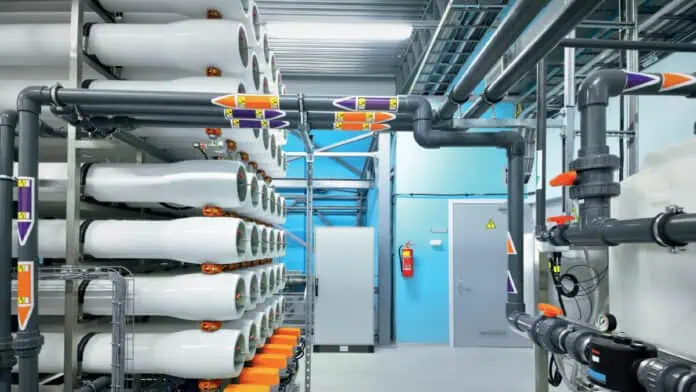
Conductivity measurement plays a key role in verifying the quality of drinking water, process water, and ultrapure water, according to ifm. This measurement reflects how well a liquid conducts electrical current, which is directly related to the concentration of dissolved salts and contaminants present. The technology also supports monitoring the efficiency of various water treatment processes, including filtration, reverse osmosis, and demineralisation. This capability is particularly useful in industrial settings where consistent water quality is essential for operations, ensuring that treated water meets stringent quality standards for its intended use.
In Clean-in-Place (CIP) processes, conductivity measurement aids in distinguishing between the product, rinse water, and cleaning agents. This distinction allows for precise control of CIP cycles, contributing to optimized resource usage and hygiene. By accurately identifying the interface between these different liquids, manufacturers can ensure that cleaning cycles are effective without wasting valuable resources such as water and cleaning chemicals. This application is particularly critical in the food and beverage industry, where maintaining impeccable hygiene is critical.
The integration of digital communication via IO-Link further enhances the utility of these sensors. IO-Link enables the extraction of high-resolution process data, temperature-compensated values, diagnostic information, and configuration settings. This digital interface facilitates more sophisticated monitoring and control over water quality and industrial processes, providing operators with detailed insights into their systems. The ability to transmit precise, real-time data allows for proactive adjustments and maintenance, thereby improving overall operational efficiency and reliability.
Industrial Process Optimization
Conductivity measurement serves to prevent downstream corrosion, fouling, and product losses in industrial applications. By continuously monitoring conductivity levels, operators can detect changes that might indicate the presence of corrosive agents or substances that lead to fouling. This early detection capability helps in implementing preventative measures before significant damage occurs to equipment or infrastructure.
In sectors such as mining and power generation, conductivity acts as an early warning signal for issues like scaling and mineralisation within cooling circuits. Scaling and mineralisation can severely impede heat transfer efficiency and lead to costly equipment downtime. The ability to identify these problems at an incipient stage allows operators to address potential problems before they lead to significant operational disruptions or equipment damage, thereby safeguarding machinery and maintaining production schedules. The continuous monitoring of conductivity in these critical applications ensures that industrial processes run smoothly and efficiently, minimizing the risk of unexpected failures.
ifm's Advanced Sensor Technology
Ifm's LDL family of conductivity sensors integrates the measuring element and evaluation electronics within a single housing, offering a compact and strong solution. The LDL sensors communicate digitally via IO-Link or through traditional analogue outputs, providing flexibility for integration into various control systems. This dual communication capability allows for smooth adoption in both modern, digitally networked plants and facilities relying on conventional analogue signals.
The LDL101 sensor provides precise measurements down to 0.04 µS/cm, making it suitable for ultrapure water systems found in pharmaceuticals, electronics manufacturing, and hydrogen electrolysis. Its high sensitivity ensures that even minute changes in conductivity are detected, which is key for applications demanding the highest water purity. The design of ifm's inductive sensors provides exceptional resilience to fouling, coating, and aggressive media. This strong construction ensures long-term reliability and accuracy, even in challenging industrial environments where sensor performance might otherwise degrade rapidly.
Meanwhile, the LDL400 sensor maintains a broad measurement range, capable of detecting conductivity from 100 to 2,000,000 µS/cm. The LDL400's polypropylene construction provides continuous corrosion resistance, further enhancing its durability and suitability for use with aggressive substances. This wide measurement range and material resilience make the LDL400 a versatile tool for a diverse array of industrial processes, from monitoring wastewater to controlling chemical concentrations. The combination of advanced sensor technology, strong design, and flexible communication options positions ifm's conductivity sensors as a critical component for optimizing water management and industrial efficiency across South Africa's diverse industrial landscape.