Close to 300 Ghanaian nationals boarded a repatriation flight from South Africa on Wednesday, organized by the Ghanaian government amidst concerns over xenophobia and documentation issues. The flight departed with 295 Ghanaians after officials processed the passengers, marking a significant moment in the ongoing discussions surrounding foreign nationals in South Africa. South African officials informed the Daily Maverick that only 10 of the approximately 300 Ghanaians initially slated to board the flight on Wednesday possessed proper documentation, noting the widespread nature of the immigration challenges. The Ghanaian government facilitated the departure of its citizens from South Africa, responding to a complex situation involving both perceived threats and regulatory hurdles. This initial flight showed the urgent need for resolution for many Ghanaian nationals residing in the country. The successful departure of 295 Ghanaians on Wednesday provided a tangible outcome for those seeking to return home amidst the prevailing tensions and administrative hurdles.
Documentation Disputes Emerge
An additional 300 Ghanaian nationals are scheduled for repatriation from South Africa on Sunday, indicating the scale of the ongoing efforts by the Ghanaian government to assist its citizens. The Border Management Authority (BMA) stated that most of the travelers denied departure had overstayed their permitted time in South Africa by more than 30 days, with some exceeding a year. This significant overstay period led the BMA to consequently declare these individuals undesirable, a designation that carries implications for future entry into the country. "The travellers who were denied departure," the BMA explained, "were handed back to the Ghanaian high commissioner for future repatriation should they meet the relevant immigration requirements for departure." This procedure ensures that while immediate departure was denied due to documentation issues, the process for eventual repatriation remains open, subject to adherence to legal protocols. The BMA further clarified that the 295 Ghanaians who were finally allowed to board the flight on Wednesday had successfully navigated these requirements, ensuring their legal departure from South Africa.
The complexities of immigration documentation were further illustrated by specific cases of individuals denied boarding. Among those denied boarding was one passenger presenting a valid asylum-seeker permit, raising questions about the interpretation and acceptance of such documents during departure procedures. This particular case noted the challenges faced by individuals holding specific types of legal residency permits when attempting to exit the country, suggesting potential discrepancies in how these documents are processed at different stages. Another individual encountered issues due to an expired passport and the absence of an emergency travel certificate, which is required for such situations to facilitate legal international travel. The lack of an emergency travel certificate, a key document for those with expired passports, prevented this individual from boarding the repatriation flight, emphasizing the strict requirements for international travel. Authorities also intercepted a third person attempting to depart with two minor children who lacked proper documentation to prove either relationship to the adult or consent for travel, emphasizing the stringent requirements for minors crossing international borders. This incident showed the critical need for full documentation for all family members, especially children, to ensure their legal and safe passage across borders. These individual cases show the multifaceted challenges faced by both travelers and authorities in managing international departures.
Government and Activist Reactions
Ghana's government intends to raise the issue of xenophobia in South Africa at the mid-year summit of the African Union next month, signaling the regional concern over the situation. This move notes the diplomatic implications of the tensions within South Africa regarding foreign nationals. Justice Minister Mmamoloko Kubayi acknowledged public frustration over socioeconomic conditions but cautioned against unlawful and violent conduct, urging citizens to uphold the rule of law. African National Congress (ANC) secretary-general Fikile Mbalula condemned the recent anti-immigrant vigilantism, emphasizing the party's stance against such actions. Mbalula stated the ANC fully backed the South African Police Service and the National Prosecuting Authority in enforcing the Prevention and Combating of Hate Crimes and Hate Speech Act, showing the government's commitment to addressing hate-motivated incidents through legal channels.
Ronald Lamola, the Justice Minister, suggested that outside forces might be deliberately exaggerating the situation to harm South Africa's international standing and reputation. Lamola stated that fake news was circulating on social media about people being killed and mutilated, whereas none had been killed or mutilated in the present wave of xenophobia, according to official reports. This assertion by Lamola directly challenged the narratives circulating online, aiming to correct what he described as misinformation designed to tarnish the country's image. He elaborated on this perspective, saying, "So, in that context, it does appear that there is someone who wants to plant a narrative against South Africa, but where there is reality, we have to face it." This statement reflects a concern that misinformation could exacerbate tensions and misrepresent the true nature of events on the ground, potentially influencing international perceptions unfairly.
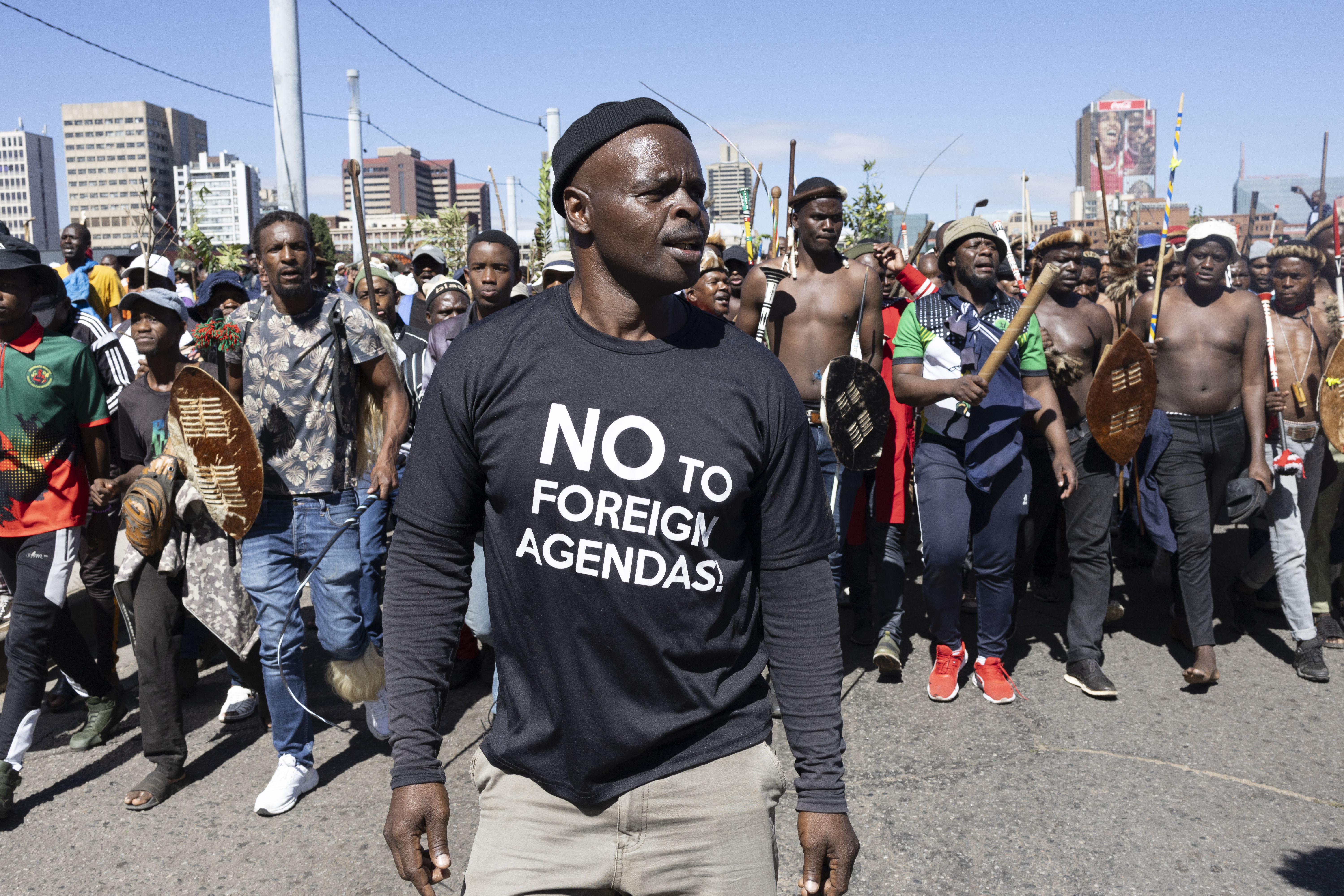
The Justice Minister further commented on the broader geopolitical landscape, linking the current narrative to South Africa's international engagements. "Obviously, with the geopolitical environment and South Africa’s role in the international space, including our case at the ICJ [International Criminal Court], you cannot exclude state and non-state actors trying to erode the human rights standing of South Africa on the global stage," Lamola added. This suggests a belief that the country's actions on the international stage might be attracting undue scrutiny or deliberate attempts to undermine its image. Meanwhile, the March and March movement has threatened to shut down the country if all illegal migrants do not leave by June 30, illustrating the growing pressure from certain activist groups within South Africa. This ultimatum adds another layer of complexity to the already tense situation, potentially leading to further disruptions and social unrest if their demands are not met.
Historical Context and Broader Impact
Loren Landau, a professor of migration and development at the University of the Witwatersrand, suggested that South African politics has long grappled with conflicting ideologies regarding its regional and continental identity. Landau stated, "I think since 1994 there’s always been these tensions in South African politics between the kind of Mbeki’s pan-Africanist global orientation and what Zuma represented … a much more ethnic or nationally based inwardly looking South African transformation." This ongoing tension has influenced national policy and public sentiment, particularly concerning foreign nationals, creating a dynamic environment where different political philosophies vie for dominance. The historical context, therefore, is key for understanding the current manifestations of anti-immigrant sentiment.
Landau further observed a shift towards a more nationalistic stance in recent years, a development he believes has significant implications for the country's regional and international relations. He indicated that the concept of "South Africa-first" has become increasingly dominant, leading the nation to prioritize its own interests over broader continental commitments. "And, over the years, that kind of inwardly looking or South Africa-first kind of idea … has really gained prominence," Landau explained. He added that current events reflect this trend, noting, "So I think these are just the latest incidents in which South Africa is continuing to turn its back on … whether it’s SADC or AU things … to try to really promote South African interests above continental interests." This perspective suggests a deliberate pivot in policy and public discourse away from pan-African solidarity towards a more self-interested approach.
This prioritization, Landau contended, carries significant negative consequences for South Africa's international standing and economic prospects. He articulated that the country's brand, its tourism sector, and its moral authority on the African continent are already suffering as a direct result of these inward-looking policies and the associated xenophobic incidents. Landau remarked, "I think … it is already hurting South Africa — it’s hurt the brand South Africa, it’s hurt South African tourism, it’s hurting South Africa’s moral authority on the continent and its ability to shape continental politics, and it’s going to hurt South Africa’s investment opportunities." These developments, according to Landau, could hinder South Africa's ability to influence regional politics and attract foreign capital, thereby impacting its long-term economic growth and diplomatic leverage. The professor's analysis shows the potential for a self-inflicted wound on the nation's global image and economic future if the current trajectory continues.