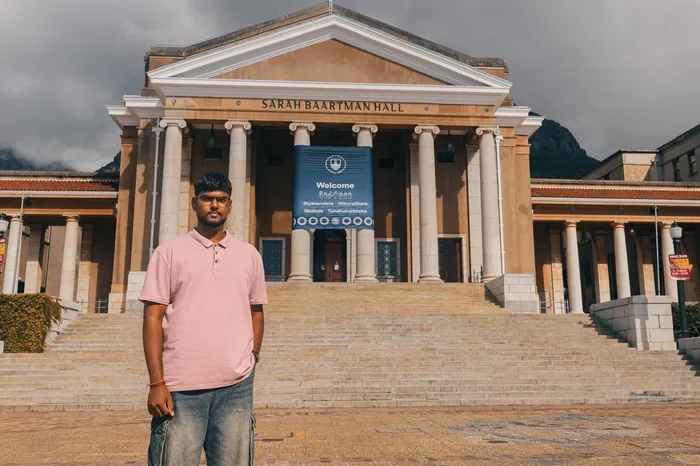
Rishen Krishna Moodley, a third-year Actuarial Science student at the University of Cape Town, is currently pursuing his degree after achieving top academic results at Curro Heritage House in Durban. Moodley, who hails from Durban, finished at the top of his class at Curro Heritage House, a significant accomplishment that set the stage for his tertiary education. His exceptional performance in school showed his academic potential and dedication from an early age. Moodley stated that upon seeing his final school results, "the biggest feeling was relief that the hard work had paid off. It felt like a turning point... It felt like the start of the next chapter." He acknowledged the key role of external support in his journey, noting that the foundation "gave me a platform to concentrate on my academics without worrying about school fees." This early support was instrumental in allowing him to focus entirely on his studies, free from the immediate financial burdens that often challenge aspiring students.
Entering university, Moodley observed a significant shift in personal responsibility. He commented, "What surprised me most after matric was how quickly responsibility shifts onto you," contrasting it with high school where "the framework is provided for you." He added that "the hardest part was adapting to the intensity and pace of university while managing everything independently." This transition demanded a rapid development of self-management skills and a proactive approach to his academic and personal life. Despite the initial challenges, Moodley credits his success to unwavering commitment and a disciplined routine, explaining that "top achievers are not inherently born smart. We simply provide a level of commitment that allows us to achieve the best outcomes." He emphasized that "routine is key" and that he focused on "doing the next thing well," a philosophy that has guided his academic progress at the University of Cape Town. This belief shows his conviction that sustained effort and methodical work ethic are critical to achieving excellence, rather than relying solely on innate talent.
The Unseen Transition
Rishen Krishna Moodley, originally from Durban, experienced a period of significant adjustment during his initial 100 days at university. This early phase of his university life was characterised by profound personal and academic adjustments, as he navigated a new city and a demanding academic environment. His transition into higher education mirrored a broader national discussion in South Africa regarding access and support for tertiary students. In 2016, the country's education debate largely centered on issues of access to higher learning institutions, noting the systemic challenges many students face. Moodley's personal journey, from Durban to the University of Cape Town, reflects the individual experiences within this wider context of educational equity and opportunity. The shift from a structured high school environment to the independent demands of university life required a substantial adaptation period for him, both academically and socially. This personal adjustment phase shows the complexities many students face when entering tertiary education, particularly when moving away from home and establishing a new support system. The initial 100 days proved to be a critical period for establishing habits and finding his footing in a completely new setting.
Navigating Academic and Financial Hurdles
Financial pressures posed a significant challenge to Rishen Krishna Moodley's academic aspirations, threatening to derail his pursuit of a degree in Actuarial Science. However, timely assistance from the Ruta Sechaba Foundation helped alleviate this substantial burden. The foundation, which is celebrating its 10th anniversary this year, provided key support that enabled Moodley to continue his studies without the constant worry of tuition fees and living expenses. This support was vital in allowing him to fully immerse himself in his demanding academic program. As part of its anniversary, the Ruta Sechaba Foundation is conducting a 10-year milestone campaign. This initiative aims to amplify the voices of young South Africans as they transition from school into their careers and navigate life beyond their initial education, showcasing the impact of their work over the past decade. The campaign notes success stories like Moodley's, demonstrating the tangible benefits of sustained philanthropic efforts in education.
Moodley has maintained that achieving academic excellence does not require sacrificing personal balance. He asserts that a full approach to education allows for both high achievement and a well-rounded personal life, emphasizing the importance of mental and physical well-being alongside academic rigour. The support from organizations like the Ruta Sechaba Foundation shows the indispensable role external assistance plays in enabling students to overcome financial obstacles, allowing them to focus more fully on their academic pursuits and personal development. This framework of support helps students like Moodley manage the multifaceted demands of tertiary education without undue financial strain, fostering an environment where they can thrive holistically.
Cultivating Success Beyond Academics
The transition from Durban to Cape Town presented a significant personal challenge for Rishen Krishna Moodley, extending beyond the academic adjustments he faced. Beyond the initial academic adjustments, his second year at the University of Cape Town introduced further complexities, specifically with coinciding deadlines for his own coursework and responsibilities as a tutor. This period required Moodley to adeptly balance his personal studies with mentoring other students, adding another layer to his university experience and demanding advanced time management skills. This dual role as both a student and a mentor further solidified his commitment to his academic community and his personal growth.
Moodley maintains that academic excellence is not solely a product of innate ability. He stated, "Top achievers are not inherently born smart. We simply provide a level of commitment that allows us to achieve the best outcomes." This perspective emphasizes the critical role of sustained effort and dedication in achieving academic success rather than relying on natural talent or inherent genius. His experience suggests that consistent commitment, coupled with strategic planning and effective time management, is a primary driver for high performance in a demanding academic environment like the University of Cape Town. Moodley's approach to balancing his academic and tutoring roles reflects this philosophy, requiring methodical planning and consistent engagement to meet all obligations effectively and maintain his high standards. His journey exemplifies how dedication and external support can pave the way for success in higher education, transforming challenges into opportunities for growth and achievement.