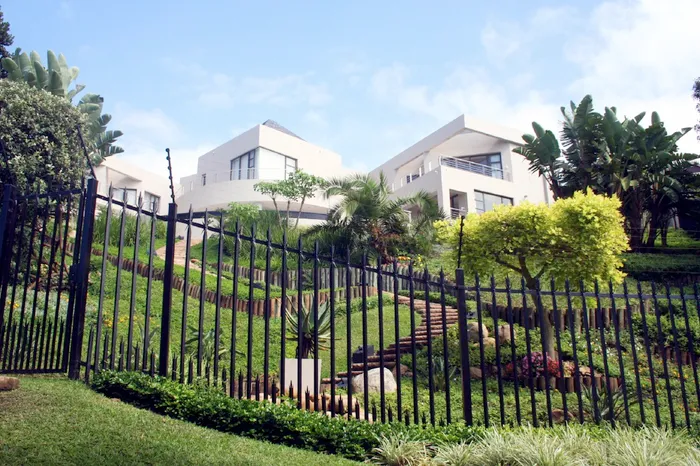
Foreign buyers are increasingly targeting South Africa's luxury property market, drawn by favorable valuations and lifestyle attributes, despite their overall presence remaining a small fraction of the total residential market. Foreign ownership constitutes just 6% of South Africa’s total residential housing market, indicating a niche but growing segment. This interest is particularly concentrated in the Western Cape, where foreign buying activity reaches 7.8% of the regional market, marking it as the strongest area for international investment within the country. The rand comparison further enhances the appeal for these buyers, offering an additional financial incentive to invest in South African properties. This attractive exchange rate allows international investors to acquire more substantial properties or a greater quantity of assets for their foreign currency, significantly boosting their purchasing power within the local market.
The Appeal of South African Property
Foreign buyers represent a significant portion of the higher-end property market in South Africa, accounting for 15% of transactions valued between R4 million and R10 million. This demonstrates a clear trend of international investors focusing on the mid-to-high luxury segment. While the Western Cape leads in foreign buying activity with 7.8% of the regional market attributed to international purchasers, interest from international buyers is also notably strong in Gauteng and subsequently Limpopo. These provinces offer diverse attractions, from the bustling economic hub of Gauteng to the natural beauty and safari opportunities in Limpopo, catering to a range of foreign investor preferences.
South Africa offers international buyers a combination of space, lifestyle, natural beauty, and value, which observers note is increasingly difficult to find in other global markets. This unique package of attributes is a key differentiator for the country's property market. This value proposition is evident in property pricing. The median property price in Cape Town, for instance, is approximately R3.4 million, which translates to roughly €179,200. This figure notes the relative affordability of prime real estate in a globally recognized city. Similarly, a selling price of R7.2 million, which represents a substantial luxury property, is equivalent to around €380,000, illustrating the comparative affordability for buyers converting from stronger currencies. The favorable exchange rate, particularly against major currencies like the Euro, Dollar, and Pound, means that foreign buyers can acquire properties that would be significantly more expensive in their home countries or other established luxury markets around the world. This financial advantage, coupled with the quality of life on offer, creates a compelling investment case.
Financial and Lifestyle Drivers
Foreign buyers constitute a significant portion of the ultra-luxury market in South Africa, accounting for 26% of transactions valued between R10 million and R20 million. This trend indicates a strong international appetite for high-end properties within the country. Observers note that foreign buyers are increasingly comparing South Africa with other prime global destinations, finding that the country offers a unique combination of space, setting, lifestyle, and long-term benefits at prices that are difficult to match elsewhere. This value proposition is a key driver for their investment decisions, as they seek not just a property, but an entire experience and a sound long-term asset. The expansive properties, often with stunning views and access to world-class amenities, provide an unparalleled lifestyle that is becoming increasingly rare and costly in other global hubs.
Foreign luxury buyers are also less exposed to the local economic pressures that many South African buyers currently face, according to market analysis. This insulation allows them to pursue high-value acquisitions with greater financial flexibility. Their purchasing power is often derived from economies with different interest rate cycles and economic conditions, making them less sensitive to local fluctuations. Additionally, South African banks often provide financial support to non-resident buyers. These institutions offer home loans of up to 50% of the purchase price to foreign buyers, provided they meet the established lending criteria. This access to local financing further facilitates their entry into the South African property market, making it easier for them to leverage their capital and complete transactions. The availability of such financing demonstrates the confidence of local financial institutions in the stability and value of these high-end property investments, even for international clients.
The appeal extends to the very pinnacle of the market, where foreign buyers account for an even larger share. This segment, encompassing properties valued above R20 million, showcases the extreme luxury and investment potential that South Africa offers. The ability to acquire vast estates, beachfront villas, or exclusive urban residences at a fraction of the cost compared to similar properties in Europe, North America, or parts of Asia, makes South Africa an irresistible proposition for the ultra-wealthy international buyer.
Navigating Regulations and Future Trends
Foreign buyers constitute a significant portion of the ultra-luxury market, accounting for 39% of sales valued above R20 million. This substantial proportion shows the importance of international investors in driving the top tier of South Africa's real estate sector. The South African Reserve Bank (SARB) maintains a repo rate of 7.00%, which influences the country's prime lending rate of 10.50%. These rates are critical benchmarks for the cost of borrowing within the country, affecting both local and international buyers who opt for local financing. While foreign buyers may be less exposed to local economic pressures, these rates still provide a framework for the financial environment in which they operate.
The South African Reserve Bank's (SARB) updated harmonised Balance of Payments (BoP) codes represent an important development that foreign property buyers in the country should note. These new BoP codes are scheduled to come into effect from August 11, 2026. These changes are part of an ongoing effort to modernize and streamline financial reporting and monitoring within South Africa. South Africa will remain an exchange control jurisdiction, meaning that the movement of capital across its borders is closely regulated. These regulations are designed to monitor and manage financial flows into and out of the country, impacting how foreign investors conduct transactions related to property acquisition and other investments. While these controls ensure financial stability and compliance, they require foreign buyers to be aware of the necessary procedures for transferring funds for property purchases and repatriating proceeds from sales. Understanding and adhering to these regulations, particularly in light of the upcoming BoP code changes, will be key for smooth transactions in the South African luxury property market. Despite these regulatory frameworks, the enduring appeal of South Africa's luxury real estate market continues to attract a discerning international clientele, drawn by its unique blend of value, lifestyle, and natural splendor.