South Africa has stated that the expanded BRICS grouping offers an opportunity to enhance collective engagement in reforming global institutions and promoting the interests of developing countries. This comes despite acknowledging the increased complexity of achieving consensus among a larger membership. The next significant event for the bloc will be the 18th BRICS Summit, which India is scheduled to host in New Delhi on September 12 and 13, 2026.
Areas of Broad Agreement
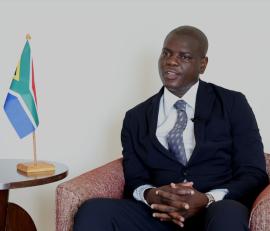
Minister of International Relations and Cooperation Ronald Lamola spoke to SAnews.gov.za on Friday, ahead of the 18th BRICS Summit in New Delhi, India. Lamola noted that the BRICS grouping offers a platform for consultation and cooperation on global and regional matters, encompassing political, economic, financial, and people-to-people collaboration. He acknowledged the challenges of an expanded group but emphasized the opportunities it presents. "Yes, it is always a challenge when the grouping becomes larger, but it can also be an opportunity because it means more countries have a voice and can help advance the message that we are promoting," Lamola stated.
According to India’s BRICS presidency, the 11 member countries collectively account for 40% of global gross domestic product. Lamola noted that broad agreement exists on many issues within the bloc. "The only area where we could not reach agreement was a narrow issue of interest between two countries," he said, referring to the Israel-Iran conflict. Lamola expressed optimism that the platform could facilitate consensus and persuade countries to reaffirm the UN Charter on peace and security. "I believe this meeting can achieve that goal. Even during the Foreign Ministers' meetings, these were issues on which there was largely agreement," he added.
Expanding Influence and Scope
The BRICS grouping has expanded its original membership of Brazil, Russia, India, China, and South Africa to include Egypt, Ethiopia, Iran, Saudi Arabia, the United Arab Emirates, and Indonesia as full members. These 11 member countries collectively account for 26% of global trade, according to India’s BRICS presidency. Additionally, this expanded bloc represents approximately 49.5% of the world’s population. Looking ahead to 2025, the partner-country framework for BRICS includes Belarus, Bolivia, Cuba, Kazakhstan, Malaysia, Nigeria, Thailand, Uganda, Uzbekistan, and Vietnam, further broadening its global reach.
Challenges and Future Outlook
Ronald Lamola stated that BRICS members largely converged on key priorities, including transforming the global financial architecture, reforming the United Nations Security Council, and adapting to climate change. However, Lamola indicated that the only area where agreement could not be reached was a narrow issue of interest between two countries, referring to the Israel-Iran conflict. Lamola expressed optimism that discussions could foster consensus, stating, "I believe this meeting can achieve that goal. Even during the Foreign Ministers' meetings, these were issues on which there was largely agreement."
Summit Theme and Objectives
The 18th BRICS Summit, scheduled to be hosted by India in New Delhi on September 12 and 13, 2026, will operate under the theme “Building for Resilience, Innovation, Cooperation and Sustainability.” This theme outlines the core objectives for the upcoming gathering of the expanded BRICS grouping. It signals a focus on strengthening the bloc's capacity to withstand global challenges, foster new solutions, enhance collaboration among member states, and ensure long-term viability across various sectors. The theme reflects an agenda aimed at addressing contemporary global issues through collective action.