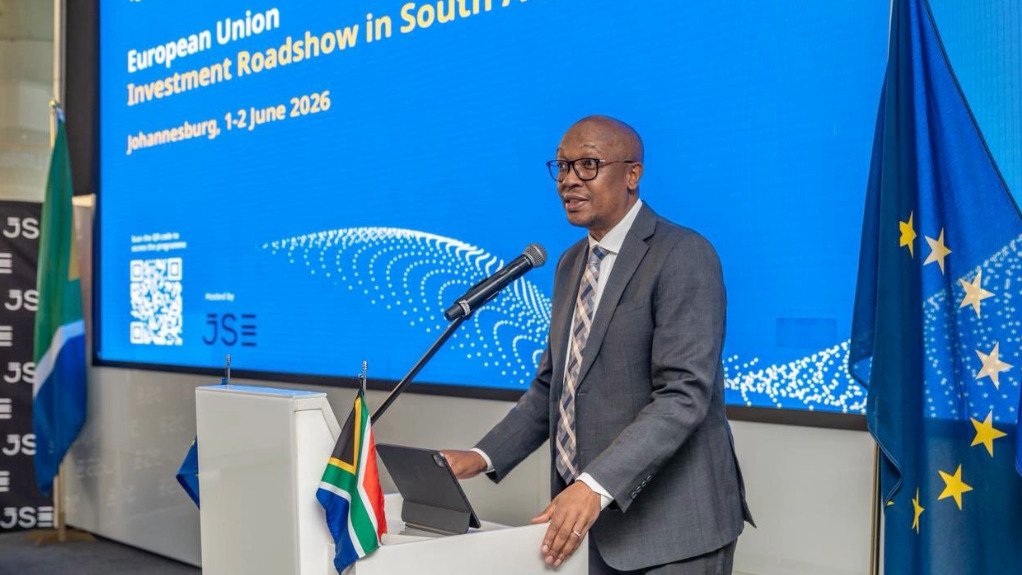
The European Union (EU) has initiated a series of investor roadshows in South Africa, commencing with events at the JSE in Johannesburg on June 1 and 2, aiming to convert a previously announced €12-billion investment package into concrete projects. This initiative follows the EU's October announcement of the substantial investment package, a pledge of €12 billion for South Africa. The roadshows represent the first significant effort to mobilize capital under the framework of the 2025 EU-South Africa Clean Trade and Investment Partnership, according to reports. This partnership seeks to foster closer economic ties and channel funds towards sustainable development within South Africa, specifically targeting the conversion of the €12-billion investment pledge into firm, tangible projects on the ground.
Unpacking the Investment Partnership
The European Union and South Africa formalized the Clean Trade and Investment Partnership (CTIP) with its signing in November of last year. This key agreement, signed by both parties, laid the groundwork for enhanced economic cooperation. The CTIP aligns with the broader objectives of the EU's Global Gateway strategy, which aims to mobilize significant investments in partner countries worldwide, fostering sustainable links and resilient infrastructure. The alignment ensures that the partnership's goals contribute to a larger, globally coordinated effort by the EU.
A key component of this strategy within South Africa is the EU's €8.7-billion support package dedicated to the country's Just Energy Transition. This substantial financial commitment, integral to South Africa's efforts to shift towards a greener economy, is also explicitly integrated into the Global Gateway framework, demonstrating a cohesive investment approach. Beyond energy, the Global Gateway strategy is actively backing South Africa's endeavors in other critical sectors. This includes assistance for the expansion of digital infrastructure, a vital component for modern economic development and connectivity, and concerted efforts to establish a domestic pharmaceuticals value-chain. The focus on a local pharmaceuticals value-chain aims to enhance South Africa's self-sufficiency and resilience in healthcare provision, reducing reliance on external markets for essential medicines and medical supplies. These diverse investments show the full nature of the EU's engagement under the Global Gateway strategy.
These initiatives show the growing collaboration between the EU and South Africa, reflecting a deepening strategic partnership. Demonstrating this deepening partnership, the inaugural EU-South Africa Energy Dialogue and Business Forum convened in Brussels in May. This significant event provided a key platform for discussions on energy collaboration, exploring joint ventures, technological exchanges, and investment opportunities in the energy sector. Further diplomatic engagement is anticipated as the first EU-South Africa government-to-government discussions regarding the CTIP are scheduled to take place in early July, setting the stage for the practical implementation of the partnership's goals. These high-level discussions are expected to solidify the operational framework and identify priority areas for immediate action under the CTIP.
Roadshow Logistics and Participants
The European Union is conducting investment roadshows across South Africa this week, with events scheduled in Johannesburg, Cape Town, and Durban. These roadshows are specifically designed to translate the previously announced €12 billion investment pledge into concrete projects within the country, moving from commitment to tangible implementation. The roadshow kicked off impressively at the JSE in Johannesburg on June 1 and 2, attracting considerable attention from the financial community. Following the initial events at the JSE in Johannesburg, the roadshows were then scheduled for Cape Town on June 3 and 4, continuing the momentum of engagement. The series of events concludes in Durban, ensuring a broad geographical reach and engagement with diverse regional economies within South Africa.
The events are drawing participation from a substantial number of stakeholders, reflecting the widespread interest in these investment opportunities. Approximately 200 companies are expected to participate in the various roadshow sessions, engaging with potential European investors and partners. This diverse group of companies represents a wide array of sectors, from renewable energy to critical minerals and digital infrastructure, all aligned with the CTIP's objectives. Additionally, ten financial institutions are also taking part in the events, indicating a broad financial sector interest in the investment opportunities presented and a readiness to facilitate these large-scale projects. These institutions include both local and international banks, development finance institutions, and investment funds, all looking to play a role in channeling the pledged capital. The EU initiative seeks to facilitate direct engagement between European investors and South African businesses to identify and develop projects aligned with the investment package's objectives, fostering direct partnerships and accelerating project development.
Strategic Goals and Value Chains
A memorandum of understanding addressing sustainable minerals and metal value chains was signed concurrently with the Clean Trade and Investment Partnership (CTIP). This parallel agreement notes the strategic importance placed on responsible sourcing and processing of critical raw materials. The CTIP itself specifically focuses on clean industry and energy sectors, encompassing a wide range of activities. These include renewable energy generation and infrastructure, the development and deployment of low-carbon technologies, the modernization and expansion of electricity transmission infrastructure, and the production of clean fuels. It also explicitly includes raw materials and mineral value chains, recognizing their foundational role in the clean energy transition, along with climate mitigation and adaptation technologies, which are key for building resilience against climate change impacts.
South Africa aims to establish moving higher up the value chain as a prerequisite for access to its critical minerals, according to reports. This ambition reflects a strategic national imperative to derive greater economic benefit from its abundant mineral resources, shifting from mere extraction to processing and manufacturing. This ambition comes at a critical juncture, as China's restrictions on mineral exports with potential military applications have prompted Western nations to explore alternative supply chains across Africa. The global push for diversified and secure supply chains for critical minerals, essential for high-tech industries and green technologies, has amplified South Africa's position. The EU's strategic focus on mineral value chains within the CTIP aligns with this broader international push for diversified sourcing and local processing of critical raw materials. The partnership endeavors to facilitate investment that not only extracts but also processes these minerals within South Africa, thereby creating greater economic benefit, fostering local industrial development, and reducing reliance on single-source suppliers. This integrated approach seeks to build resilient and sustainable value chains, benefiting both South Africa's economy and the EU's strategic raw material needs. The inclusion of these strategic mineral discussions shows the multifaceted nature of the EU-South Africa economic collaboration, extending beyond traditional trade to encompass critical resource security and industrial development.
Economic Ties and Future Outlook
The European Union stands as South Africa’s largest trade and investment partner, according to reports, showing the deep and long-standing economic relationship between the two entities. This strong partnership is evident in the substantial bilateral trade flows between the EU and South Africa, which reached an impressive €46 billion in 2022. This significant volume of trade notes the constant exchange of goods and services that underpins their economic ties. The presence of more than 1,700 European companies currently operating in South Africa collectively represents over 40% of the total foreign direct investment in the country. This substantial FDI indicates a strong commitment by European businesses to the South African economy, contributing significantly to job creation, technology transfer, and economic growth. The EU has also extended significant financial support for infrastructure and clean energy initiatives, demonstrating its commitment to South Africa's sustainable development goals.
A €600 million framework loan has been provided to the Development Bank of Southern Africa, a key financial injection projected to deliver 1,200 megawatts of green energy capacity. This substantial renewable energy addition is expected to displace 3.6 million tons of CO2 emissions annually, making a significant contribution to climate change mitigation and South Africa's energy transition. Additionally, a €1.48 billion facility for the state freight company Transnet is designated to modernize South Africa’s port and rail network. This critical investment aims to improve the efficiency and capacity of the country's logistical infrastructure, which is vital for both domestic and international trade, facilitating the movement of goods and raw materials. These targeted investments exemplify the EU's commitment to supporting South Africa's economic development and its transition to a greener, more sustainable future, reinforcing the strategic importance of the Clean Trade and Investment Partnership. The ongoing roadshows are a direct mechanism to translate these overarching financial commitments and strategic goals into actionable projects that will benefit both regions.