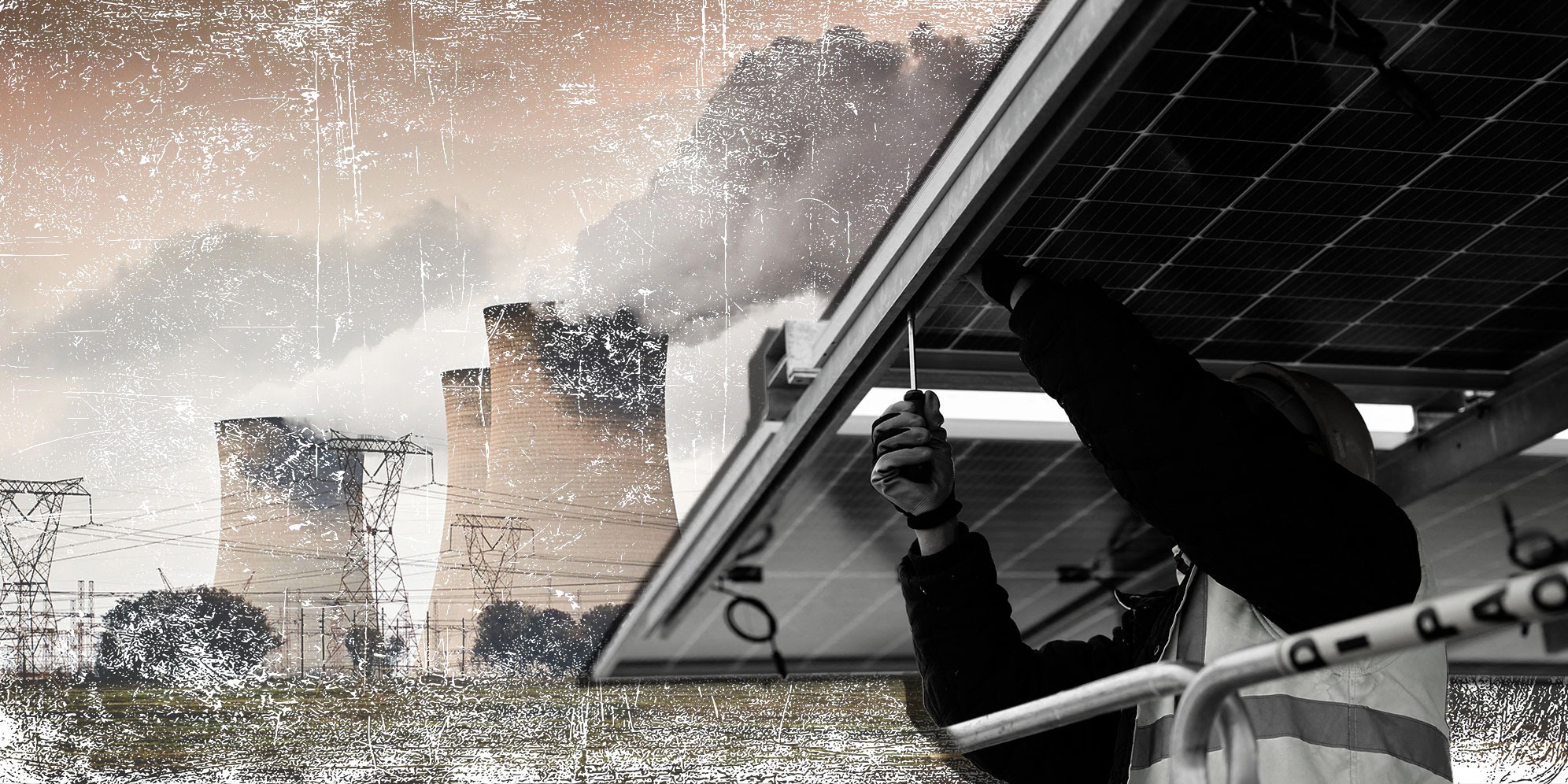
Eskom has extended its rooftop solar registration deadline to September 30, 2026, while withdrawing previous threats of fines or electricity supply cuts for residential customers who fail to register their installations. The state-owned utility also scrapped the requirement for costly professional sign-off, according to an article headline and sub-headline. This move pushes back the previous deadline of March 31, 2026. This significant extension provides homeowners with additional time to ensure compliance without the immediate pressure of punitive measures. However, Eskom stated it retains the right to cut supply to any solar or battery installation deemed "unsafe." This assertion by Eskom has been met with strong opposition. The Organisation Undoing Tax Abuse (Outa) has indicated that this claim regarding unsafe installations will not withstand legal scrutiny. The withdrawal of threats to fine and/or cut electricity supply marks a notable shift in Eskom's approach to managing the widespread adoption of rooftop solar technology.
Legal Challenge and Eskom's Retreat
Outa asserts that Eskom lacks a lawful basis to disconnect a residential customer with a valid Certificate of Compliance (CoC), even if Eskom unilaterally declares the installation unsafe. This position challenges the utility’s perceived authority over installations on private property that meet national safety standards. The organization argues that, in the absence of a point of connection, a solar photovoltaic (PV) or battery energy storage (BES) installation under 100kW falls outside the purview of the Electricity Regulation Act (ERA) and the regulatory authority of Nersa. This interpretation hinges on the specific definitions within the regulatory framework concerning grid interaction. The Electrical Installation Regulations (EIR) mandate adherence to SANS 10142-1, which serves as the national technical and safety standard for such installations. Compliance with this standard, therefore, is seen by Outa as the primary measure of an installation's safety and legality. Eskom has conceded that a significant majority of low-voltage solar PV and BES installations connected to its network remain unregistered. This admission shows the scale of the challenge Eskom faces in monitoring and regulating these systems, and likely contributed to the decision to extend the deadline and revise compliance requirements.
Shifting Compliance Requirements
Eskom has adjusted its compliance requirements for residential solar installations, eliminating the need for sign-off by a professional registered with the Engineering Council of South Africa (Ecsa). This change is a direct response to feedback and aims to make the registration process more accessible for homeowners. The utility now accepts a Certificate of Compliance (CoC) issued by an installation electrician or electrical contractor, provided they are registered with the Department of Employment and Labour. This change streamlines the process for homeowners installing solar photovoltaic (PV) or battery energy storage (BES) systems, reducing both the cost and complexity previously associated with registration. The previous requirement for Ecsa-registered professional sign-off had been a point of contention for many residential solar users, who found it to be an unnecessary and expensive hurdle. This revised approach acknowledges the expertise of qualified electricians and contractors who are already responsible for issuing CoCs under existing regulations.
The Organisation Undoing Tax Abuse (Outa) has contended that a low-voltage residential solar PV or BES system connected to a customer’s distribution board, located on the customer’s premises behind the meter, does not possess a "point of connection" as defined in the Grid Code of South Africa. This distinction is central to Outa's argument regarding the scope of Eskom's regulatory authority. According to Outa, without such a defined point of connection, a solar PV/BES installation of less than 100kW falls outside the scope of the Electricity Regulation Act (ERA) and Nersa’s regulatory authority. This legal interpretation suggests that Eskom's jurisdiction may be more limited than it has previously asserted for these types of installations. Outa asserts that a compliant, CoC-certified solar PV or BES system, along with its inverter, inherently addresses quality-of-supply risks. These risks include potential issues such as overvoltage, undervoltage, voltage dips, sags, flicker, and harmonics, which are mitigated by the system's design and certification. This means that a properly installed and certified system is designed to prevent adverse impacts on the grid, thereby reducing the need for Eskom's direct oversight on safety aspects that are already covered by national standards.
Unenforceable Threats and Regulatory Scope
Eskom maintains that it reserves the right to disconnect a residential customer if it determines their solar photovoltaic (PV) or battery energy storage (BES) installation is "unsafe." However, the Organisation Undoing Tax Abuse (Outa) disputes the utility's authority to enforce such disconnections. Outa's view is that Eskom would have no lawful right to disconnect a residential customer who holds a valid CoC simply because Eskom deems that installation to be unsafe. This perspective notes a fundamental disagreement over the extent of Eskom's power to intervene in private installations that have met established safety requirements.
The legal framework for low-voltage electrical installations situated behind the meter is governed by the Occupational Health & Safety Act (OHS Act) and its corresponding Electrical Installation Regulations (EIR). This legislation outlines the safety standards and compliance requirements for such systems, placing the responsibility for ensuring safety primarily on the installer and the homeowner, in accordance with national standards. The EIR specifically requires compliance with SANS 10142-1, which is the mandatory national technical and safety standard for such installations. This standard provides full guidelines for the safe design, installation, and maintenance of electrical systems, including solar PV and BES systems. Therefore, if an installation adheres to SANS 10142-1 and possesses a valid CoC, Outa argues it should be considered compliant and safe under the relevant legal framework, regardless of Eskom's individual assessment.
Eskom Distribution has previously cited various regulations and internal specifications to justify its registration and compliance framework. According to an article, Eskom Distribution has routinely justified its registration and compliance regime by pointing to the Electricity Regulation Act (ERA), the National Energy Regulator of South Africa’s (Nersa) regulatory authority, the South African Grid Code, Eskom’s own internal technical specifications, network safety, quality-of-supply risk and the system operator’s need for data on installed rooftop solar capacity. These justifications reflect Eskom's concerns about grid stability and the operational impact of distributed generation. However, Outa's legal arguments challenge the applicability of some of these regulations to behind-the-meter residential installations, particularly concerning the "point of connection" and Nersa's regulatory scope. The ongoing debate shows the need for clear legislative and regulatory frameworks that address the evolving landscape of renewable energy adoption in South Africa.
In related reporting, the article itself is presented as an Op-Ed, indicating that the perspectives articulated are those of the author and do not necessarily represent the official stance of the Daily Maverick publication. This context is important for readers to understand the nature of the arguments presented. Meanwhile, Eskom’s National Transmission Company of South Africa (NTCSA) provides public updates on installed rooftop solar capacity. This information is published weekly in the NTCSA's publicly available system status reports, offering transparency on the growth of solar installations across the country.