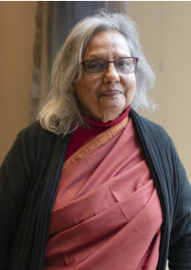
Ela Gandhi, granddaughter of Mahatma Gandhi, recently described her identity as deeply rooted in the ongoing fight for equality in South Africa. As a member of the Eminent Persons Group of the National Dialogue, a significant initiative announced by President Cyril Ramaphosa in June 2025, Ms. Gandhi shared profound insights into her lifelong activism and the persistent struggles faced by women in the nation. Her perspective is shaped by decades of engagement with social justice issues, making her a key voice in contemporary discussions about South Africa's trajectory. Ms. Gandhi, at 86 years old, stated, "I am a grandmother who is a social worker by profession but now enjoying retirement. I am also an activist who lived under and fought apartheid injustices for many years." This statement shows her dual role as both a seasoned advocate and a reflective elder observing the current state of affairs. Ms. Gandhi emphasized the "triple oppression" faced by black women under apartheid, capitalism, and patriarchy, noting that "Our struggles were against these oppressive systems." She reflected on the progress made in gender issues, but cautioned, "patriarchy has been so entrenched by generations of conditioning that the struggle continues and my identity is located within that struggle." Her identity, therefore, is not merely personal but inextricably linked to this broader, enduring struggle for true equity.
Echoes of the Past
South Africa observed the 70th anniversary of the 1956 Women’s March to the Union Buildings in Pretoria on 9 August 2026. This historic event saw more than 20,000 women participate in a powerful demonstration against the expansion of discriminatory pass laws and the Urban Areas Act. These legislative measures were designed to control the movement and residency of black South Africans, particularly women, severely restricting their ability to live and work in urban areas without permits. The pass laws, in particular, were a cornerstone of the apartheid regime's system of racial segregation and control, dictating where black individuals could reside, work, and travel. For women, these laws often meant forced removals, family separation, and immense economic hardship, denying them fundamental freedoms and dignity. The 1956 march represented a significant moment of resistance, with women from various racial backgrounds uniting to challenge the apartheid government's oppressive policies. Their actions showed a collective defiance against laws that sought to entrench racial segregation and limit fundamental freedoms for the majority of the population. The anniversary served as a poignant reminder of the historical struggle for equality and the enduring impact of women's activism in the nation's past, drawing parallels between the challenges of yesteryear and those that persist today. The courage and unity displayed by the women in 1956 continue to inspire new generations of activists.
Persistent Challenges Remain
Ela Gandhi observed that she and her colleagues identified a "triple oppression" experienced by black women in South Africa. She stated, "My colleagues and I recognised the triple oppression we faced as black women, under apartheid as blacks, in a capitalist system as poor and under patriarchy as women." This multifaceted oppression created a complex web of disadvantages, severely limiting opportunities and perpetuating systemic inequality. Ms. Gandhi elaborated that "Our struggles were against these oppressive systems, which together ensured that we were deprived of opportunities and that our status was maintained as inferior to our male counterparts." This historical context is key for understanding the deep-seated nature of the challenges that continue to plague South African society.
While progress has been made in certain areas, Ms. Gandhi noted that much work remains, despite women gaining access to fields previously closed to them. The legal and policy frameworks have indeed opened doors, allowing women to pursue careers and roles that were once exclusively the domain of men. However, Ms. Gandhi questioned the practical impact of these advancements on the daily lives of women, asking, "But what is the position of women on the ground?" This critical question notes a potential disconnect between legislative achievements and the lived realities of many, suggesting that formal equality does not always translate into substantive change.
Ms. Gandhi noted that gender-based violence (GBV) is on the rise and the status of women within the home has not significantly improved. She remarked, "The fact that GBV [gender-based violence] is increasing and women’s position in the home has not changed much, even though we have very good laws." South Africa has enacted significant legislation aimed at protecting women and promoting equality, demonstrating a commitment to human rights on paper. These laws include the Domestic Violence Act, which provides protection orders and support for victims of domestic abuse, and the Promotion of Equality and Prevention of Unfair Discrimination Act, which seeks to address systemic inequalities and violence by prohibiting various forms of discrimination. Despite these strong legal frameworks, the widespread nature of GBV and the stagnation of women's domestic status indicate that legal provisions alone are insufficient to dismantle deeply ingrained societal norms. Ms. Gandhi emphasized that patriarchy remains profoundly entrenched, stating, "patriarchy has been so entrenched by generations of conditioning that the struggle continues and my identity is located within that struggle." This conditioning, passed down through generations, continues to manifest in attitudes and behaviors that undermine women's equality and safety, even in the presence of progressive laws.
Re-evaluating Values and Action
Ela Gandhi, at 86 years old, reflects on the current state of South Africa, particularly in a year that marks both the 70th anniversary of the 1956 Women’s March and 30 Years of the Constitution. She emphasizes that these significant milestones should prompt a thorough re-evaluation of the nation's progress and its future direction. The Constitution’s Bill of Rights, a foundational document of post-apartheid South Africa, guarantees that everyone is equal before the law and has the right to equal protection and benefit of the law. This constitutional promise represents a radical departure from the discriminatory laws of the past, aiming to establish a society founded on principles of justice and human dignity. However, Ms. Gandhi suggests a concerning disconnect between these powerful legal provisions and the lived experiences of many South Africans, particularly women. The gap between constitutional ideals and daily realities points to the need for more effective implementation and a deeper societal transformation.
"We need to consider our own identity crisis carefully as we continue to struggle for true socio-political and economic emancipation and universal rights," Ms. Gandhi stated. This "identity crisis" refers to the nation's struggle to fully embody the values enshrined in its Constitution, particularly in the face of persistent inequalities. She also observed a concerning trend in the feminist movement, saying, "We are losing the importance of feminism, depicting compassion, care and love. Instead, we are running after a feminism that portrays a masculine image, thus losing our intrinsic values in favour of developing a macho image." Ms. Gandhi's critique suggests that some modern interpretations of feminism may inadvertently adopt traits associated with patriarchal power structures, thereby moving away from what she perceives as core feminine values of empathy and nurturing. She concluded that the struggle is against this "macho patriarchal identity," and simply reversing positions, where women merely replace men in positions of power without transforming the underlying values, does not guarantee true freedom or equality. "For anything to succeed, there has to be mutual trust and respect and with that, we can deal with difficult issues, especially those entrenched in our culture and religion and begin to reinterprete them from a gendered perspective," Ms. Gandhi added. This call for mutual trust and respect shows the need for a collaborative approach to social change, one that involves both men and women in re-evaluating cultural and religious norms to foster genuine gender equality. It notes that the path to emancipation requires a nuanced understanding of historical context, current challenges, and a commitment to transforming societal values at their core.