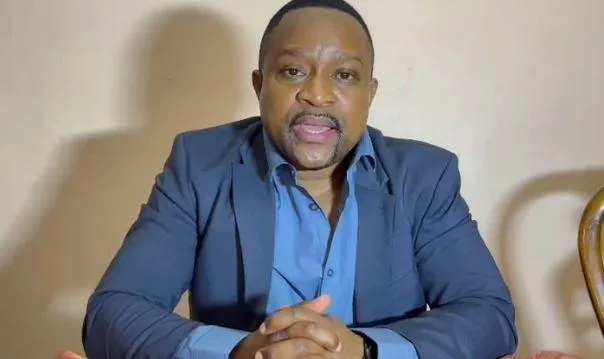
The Durban High Court has dismissed an urgent application filed by a former patient to prevent his cardiologist from sharing TikTok videos referencing him. An urgent application by Jeffrey Chetty, seeking to stop his cardiologist, Dr Ntando Duze, from posting TikTok videos about him has been struck off the roll by the Durban High Court for lack of urgency. The court ruled that the matter lacked the necessary urgency for immediate consideration, thereby striking it off the roll. This decision means the patient's bid to halt the cardiologist's social media activity, which allegedly used details from their medical interactions, will not proceed on an urgent basis at this time.
Patient's Allegations and Claims
Jeffrey Chetty approached the Durban High Court last month, seeking an urgent interdict to prevent his former cardiologist, Dr Ntando Duze, from publishing videos that he alleged disclosed his private medical information. Chetty claimed the medical treatment he received from Dr Duze fell below the expected standard, a conclusion he reached after obtaining a second opinion from another specialist at eThekwini Hospital. This claim formed a significant part of the underlying dispute leading to the urgent application.
Chetty further alleged Dr Duze posted a series of TikTok videos containing defamatory statements and sought a court order compelling the doctor to remove them. According to Chetty, these videos accused him of being a criminal evading investigations, sexually harassing a female patient, and being involved in the killing of a sheriff. These serious allegations were central to Chetty's urgent application, as he contended they caused significant reputational damage and violated his privacy. Advocate Camish Gajoo, representing Chetty, argued that his client’s consent for information disclosure was limited to its broadcast by Carte Blanche and did not extend to private individuals republishing or discussing his medical details. Gajoo emphasized that the public interest benefits enjoyed by journalists and media outlets like Carte Blanche do not automatically transfer to private individuals.
Dr Duze countered this assertion, stating, "The applicant’s personal and medical information was voluntarily placed in the public domain by the applicant in the Carte Blanche episode." Advocate Gajoo reiterated Chetty's position, clarifying that "The benefits of public interest enjoyed by Carte Blanche as journalists cannot be enjoyed by a private person. The applicant’s consent was narrow," specifically arguing that the scope of consent given for the television broadcast did not permit Dr Duze to disseminate or comment on the information on his personal social media platforms.
Cardiologist's Defense and Counterarguments
In opposing the urgent application, Dr. Ntando Duze stated that the videos in question were created as a direct response to allegations leveled against him during a Carte Blanche episode. The broadcast featuring these allegations aired on July 27, 2025. Dr. Duze contended that Jeffrey Chetty had willingly made his personal and medical information public during the Carte Blanche program, including specific details concerning the medical treatment he had received from the cardiologist. He asserted that his TikTok videos were merely a reaction to information already widely available.
Dr. Duze reinforced his defense by asserting that Chetty’s information was already in the public domain. "The applicant’s personal and medical information was voluntarily placed in the public domain by the applicant in the Carte Blanche episode," Dr. Duze explained in his submission to the court. He emphasized that since Chetty himself had disclosed these details during the television program, his subsequent TikTok videos were not a breach of privacy but rather a reaction to information already made public. This formed the cornerstone of his argument against the interdict.
Court's Ruling on Urgency
The Durban High Court ultimately struck the application from the urgent roll, determining it did not meet the stringent criteria for immediate consideration. Dr. Ntando Duze argued that Jeffrey Chetty's application specifically lacked urgency because Chetty had not disclosed when he first became aware of the ten TikTok videos. These videos were posted on various dates, with the earliest appearing on May 3, 2026. Advocate Credo Mlaba, representing Dr. Duze, emphasized the delay in Chetty's action, noting the timeline of events. "It has been more than 29 days since the first alleged defamatory TikTok was posted," Mlaba stated, adding that this significant passage of time undermined the claim of immediate and pressing need for court intervention. "Therefore, these proceedings cannot be deemed urgent." Chetty's letter of demand was drafted on June 1, 2026, but the urgent application itself was only launched on June 17, further contributing to the court's finding regarding the lack of urgency and the patient's apparent delay in seeking judicial relief.
Background and Context
Dr. Ntando Duze provided medical treatment to Jeffrey Chetty at Life Westville Hospital in March 2025. This interaction formed the basis of the patient-cardiologist relationship preceding the current legal dispute. Chetty later sought a second medical opinion from a specialist at eThekwini Hospital, leading to his claims about the quality of care received from Dr. Duze and the subsequent public and legal confrontations.