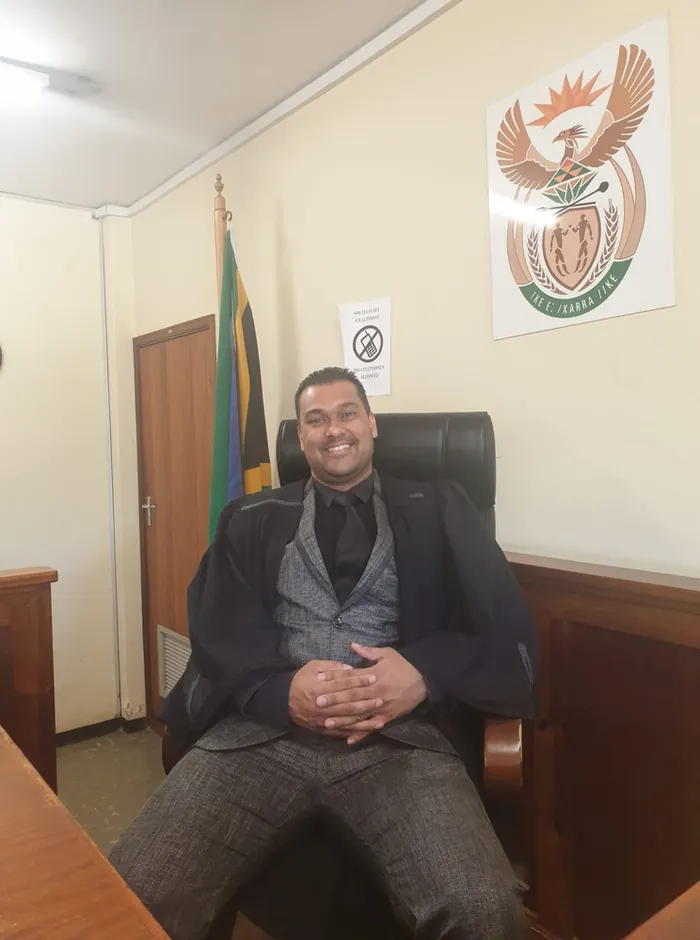
The Durban Regional Court has ruled that the arrest and subsequent detention of attorney Shabeer Goolabjith and prosecutor Kelvin Raymond Munsamy were unlawful. The court's decision, issued on Tuesday, found that both the initial arrest and the period of detention for Mr. Goolabjith and Mr. Munsamy were conducted without legal basis. This significant ruling shows the critical importance of adherence to legal procedures by law enforcement agencies in South Africa. The ruling stems from a case involving the two legal professionals, whose arrests had drawn attention to the procedures followed by law enforcement in South Africa. The court specifically declared the actions taken against them to be unlawful, impacting the Minister of Police and other relevant parties, holding the state accountable for the conduct of its officers.
Background of the Case
The matter originated from a corruption investigation that was connected to a 2016 fraud probe. This probe formed the initial basis for the subsequent actions taken against the two legal practitioners. Following their arrests in August 2019, attorney Shabeer Goolabjith and prosecutor Kelvin Raymond Munsamy initiated civil claims against the state, specifically targeting the Minister of Police for the alleged wrongful actions. Both men voluntarily reported to the Durban Central Police Station in August 2019 after police contacted them regarding the investigation. Their voluntary appearance notes that they were not attempting to evade law enforcement.
Upon their arrival at the police station, they were processed and formally charged. Subsequently, Mr. Goolabjith and Mr. Munsamy were taken to court, where they were released on bail. The bail for each individual was set at R2,000, and they secured their release on the same day as their appearance. This prompt release on a relatively low bail amount further suggested that they were not considered flight risks or a danger to the public, factors that would typically influence the need for immediate arrest and detention without a warrant. The civil claims they instituted against the state sought to challenge the legality of these events from their initial contact with police through their release.
Court's Findings on Arrest Legality
The pair subsequently sued the Minister of Police, contending that their arrest and detention were unlawful and executed without reasonable grounds or a warrant. Their legal challenge centered on the premise that the police had overstepped their authority and failed to follow due process. During cross-examination in court, Retired Warrant Officer Sagren Govender, one of the arresting officers, made key concessions. He admitted that the arrests were made without warrants, a significant point in the legal challenge. Govender further conceded that none of the stringent requirements for warrantless arrests under Section 40 of the Criminal Procedure Act had been fulfilled. This section outlines specific circumstances under which an officer may arrest a person without a warrant, such as when a crime is committed in their presence or if there are reasonable grounds to suspect a serious offense.
Govender also acknowledged that the alleged offences, which formed the basis of the corruption investigation, did not fall under Schedule 1 of the Act, which specifies certain serious crimes that might warrant more immediate and forceful police action. Govender testified that he had acted on prosecutorial instructions and had not sought warrants because the accused individuals were known and not considered flight risks. This explanation, however, did not satisfy the court.
The court firmly rejected Govender’s reasoning, establishing that prosecutors do not possess the legal authority to instruct police to carry out arrests. Magistrate Fiona Seedat, presiding over the case, emphasised that powers of arrest rest solely with the police under the Criminal Procedure Act. This distinction is vital for maintaining the separation of powers and ensuring that police exercise independent discretion in their duties, rather than acting as mere agents of the prosecution. The magistrate concluded that Govender failed to exercise independent discretion in the matter, instead relying on instructions that were legally unsound. Magistrate Seedat also determined that less invasive options, such as issuing summonses or written notices to appear in court, were readily available to the police at the time of the arrests. These alternatives would have achieved the same objective of bringing the individuals before the court without resorting to an unlawful arrest and detention.
Evidence and Investigation Details
During a search conducted at Mr. Goolabjith's legal offices, police seized electronic devices. These devices contained WhatsApp messages that investigators identified as indicating corrupt dealings between attorney Shabeer Goolabjith and prosecutor Kelvin Raymond Munsamy. The content of these messages formed part of the evidence gathered during the investigation into the alleged corruption. While the investigation into the alleged corruption itself is a separate matter, the court's ruling focused specifically on the procedures followed during the arrest and detention of the two legal professionals, rather than the merits of the corruption allegations. The existence of this evidence, however, was part of the broader context of the police's actions leading up to the arrests.
Consequences and Next Steps
Acting Regional Court Magistrate Fiona Seedat ruled that the Minister of Police failed to justify the arrests and subsequent detention of attorney Shabeer Goolabjith and prosecutor Kelvin Raymond Munsamy. This failure to provide legal justification was a central factor in the court's decision. The court further ordered the Minister of Police to pay the costs of the proceedings related to the unlawfulness of the arrests, imposing a financial consequence on the state for the procedural errors. This cost order covers the legal expenses incurred by Mr. Goolabjith and Mr. Munsamy in challenging their arrests.
The issue of damages, which could potentially be sought by Mr. Goolabjith and Mr. Munsamy for the unlawful arrest and detention, will be determined in a separate phase of the case. This next phase will assess the financial compensation due to the two legal professionals for the harm and inconvenience caused by the unlawful actions of the police. This ruling sets the stage for future legal proceedings to assess financial compensation for the two legal professionals whose arrests were deemed unlawful, reinforcing the principle that state organs must operate strictly within the confines of the law.