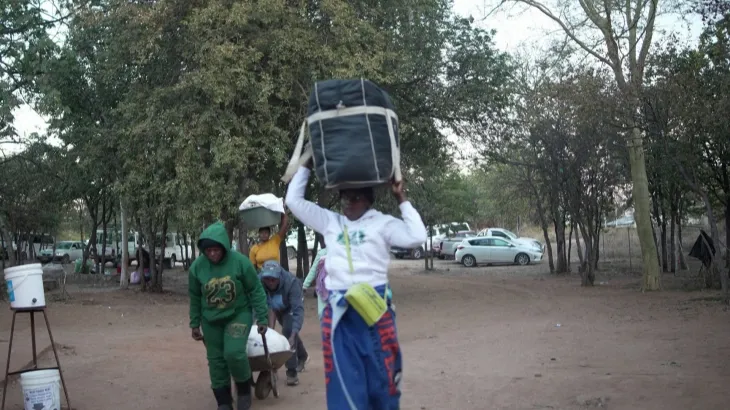
De Doorns, a 207-year-old town in South Africa's Cape Winelands region, is a significant agricultural hub known as the country's largest producer and exporter of table grapes. Situated in the picturesque Western Cape, the town's extensive vineyards contribute substantially to global fruit markets, solidifying its reputation as a key player in the international agricultural landscape. This historic town, with its deep roots in viticulture, exemplifies South Africa's agricultural prowess.
A Rich History in the Valley
The origins of De Doorns trace back to 1819, when it was established and initially proclaimed as a Sub-Drostdy of Tulbagh. This foundational event marked the beginning of its formal administrative development. The settlement's administrative standing quickly evolved, reflecting its growing importance in the region. By 1822, De Doorns was elevated to the full status of a Drostdy, a significant step that showed its increasing prominence and organizational structure within the colonial administration. The area's strategic importance continued to increase significantly over the decades. In 1875, the De Doorns farm was acquired by the Government of the Cape, a move specifically undertaken for the construction of a railway station. This critical infrastructure development would further connect the region, facilitating trade and movement, and laying the groundwork for its future as an export hub.
Long before these colonial developments, evidence of human presence in the area dates back millennia, indicating a profound and enduring connection to the land. Rock art discovered in the mountains of the Hex River Valley has been dated to approximately 7,000 years old, providing a tangible link to ancient inhabitants and their cultural heritage in this fertile valley. This deep historical context notes that the Hex River Valley, and by extension De Doorns, has been a place of human activity and sustenance for thousands of years, far predating its modern agricultural prominence.
The Heart of Grape Production
De Doorns is strategically situated in the Hex River Valley, a location that is central to its agricultural success. It is positioned 32 kilometers northeast of Worcester and 40 kilometers southwest of Touwsrivier, placing it within a prime agricultural zone. This specific location contributes significantly to its reputation as one of the most concentrated and productive table grape export hubs globally, a claim supported by various agricultural reports. The Hex River Valley itself is an indispensable contributor to South Africa's overall grape output, accounting for approximately 25% of the country's impressive 78.3 million export cartons of table grapes annually. This substantial contribution shows the valley's critical role in national agricultural exports.
The valley's agricultural landscape is characterized by an exceptionally high density of farming operations, demonstrating a singular focus on grape cultivation. Specifically, the Hex River Valley is home to 200 distinct table grape farms, each contributing to the region's collective output. This concentration of farms notes the intense and specialized focus on viticulture for export markets that defines the area. The collective output from these numerous farms solidifies De Doorns' key role in the international fruit trade, making it a cornerstone of South Africa's agricultural economy and a significant supplier to global consumers.
Global Reach and Long Harvest
De Doorns annually exports a remarkable 17 million crates of grapes, firmly establishing its position in the competitive global fruit market. This consistent volume of exports notes the town's capacity and efficiency in production and distribution. The South African table grape export industry consistently ranks among the top Southern Hemisphere exporters worldwide, a standing to which De Doorns contributes significantly through its substantial output. This strong international presence ensures that grapes from De Doorns reach diverse markets across the globe.
A unique advantage for the region is the operation of the De Doorns Wine Cellar, which boasts the world's longest harvest season. This extended period runs from December through April, providing a substantial window for cultivation and collection. The five-month harvest season begins promptly in December, allowing for a sustained period of grape collection and processing that is unparalleled in many other grape-producing regions. This protracted harvest enables the region to supply international markets over an extended timeframe, offering a consistent supply of fresh table grapes. This capability reinforces De Doorns' role as a key and reliable player in the global table grape trade, providing a steady stream of high-quality produce to consumers worldwide.