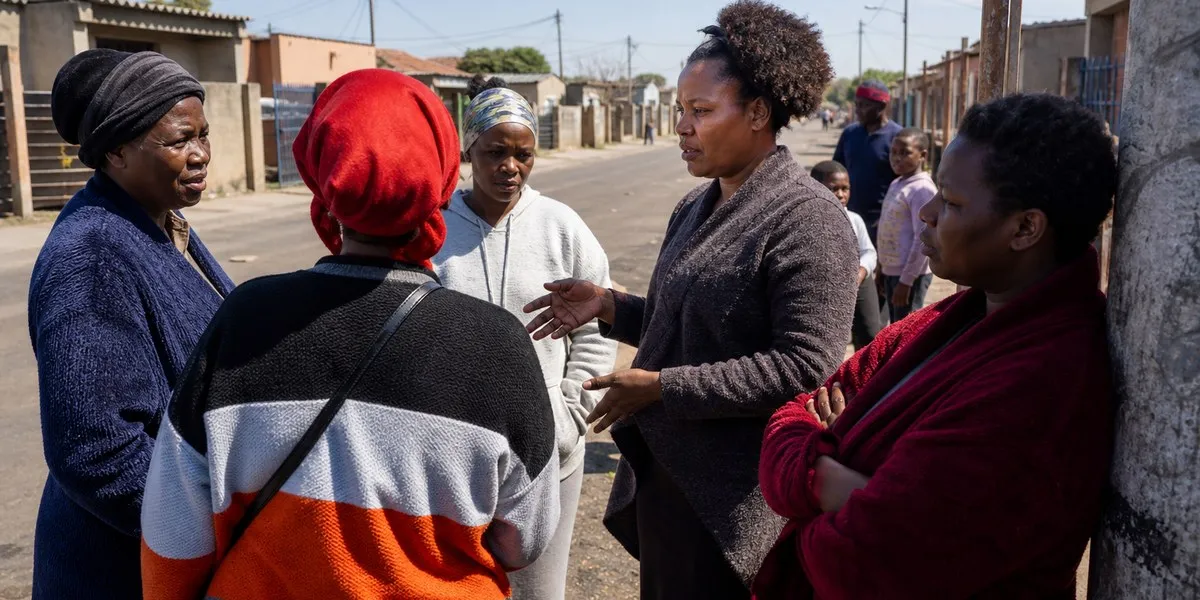
Democratic Alliance (DA) candidate for mayor of Johannesburg, Helen Zille, is campaigning in Soweto ahead of local elections scheduled for November 4. Zille indicated that the DA needs nearly 500,000 votes to secure a majority in the Johannesburg metro. This target shows the significant electoral challenge the party faces in the upcoming polls. She stated that the DA was experiencing rapid growth in Soweto, asserting that declining African National Congress (ANC) support was benefiting her party. When questioned about specific examples of the DA’s work in Johannesburg, Zille responded that service delivery is the duty of the authorities, not a political party. Her campaign efforts in Soweto are a direct attempt to challenge the long-standing political landscape of the area, which has historically been an ANC stronghold. The party's strategy involves directly engaging with communities that have traditionally voted against it, aiming to shift voter perceptions and allegiances.
Soweto's Electoral Significance
Soweto holds substantial electoral weight within Johannesburg, comprising nearly 30% of the city’s electoral wards. The sprawling township is home to approximately 1.2 million people, making its voter base critical for any party seeking control of the metropolitan area. The sheer size of Soweto's population means that its residents represent a significant bloc of potential voters whose support is essential for securing a majority in the broader Johannesburg metropolitan area. Historically, the African National Congress (ANC) has maintained a dominant position in the region, leading in every Soweto ward during the 2021 elections. This consistent performance notes the deep roots the ANC has cultivated within the community over decades. However, the Democratic Alliance (DA) has seen fluctuating support in the area, indicating a dynamic and sometimes unpredictable electoral environment. In the 2016 local elections, the DA secured 31,324 ward-ballot votes in Soweto, representing 9.77% of the total votes cast. By 2021, amid lower voter turnout, the DA’s ward-ballot votes in Soweto decreased to 9,355, accounting for 4.1% of the vote. This decline in vote share in 2021 suggests a setback for the party in the region, making the current campaign even more key for its future prospects. The fluctuating numbers show the challenge the DA faces in consistently appealing to Soweto voters.
Voter Perceptions and DA's History
Some voters in Soweto express distrust towards the Democratic Alliance, perceiving it as a party primarily representing the country’s white residents. This sentiment among Soweto residents is often linked to the legacy of apartheid and historical accusations of racism directed at the DA. Such perceptions present a significant hurdle for the DA as it attempts to broaden its appeal beyond its traditional voter base. Overcoming these historical associations requires a concerted effort to build trust and demonstrate commitment to the needs of all communities.
Despite these perceptions, the DA has previously held significant leadership roles in Johannesburg, demonstrating its capacity to govern a major metropolitan area. Herman Mashaba, a DA member, served as Mayor of Johannesburg from 2016 until 2019, leading a coalition government. His tenure marked a period where the DA, as part of a multi-party coalition, was at the helm of the city's administration. More recently, DA representative Mpho Phalatse held the mayoral office for just over a year, beginning in late 2021. This further period of DA leadership, albeit for a shorter duration, showcased the party's continued influence in the city's political landscape. The party’s past leadership in the city notes its efforts to broaden its appeal beyond its traditional voter base, even as it continues to face historical skepticism in areas like Soweto. These periods of governance provide the DA with a track record it can point to when campaigning for broader support.
Campaign Strategy and Trust Building
Soweto is a traditional stronghold of the African National Congress (ANC), a factor acknowledged by opposition parties. ActionSA leader Herman Mashaba stated that Helen Zille would not be able to win in Johannesburg without Soweto’s support, showing the critical importance of the township's votes to any mayoral aspirant. This statement from a prominent opposition figure notes the consensus among political observers regarding Soweto's key role in Johannesburg's electoral outcomes. Despite historical challenges and the ingrained distrust, DA campaign head Nomzicelo Mohamed indicated that the party had been active in Soweto for over a decade and was gradually earning the community’s trust. This long-term engagement suggests a strategic approach to incremental gains rather than immediate shifts in allegiance. Mohamed's comments reflect the party's belief that consistent presence and effort can eventually overcome historical barriers.
Recent polling data presents a varied picture of voter sentiment in the Johannesburg race, suggesting a highly contested election. An Ipsos survey indicated 31% support for the ANC and 27% for the DA, suggesting a relatively close contest with the ANC holding a slight lead. In contrast, the Social Research Foundation estimated DA support at 42% and ANC support at 18%, painting a significantly different scenario where the DA holds a commanding lead. These divergent poll results highlight the uncertainty surrounding the upcoming elections and the varying methodologies or samples used by different research firms. The discrepancy in polling data indicates that the race for Johannesburg is far from decided, with both major parties having plausible paths to victory depending on voter turnout and the final distribution of votes across the city’s wards, particularly in key areas like Soweto.