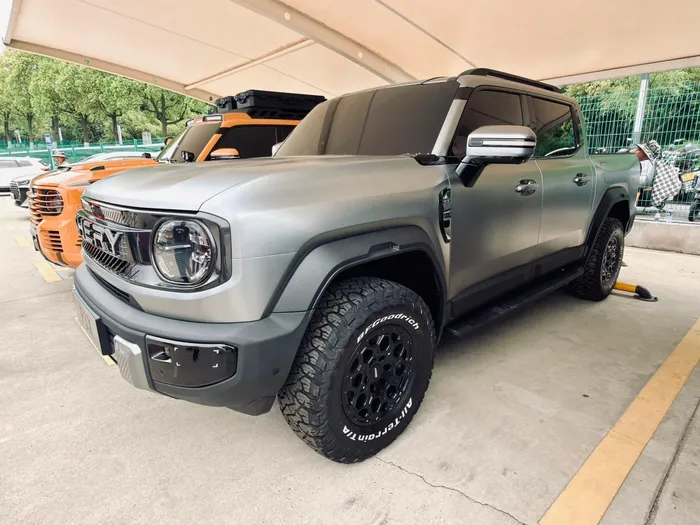
Chery is preparing to enter South Africa’s competitive double-cab segment with its new KP31 bakkie, expected to arrive locally between late 2026 and early 2027. This strategic move signifies Chery's ambition to capture a significant share of a market traditionally dominated by established players. The model, currently known by its internal codename KP31, is likely to be produced at Chery's recently acquired plant in Rosslyn, Pretoria, a decision that shows the company's commitment to local manufacturing and job creation within South Africa. This local production facility is expected to play a key role in ensuring the KP31's availability and competitive pricing in the South African market. The KP31 is aimed straight at established rivals such as the Toyota Hilux and Ford Ranger in the South African market, two vehicles that have long held significant market share and brand loyalty among consumers. Chery has confirmed that the KP31 will debut with a diesel plug-in hybrid system, marking a significant entry into the bakkie segment with advanced powertrain technology that promises both performance and efficiency. This innovative approach sets the KP31 apart from many current offerings, positioning it as a technologically forward-thinking option for South African consumers.
Powertrain and Performance
The Chery KP31 will feature a sophisticated diesel plug-in hybrid system, integrating a powerful 2.5-litre turbodiesel engine with an advanced electric motor and a high-capacity battery pack. This combination represents a significant step forward in bakkie powertrain technology, aiming to deliver a blend of strong performance and environmental efficiency. This powertrain configuration is projected to offer an impressive electric-only driving range of up to 170 kilometres on a single charge, providing users with the flexibility to complete daily commutes or shorter trips without consuming any diesel fuel. This substantial electric range is a key differentiator, offering considerable savings on fuel costs and reducing urban emissions.
The bakkie's total driving range, combining both diesel and electric power, is anticipated to exceed 1,300 kilometres, ensuring long-distance travel capability without frequent refuelling stops. This extended range is particularly beneficial for commercial users and those who frequently travel across South Africa's vast distances. The combined output of the hybrid system is expected to be approximately 260kW of power and a substantial 680Nm of torque. These figures suggest that the KP31 will not only be efficient but also possess ample power for hauling heavy loads and tackling challenging terrains, aligning it with the demanding expectations of the bakkie segment.
This powertrain is being positioned by Chery as a segment-first, distinguishing it from competitors like the BYD Shark, which currently employs petrol-electric hybrid systems in its offerings. The choice of a diesel-electric hybrid system for the KP31 is particularly relevant for markets where diesel remains a popular and practical fuel choice for commercial vehicles and those requiring high torque for towing and off-road applications. Final specifications and performance statistics for the Chery KP31 are expected to be officially released closer to its market launch, building anticipation for its full capabilities. The blend of diesel power and electric efficiency is set to offer a compelling proposition to buyers seeking a versatile and future-proof utility vehicle.
Design and Dimensions
The KP31 is built on a new, strong ladder-frame platform, providing a sturdy and durable foundation essential for a bakkie designed to handle challenging conditions and heavy loads. This architecture is key for maintaining structural integrity and offering superior off-road capabilities. Prototypes of the bakkie were observed equipped with P3X number plates, suggesting their intensive testing phase across various terrains and conditions to ensure reliability and performance. These prototypes were notably kitted out with tough all-terrain tyres, indicating a strong focus on off-road readiness and durability. The inclusion of raised suspension further accentuates its capability to navigate uneven landscapes and obstacles with ease, providing improved ground clearance.
Additionally, the prototypes featured steel bullbars, which offer enhanced protection to the vehicle's front end, a valuable asset for both off-road adventures and practical utility. The presence of a rooftop tent on the prototypes strongly suggests an emphasis on overlanding and adventure utility, appealing to consumers who use their bakkies for outdoor activities and extended trips. These features collectively highlight Chery's intention to deliver a bakkie that is not only strong but also versatile enough to cater to a wide range of adventurous lifestyles and practical applications.
In terms of dimensions, the Chery KP31 appears to be slightly longer than the Ford Ranger, measuring an imposing 5,450mm from bumper to bumper. This extended length contributes to a more spacious load bed and potentially a more comfortable cabin. Its width is approximately 1,920mm, providing a broad stance that enhances stability and road presence. With a height of about 1,925mm, the KP31 stands tall, offering a commanding view of the road and contributing to its rugged aesthetic. These generous dimensions position the KP31 as a substantial entrant in the double-cab segment, capable of competing head-on with the largest vehicles in its class.
The bakkie is expected to offer a payload capacity of around 1,000kg, making it suitable for a wide array of commercial and recreational hauling tasks. This capacity is competitive within the segment, ensuring that it can carry significant loads without compromising performance. Additionally, the KP31 is projected to have a braked towing capacity of 3,500kg, aligning it squarely with the capabilities of established competitors in the market. This high towing capacity is a critical feature for many bakkie owners, enabling them to tow trailers, boats, or caravans with confidence and ease. The combination of its strong platform, generous dimensions, and impressive payload and towing capacities shows the KP31's potential as a highly capable and versatile utility vehicle.
Interior and Strategy
The interior of the Chery KP31 is expected to incorporate a large central infotainment display, serving as the hub for navigation, entertainment, and vehicle settings. This modern interface is complemented by a digital instrument cluster, which provides drivers with customizable and clear information at a glance. These features aim to provide a modern and technologically advanced cabin experience, reflecting contemporary automotive trends and consumer expectations for connectivity and digital integration. The design will also include premium materials such as leather upholstery, offering a touch of luxury and comfort for occupants. Soft-touch surfaces throughout the cabin further contribute to the vehicle's perceived quality and refinement, enhancing the overall tactile experience. These elements suggest Chery's intention to position the KP31 as a refined offering within the competitive bakkie segment, balancing rugged utility with contemporary aesthetics and passenger amenities, thereby appealing to a broader range of buyers who demand both capability and comfort.
The KP31 bakkie is part of a broader strategy by Chery to expand its presence in the global pickup market. This full strategy encompasses the development of multiple bakkie concepts and sub-brand models, each specifically targeting different segments of the market. This approach indicates Chery's ambition to establish a full lineup of light commercial vehicles beyond a single model, ensuring they can cater to diverse consumer needs and preferences, from basic workhorses to premium lifestyle vehicles. The company aims to cater to varied consumer needs and preferences, suggesting a long-term commitment to becoming a significant player in the international pickup truck arena. This multi-pronged strategy reflects Chery's confidence in its engineering capabilities and its determination to challenge established players on a global scale. By offering a range of options, Chery seeks to build a strong foothold and cultivate brand loyalty within the highly competitive pickup truck segment worldwide.