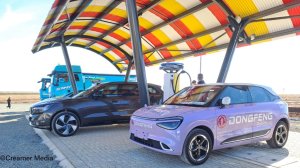
Electric vehicle (EV) charging company Zero Carbon Charge (CHARGE) has inaugurated the first of two off-grid, solar-powered EV charging stations along the N3 corridor, a vital artery connecting Johannesburg and Durban. The initial station is situated at the Reitz Interchange in the Free State, with the second planned for the Colenso-Winterton Interchange in KwaZulu-Natal. These facilities represent the first of their kind in South Africa, aiming to support the growing adoption of electric vehicles by providing key charging infrastructure. The stations operate entirely off-grid, utilizing solar-powered microgrids coupled with battery storage systems, ensuring complete energy independence for their charging operations and mitigating reliance on the national grid. This innovative approach addresses potential energy supply challenges and provides a reliable charging solution for EV owners.
Network Expansion Details
The two new N3 charging stations, signifying a significant advancement in South Africa's EV infrastructure, were delivered in under five months, demonstrating a rapid deployment capability. Each of these stations features next-generation technology, providing 50% more charging capacity than the Wolmaransstad pilot site, CHARGE N12 Wolmaransstad, which has been operational since November 2024. This enhanced capacity allows each station to accommodate up to eight electric vehicles concurrently, significantly improving service availability for users. Each facility includes three direct current (DC) chargers, which are equipped with six dispensers, alongside two alternating current (AC) chargers, each featuring a single dispenser. This full configuration facilitates a rapid and versatile charging experience for users, catering to different charging needs. A typical electric vehicle can achieve a charge from 20% to 80% within a 30-minute timeframe, offering convenience for long-distance travel. The exact charging duration is subject to variations based on the specific vehicle size and its battery configuration. The rapid deployment and advanced technology aim to support the growing EV market along the N3 corridor, providing essential services to motorists travelling between two of South Africa's largest economic hubs.
Investment and Support
The first CHARGE N3 Roadside site, located at the Reitz Interchange (Exit 107) in the Free State, officially launched on May 19, 2026. This station is part of an ambitious initiative to establish an extensive off-grid electric vehicle charging network across South Africa. This strategic development is poised to play a key role in enabling the widespread adoption of electric vehicles throughout the country.
The Development Bank of Southern Africa (DBSA) has provided a substantial R100-million investment to support the rollout of CHARGE's broader EV charging network. This significant funding is key for the expansion of the off-grid infrastructure, which uses solar-powered microgrids and battery storage systems to ensure energy independence and reliability, even in remote locations. The investment shows the DBSA's commitment to sustainable development and green energy initiatives within South Africa.
CHARGE's pilot site, CHARGE N12 Wolmaransstad, located in the North West province, has demonstrated high reliability and operational efficiency since its launch. The Wolmaransstad facility has achieved an impressive 99% uptime since it became operational in November 2024, indicating the effectiveness and robustness of the off-grid model in providing consistent charging services. This proven track record provides a strong foundation for the expansion of the network.
Growing EV Market
The South African electric vehicle market is experiencing significant growth, as evidenced by recent data from the online automotive marketplace, AutoTrader. Electric vehicle (EV) engagement on AutoTrader increased by more than 200% between February and March 2026, noting a surge in consumer interest and interaction with EV listings. During the same period, EV searches on AutoTrader rose by 45% year-on-year, further indicating a growing curiosity and intent among potential buyers. These figures collectively point to a rapidly growing interest in electric vehicles within the South African market, driven by increasing awareness and the availability of new models.
South Africa also recorded a total of 389 EV sales in March 2026, marking a new record for the country and reflecting a tangible shift in consumer purchasing habits. This record sales performance further shows the expansion of the EV sector and the increasing acceptance of electric mobility. The increased consumer interest and sales volume coincide with infrastructure developments, such as CHARGE's new stations, aimed at supporting and accelerating EV adoption across the nation.
Future Plans and Vision
A second charging station, CHARGE N3 Tugela, is scheduled to officially open on May 20, 2026. This site is strategically located at the Colenso-Winterton Interchange (Exit 207) in KwaZulu-Natal, further expanding the network along the N3 corridor and providing essential charging points for motorists. Following these initial installations, CHARGE intends to roll out 60 additional off-grid charging locations across the country, significantly broadening its footprint. The company has indicated that its expansion efforts will commence with the N1 corridor, connecting major economic hubs such as Johannesburg and Cape Town. This strategic development aims to establish a full and reliable charging infrastructure to support the growing adoption of electric vehicles in South Africa, fostering a sustainable future for transportation.