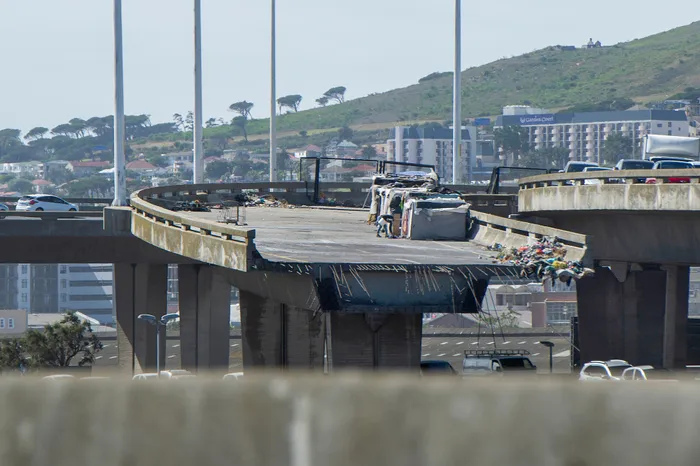
Cape Town is advancing plans to complete the Foreshore Freeway Bridge, also known as Cape Town's Unfinished Bridge, nearly five decades after its original construction stalled. The project aims to finalize the long-incomplete structure, which has been a prominent feature of the city's landscape, dominating the skyline of the central business district. Officials expect to release the first proposed designs for public comment in September, marking a key milestone in the project's revival. This initiative represents a significant step in the city's effort to address the long-standing infrastructure challenge, potentially reshaping traffic flow and urban development in the central business district, improving connectivity and alleviating congestion.
Project History and Challenges
Construction on the elevated structure was halted in 1977 after funding ran out, leaving the iconic concrete pillars and road sections incomplete. For decades, these unfinished sections have stood as a stark reminder of the ambitious project that never reached fruition. Engineers estimated in the past that it would cost at least R2 billion to complete the bridges as originally designed, a substantial investment for any municipal project. More recently, in 2022, then Transport Minister Fikile Mbalula revealed that completing the freeway could cost around R1.8 billion, with a projected construction timeline of about nine years. This cost estimate notes the significant financial undertaking required to bring the decades-old plan to completion.
Funding remains one of the biggest hurdles for the project, as the city grapples with the financial implications of such a large-scale infrastructure development. The substantial capital required has historically been a stumbling block, and finding a sustainable funding model is critical for the project's success. The city is exploring various options to ensure the financial viability of completing the freeway, which is seen as essential for future urban planning and traffic management.
Alternative Proposals and Criticism
Brett Herron, GOOD secretary-general, has been a vocal critic of the current approach and claimed the Democratic Alliance (DA) abandoned a viable solution more than a decade ago. Herron stated that the original Foreshore Freeway Project, initiated during his tenure as a City of Cape Town mayoral committee member, called for private-sector proposals to improve traffic flow while incorporating affordable housing on approximately eight hectares of City-owned land. This previous proposal aimed to leverage private investment, thereby reducing the financial burden on ratepayers. Herron reflected on the financial challenges of the project, saying, "It was clear to all of us that we would never be able to fund that scale of development – the cost burden for the ratepayers would be way too much." He emphasized that a public-private partnership model was considered essential for the project's feasibility at that time.
Herron asserted that political interference led to the cancellation of this full project. "Unfortunately that project was blocked by DA politicians, some who are still there in that Cape Town caucus," he stated, pointing to internal political dynamics as a direct cause for the previous plan's collapse. He speculated on the motivations behind the decision, adding, "I always believed it had to do with access to that 8 hectares of land," suggesting that land control and development interests played a role in the political maneuvering. Herron expressed strong skepticism regarding the current proposal's viability, particularly concerning its funding. "The Mayor's project will never be funded and will never happen, the ratepayers simply cannot afford to fund it," Herron claimed, elaborating: "The Mayor is dreaming, or spinning, but his party members and their personal or party funding interests were the direct cause of the massive Foreshore Freeway project being cancelled." His comments show the deep-seated political divisions and historical context surrounding the project.
Mayor's Vision and Next Steps
Cape Town Mayor Geordin Hill-Lewis stated the City is "well on its way" to completing the Foreshore Freeway Project, despite the historical challenges and ongoing criticism. Mayor Hill-Lewis confirmed plans for public engagement regarding the long-stalled infrastructure, which he views as a critical step towards realizing the project. "In September, we're going to release some of our first designs for public comment," he announced, inviting public input and transparency into the planning process. The Mayor also acknowledged the significant financial challenges ahead for the initiative, echoing concerns raised by others. "We still have to fund this; it's a very expensive operation," Hill-Lewis said, indicating that securing funding remains a top priority and a complex task for the city administration.
He emphasized the city's commitment to finalizing the decades-old structure, telling reporters, "The unfinished bridges that we all grew up with as Capetonians, we are planning to get them completed." This statement notes a desire to resolve a long-standing urban anomaly. Hill-Lewis reiterated the timeline for public consultation, stating, "In September we will release initial designs for public comment, while work in the background continues." He further outlined the project's necessity, stating, "The project requires detailed work in design and engineering, but it is our intention to complete it. The CBD and greater Cape Town needs the investment to make traffic flow smoother in the CBD." The Mayor's vision is to transform the unfinished structure into a functional asset, alleviating traffic congestion and supporting the city's growth.