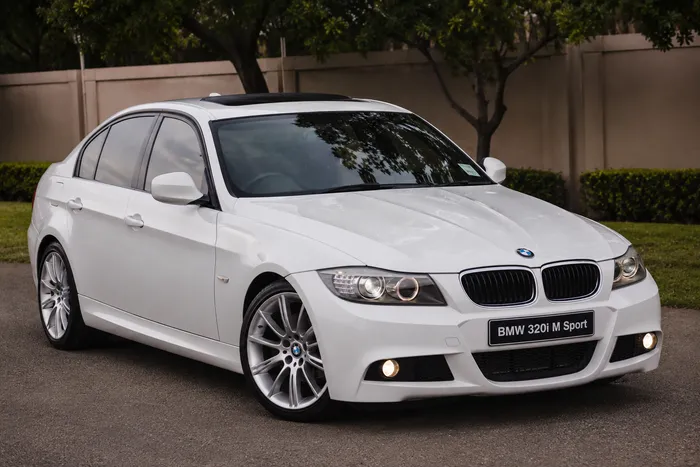
Autoworld, a dealership in Goodwood, Cape Town, has been ordered to refund a motorist identified as RL over R212,000 for a faulty 2012 BMW 320i M Sport automatic. The order, issued by Acting Judge M Louw, mandates that Autoworld accept the return of the vehicle and reimburse RL an additional R4,526 from a prior settlement agreement. Critically, the dealership is also responsible for the costs associated with returning the vehicle, further solidifying the court's stance on the matter. This ruling shows the significant consumer protections afforded under South African law, particularly when vehicles sold fail to meet acceptable standards of quality and durability.
RL purchased the second-hand BMW from Autoworld in Goodwood in December 2022. The acquisition of the 2012 BMW 320i M Sport automatic was financed through Marques Finance (MQ Finance) via an instalment sale agreement exceeding R213,000, specifically valued at over R213,000. Following the court's decision, a key directive was issued to Marques Finance. The court directed Marques Finance to apply the refunded amount from Autoworld to settle RL's outstanding debt before disbursing any remaining balance to him. This measure ensures that no additional interest, penalties, or charges accrue on RL's account after the order date, protecting him from further financial burden related to the problematic vehicle. The total refund amount, including the R4,526 from the earlier settlement, was calculated to fully address the motorist's financial outlay for the vehicle.
Persistent Mechanical Failures
Mechanical problems, particularly persistent overheating issues, emerged within weeks of RL's purchase of the 2012 BMW 320i M Sport automatic. These issues manifested shortly after the December 2022 acquisition, signaling immediate concerns about the vehicle's condition. The vehicle was repeatedly returned to the dealership for repairs as the issues continued to plague its functionality. By March 2023, Autoworld had retained the vehicle for approximately three months, undertaking repairs that included replacing the water pump in an attempt to address the chronic overheating. It was during this period of extensive repairs that RL discovered critical information that had not been disclosed at the time of sale: prior repairs to the gearbox and front brake sensor had been conducted on the vehicle. This lack of transparency regarding the vehicle's history further complicated RL's trust in the dealership's representation of the BMW.
The court determined that the BMW's problems went far beyond minor faults, characterizing them as fundamental defects. Evidence presented indicated that approximately R95,000 had been spent on repairs to a vehicle originally bought for just under R190,000. These substantial repair costs, relative to the purchase price, noted the severity and persistence of the issues. According to court findings, these defects frequently rendered the vehicle undriveable, severely impacting RL's ability to use the car for its intended purpose. The recurring nature and significant cost of these repairs showed the vehicle's inherent unreliability from the outset of RL's ownership.
Previous Settlement Efforts
The parties involved, Autoworld and RL, had previously reached a settlement in November 2023, attempting to resolve the ongoing dispute outside of court. Under the terms of that agreement, Autoworld committed to installing a replacement engine in the BMW as a significant step towards rectification. The dealership also agreed to complete any outstanding repairs on the vehicle, aiming to bring it to an acceptable operational standard. A key component of this settlement was Autoworld's agreement to reimburse RL for the instalments he had paid during the periods the vehicle was off the road due to mechanical issues, acknowledging the inconvenience and financial strain caused by the car's unreliability.
The November 2023 settlement further stipulated that Autoworld would provide a six-month implied warranty on the vehicle's overall condition, offering a period of assurance following the extensive repairs. Additionally, a specific 12-month warranty was to be provided for the replacement engine and the associated labor, indicating a recognition of the critical nature of this particular repair. This agreement aimed to resolve the ongoing mechanical problems RL had experienced since purchasing the BMW, with both parties hoping for a definitive solution to the vehicle's persistent issues.
However, despite the engine replacement and the terms outlined in the November 2023 settlement, new serious defects emerged within months. The BMW began exhibiting excessive oil consumption and smoke upon start-up, indicating fresh and significant engine-related problems. Further issues included recurring battery failures, persistent warning lights on the dashboard, uneven idling, and frequent stalling. These problems arose during the period covered by the warranties established in the November 2023 settlement, directly challenging the effectiveness and durability of the previous repairs.
RL reported these new defects to Autoworld, providing timely notification of the recurring issues. However, despite these reports falling within the agreed-upon warranty periods for both the vehicle's overall condition and the replacement engine, no further repairs were carried out by the dealership after March 2024. This inaction left RL with a vehicle still experiencing fundamental defects, even after multiple repair attempts and a formal settlement agreement.
Court's Legal Findings
Acting Judge M Louw determined that Autoworld's interpretation of the Consumer Protection Act (CPA) was incorrect. The dealership had argued that the prior settlement agreement, which included an engine replacement and specific warranties, superseded RL's rights under the Act. Autoworld contended that the settlement constituted a final resolution, thereby limiting RL's further recourse. However, Judge Louw found that despite the previous settlement and extensive repairs, the vehicle continued to exhibit fundamental defects that rendered it unfit for its intended purpose. The court emphasized that the Consumer Protection Act provides strong protections for consumers, particularly regarding goods that are not of acceptable quality, durable, or fit for purpose.
Judge Louw’s ruling clarified that a consumer's statutory rights are not necessarily extinguished by an attempt at a private settlement, especially when the underlying issues persist or new serious defects emerge within warranty periods. The judgment noted the importance of dealerships ensuring that vehicles sold meet the standards of quality and functionality expected by law, even after repair attempts. The persistent and varied mechanical failures, which included overheating, excessive oil consumption, battery failures, and stalling, indicated that the BMW remained fundamentally flawed. This ongoing unreliability justified the refund order despite the dealership's previous efforts to rectify the problems through repairs and a settlement. The court's decision showed the continuing obligation of sellers to provide goods that comply with consumer protection legislation, reinforcing that a partial or temporary fix does not absolve a seller of their duty to provide a fit-for-purpose product. The ruling serves as a significant precedent, affirming that consumers retain their rights under the CPA even after engaging in settlement attempts, particularly when the core issues of product quality remain unresolved.