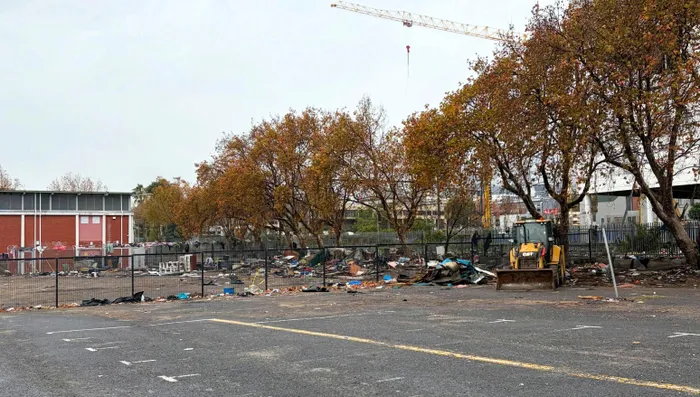
The City of Cape Town has cleared an illegal homeless encampment that occupied a parking area behind the Al-Jaamia Mosque on Stegman Road, Claremont, for the past eight years. The operation on Tuesday removed 25 structures and six tents that had encroached upon the property, some erected against the mosque fencing and others near the Claremont railway station. The removal followed a court order concerning the unlawful occupation. This decisive action by the City of Cape Town successfully removed illegal structures that had encroached upon the parking area, bringing an end to a long-standing issue in the community.
Wayne Dyason, the City’s Law Enforcement spokesperson, confirmed the action, stating, "A total of 25 structures and six tents were identified and dismantled in accordance with the court order. The site was cleared of all unlawful occupation and associated materials." Dyason further elaborated that the operation was carried out efficiently and thoroughly, ensuring that the area was fully restored to its intended purpose. The spokesperson noted the importance of adhering to legal processes, noting that the court order provided the necessary mandate for the City's intervention. The dismantled structures and tents represented the full extent of the unlawful occupation, which had persisted for nearly a decade.
Reasons for Eviction
Residents and nearby organizations previously voiced concerns regarding unhygienic living conditions, accumulation of waste, anti-social behavior, and reported criminal activity at the site. The encampment, situated near critical infrastructure, also presented risks to high-voltage electricity infrastructure and public transport services. An estimated 60 to 80 people resided at the location, utilizing the surrounding area for sanitation due to the absence of toilet facilities within the encampment. These concerns were not isolated incidents but rather a consistent pattern observed over the eight-year period of the encampment's existence.
The presence of illegal, informal structures and tents, some erected directly against the mosque fencing and others along fencing near the Claremont railway station, exacerbated these issues. The close proximity to essential services and public spaces amplified the community's worries. Concerns over unhygienic living conditions were particularly acute, with residents and nearby organisations frequently raising complaints about waste build-up. This accumulation of refuse contributed to an environment that was not only unsightly but also posed potential health hazards. The site posed a significant risk to high-voltage electricity infrastructure due to the nature of the informal structures and their proximity to power lines. Public transport services in the vicinity were also impacted, as the encampment's presence created challenges for accessibility and safety in the area. The estimated 60 to 80 individuals staying at the site relied on the surrounding public spaces for basic sanitation, showing the severe lack of essential facilities within the encampment itself. This situation led to further deterioration of the local environment and increased public health concerns.
City's Intervention and Offers
The operation to clear the encampment involved multiple city departments, including the City’s Law Enforcement, Metro Police, and Traffic Services, alongside police and other municipal support services. This full effort showcased a coordinated approach to address the long-standing issue. A week prior to the eviction, the City’s Community, Arts and Culture Development Department extended an offer of alternative accommodation to the encampment residents. This offer was subsequently declined by those residing at the site, indicating a reluctance among many to accept formal shelter solutions at that time. Following the clearance, the property has been returned to the City. Officials indicated that monitoring and enforcement measures would be implemented to deter any attempts at reoccupation.
The involvement of various City departments, including the City’s Law Enforcement, Metro Police, Traffic Services, and the South African Police Service, supported by other municipal departments, ensured a well-managed and lawful process. This multi-agency approach was critical in executing the court order effectively and maintaining public order during the operation. The City's proactive approach included the offer of alternative accommodation, a standard procedure aimed at providing humanitarian support to those displaced. However, the majority of the encampment residents chose not to accept this offer prior to the clearance. With the site now cleared, the property has been handed back to the City, which will now oversee its management. The implementation of monitoring and enforcement measures is a key strategy to prevent any future reoccupation, ensuring the area remains clear and compliant with municipal regulations.
Community and Mosque Efforts
Local officials stated a significant portion of crime affecting the Claremont area was linked to the encampment. Despite the challenges, the Al-Jaamia Mosque frequently intervened at its own expense to maintain the site. Nazeem Jamie, Chairperson of the executive committee of the Al-Jaamia Mosque, confirmed their efforts, stating, "The mosque frequently stepped in at its own expense bi-monthly to remove the rubble and manage basic cleanliness." These interventions aimed to mitigate the impact of the long-term occupation on the immediate environment.
Regarding alternative housing, eight individuals from the encampment accepted the City's offer of accommodation by May 22. This number reflects those who engaged with the City's outreach efforts and opted for formal shelter solutions. Following the clearance operation, the Al-Jaamia Mosque implemented its own measures to prevent future reoccupation of the area. These steps included hiring private security personnel and undertaking repairs to damaged fencing surrounding the mosque property, aiming to secure the perimeter and deter any return of the encampment. The mosque's proactive engagement in managing the cleanliness of the area, even before the City's intervention, shows the community's desire for a resolution. The ongoing efforts by the Al-Jaamia Mosque to secure its perimeter and prevent any recurrence of the encampment highlight a concerted community-led initiative to maintain the integrity and safety of the area. The property has been handed back to the City with monitoring and enforcement measures to prevent reoccupation, reinforcing the commitment to sustain the cleared status of the site.