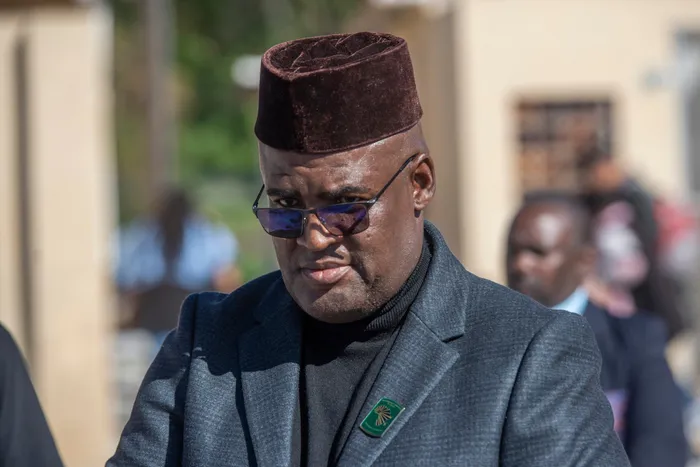
South African-born billionaire Martin Moshal has donated R118 million to various political parties in South Africa over the past five years, according to a recent report. The Electoral Commission of South Africa (IEC) released its Political Party Funding report, detailing significant financial contributions to the country's political landscape. Moshal's donations include R15.5 million directed to Build One South Africa (BOSA). His financial involvement notes the substantial role private funding plays in South African politics, with the total R118 million representing one of the largest individual contributions disclosed to political parties. Moshal's substantial political contributions in South Africa have drawn attention following the IEC's publication of its latest report, which shines a light on the intricate web of political financing. The report shows the growing influence of private capital in shaping the political discourse and electoral outcomes within the nation.
Moshal's Gambling Empire and Political Ties
Martin Moshal, the South African-born billionaire, was born in Durban and studied business science at the University of Cape Town. His career in the online gambling sector began in 1994 when he co-founded Microgaming, a key moment that would cement his legacy in the digital gaming industry. In the same year, Moshal launched casino.co.za, further establishing his presence in the nascent online gambling industry. This early foray into the digital realm positioned him as a pioneer in the rapidly evolving sector.
Moshal is credited with developing foundational patents for online gambling technologies, innovations that have profoundly shaped the industry's landscape. His ingenuity also led to the development of the world’s first online progressive jackpot slot game, a feature that revolutionized online casino entertainment and became a staple for many platforms. His company, Microgaming, provides support to major operators globally, including Betway, and powers its platforms with its strong technology. Betway offers a full range of online gambling services, encompassing sports betting, online casinos, online poker, and online bingo, catering to a diverse audience of online gamblers. Moshal is identified as one of Betway’s backers, indicating his continued financial and strategic involvement in the sector.
Currently, Moshal is based in Australia, from where he continues to oversee his extensive business interests. His significant political contributions in South Africa have drawn scrutiny, particularly when compared to public funding for political parties. The scale of his personal donations has sparked conversations about the balance between private and public financing in a democratic system. Public funding from provincial legislatures amounted to R1.055 billion, indicating the substantial scale of private donations in the overall political finance landscape and noting how individual contributions, like Moshal's, form a critical component of party funding. The Electoral Commission of South Africa (IEC) released its Political Party Funding report, which meticulously details these financial flows, bringing greater transparency to the funding of political entities.
Detailed Breakdown of Donations
Martin Moshal provided R48 million to the Democratic Alliance (DA) over a five-year period, demonstrating a sustained commitment to the party. This places Moshal as the DA’s second-largest donor, a position that shows his significant financial backing. A portion of these contributions included R5 million given to the DA specifically in anticipation of the 2026 Local Government Elections, indicating a strategic investment in future electoral campaigns.
Moshal also donated a substantial R47 million to ActionSA, making him the party's largest donor. This considerable contribution notes his belief in ActionSA's vision and objectives. Similar to his contributions to the DA, Moshal contributed R5 million to ActionSA specifically ahead of the 2026 local elections, signaling his intent to influence local political outcomes. The Inkatha Freedom Party (IFP) received R7.5 million from Moshal, further diversifying his political donations across different parties. Build One South Africa (BOSA) has also identified Moshal as its largest donor, having received R15.5 million from him, reinforcing his key role in funding emerging political forces.
Comparatively, Jonathan Oppenheimer donated R30 million to political parties, a significant sum that also places him among the top individual contributors. Half of Jonathan Oppenheimer's donation, amounting to R15 million, was directed to the Democratic Alliance (DA), aligning with other major donors to the party. The other half of Jonathan Oppenheimer's donation, also R15 million, went to the Inkatha Freedom Party (IFP), showcasing a diversified approach to political funding. These figures, meticulously detailed in the Electoral Commission of South Africa's (IEC) Political Party Funding report, highlight the significant individual financial contributions to South African political entities and the concentration of wealth in influencing political landscapes.
Concerns Over Gambling Legislation Influence
Concerns have emerged that Martin Moshal’s substantial political donations could create conflicts of interest, particularly given his deep involvement in the online gambling industry. Commentators have raised worries that parties receiving Moshal's financial contributions are less likely to support strict bans on online gambling, potentially leading to a legislative environment favorable to his business interests. There are also fears that his donations could deter political parties from supporting such legislative measures, creating an implicit bias in policy discussions. The Democratic Alliance (DA), a significant recipient of Moshal’s funding, has stated its opposition to a complete ban on online gambling. The DA believes that implementing an outright ban would inadvertently push users towards illegal operators, creating an unregulated black market that is harder to control and monitor. Instead, the party advocates for an updated National Gambling Act to regulate the sector more effectively, ensuring consumer protection and responsible gaming practices without resorting to a blanket prohibition.
Broader Political Funding Landscape
Registered political parties disclosed R230,956,140 in direct private donations over 79 declarations for the 2024/25 financial year, reflecting a dynamic and active private funding environment. Beyond Jonathan Oppenheimer's contributions, other significant donations were also reported. The Batho Batho Trust gave R25 million to the African National Congress (ANC), showing the diverse sources of funding for the ruling party. Fynbos Ekwitiet and Fynbos Kapitaal together contributed a substantial R30 million to the DA, further solidifying the party's financial base from corporate and private entities. Rebecca Oppenheimer donated R15 million, supporting Rise Mzansi, indicating support for newer political movements. Nicholas Oppenheimer also donated R15 million, specifically supporting the IFP, noting the continued influence of prominent families in political financing. We Are The People contributed R15 million to Rise Mzansi, demonstrating collective support for the party. The Chancellor House Trust donated R11 million to the ANC, another significant contribution to the governing party. Public funding for represented parties from Parliament and eight provincial legislatures, excluding the North West, totaled R1,623,506,744, providing a key baseline for party operations. Public funding from Parliament alone amounted to R568.38 million, illustrating the state's direct financial support for political representation.
Regulatory Oversight and Electoral Shifts
The Multi-Party Democracy Fund received R30,885,951 in private donations during the 2024/25 financial year, a fund designed to promote multi-party democracy and support political parties. Exxaro Resources contributed a significant R25 million to this fund, demonstrating corporate commitment to democratic processes. Standard Bank donated R2.5 million, while Discovery provided R500,000 to the fund, showcasing broader private sector participation in strengthening the democratic framework. Following the May 2024 elections, South Africa's political landscape underwent a significant transformation, with the number of represented parties increasing from 15 to 20, as eight new parties entered the political scene. This expansion reflects a more diverse and competitive electoral environment. Simultaneously, three legacy parties—COPE, AIC, and MF—lost their representation, indicating a shift in voter preferences and political alignments. The Electoral Commission (IEC) has enhanced its regulatory authority, allowing it to issue directives and impose administrative fines on political parties for non-compliance with financial reporting or late disclosures. This strengthened oversight aims to ensure greater transparency and accountability in political party funding, fostering a more equitable and trustworthy electoral system. The IEC's proactive measures are critical in maintaining the integrity of the democratic process and ensuring that financial contributions do not unduly influence political outcomes.