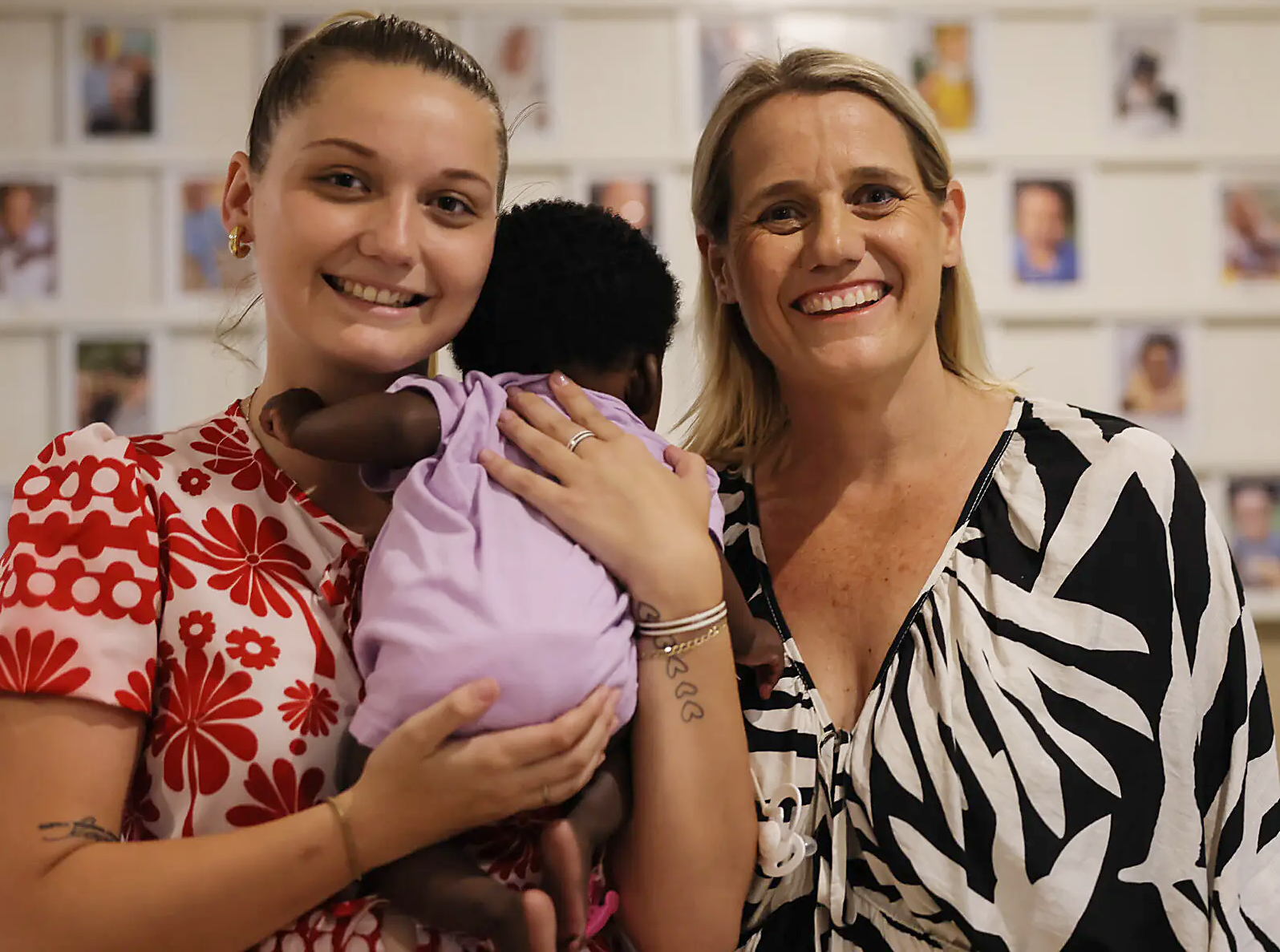
Baby Home Durban North serves as a temporary refuge for infants and toddlers in Durban, South Africa, a country that recorded 595 cases of child abandonment in 2024. The facility, established in rooms adjacent to a family house in Glen Anil, operates under the umbrella non-profit organization Peace Agency. This organization also includes Baby Line, which focuses on supporting mothers.
The home provides shelter to children referred from several government hospitals, including Addington, Prince Mshiyeni Memorial, Victoria Mxenge, and King Dinuzulu. Peace Agency’s Baby Home Durban North addresses a critical need by offering immediate care and a safe environment for abandoned children within the region.
A Day at the Home
Baby Home Durban North operates with a capacity for six children and is staffed by four permanent child caregivers. During a recent visit, five babies were observed in a sun-washed room. Childcare provider Precious Biyase was seen feeding a three-year-old boy seated in a table-chair, while a nine-month-old girl and a seven-month-old boy peered from their cribs. All five children had been at the home since shortly after birth. The sixth crib remained empty, following the departure of an 18-month-old boy the previous day for family reunification. A new baby is anticipated to arrive tomorrow.
The facility has previously accommodated additional children during emergencies. During the Covid lockdown in 2020, for instance, the home made room for three additional emergency babies over an Easter weekend. The dedication of the home's founders, Jo and Tatum Teunissen, is symbolized by the phrase "Small things, great love" tattooed on their arms.
Tatum Teunissen explained the role of Baby Line, a related initiative: "So Baby Line is a support and counselling service for pregnant women and mums." Teunissen noted the isolation many mothers experience, stating, "Often we are the only people they have as a support system. They go into hospital without a partner, all alone. And, I mean, sometimes they’re in labour for four days, all alone. So I’m just a message away for them."
Teunissen detailed her initial conversations with mothers considering abandonment: "When they message, I ask all my usual questions: ‘Where do you stay, how old are you,’ and so on – and then I’ll ask: ‘Why do you want to give your child up for adoption?’ And the number one response is: ‘Financially I can’t afford my child.’ Or: ‘I can’t afford nappies.’ Or something like that." She added, "And my immediate response is: ‘Would you consider keeping your child if I can help you with nappies and baby supplies?’ And probably eight times out of 10 it’s an absolutely yes. So it’s something so small as small as a pack of nappies, two outfits and wet wipes or Vaseline, that is the deciding factor between keeping their child or putting them up for adoption."
Teunissen also noted the social pressures faced by young mothers. "So, a lot of the time it’s high school boyfriends who they’re obviously head-over-heels in love with. But then they fall pregnant and often the fathers go absent," she said. "The pregnant girls get scared, a lot of the time their nerves kick in. They’re scared of what other people might think, or that their family might kick them out, so they don’t open up. As soon as they do, the family often is incredibly supportive."
The Scars of Abandonment
Actual annual figures for child abandonment in South Africa are believed to be significantly higher than officially recorded. Child abandonment is classified as a criminal offense under South Africa’s Children’s Act. When babies are abandoned and arrive at the Baby Home Durban North, they often remain at the facility for extended periods, necessitating public notices in newspapers for 90 days to gather information regarding the baby's family.
The home accepts babies from all backgrounds, including those with special needs. This includes children diagnosed with medical conditions such as cerebral palsy, autism, and HIV. On occasion, police officers bring babies or toddlers to the home for emergency placements, particularly when welfare offices are closed.
Child Protection Month 2026 was launched on May 3 in eDumbe, located within the Zululand District Municipality in KwaZulu-Natal.
Pathways to Permanency
Baby Home Durban North was founded in 2015 by Jo Teunissen and her husband Bjorn, creating a temporary haven for abandoned children. When a mother voluntarily gives up a baby for adoption, she must first appear in court and sign formal consent documents. From the date these documents are signed, the mother has 60 days to change her mind, according to established legal procedures. Jo Teunissen noted the fluidity of placements, stating, "There’s actually not a set time that they’re with us. It all depends on how long it takes for the social worker with each individual case." She added, "So our one boy left yesterday, he was 18 months old. It was a family reunification process. But tomorrow we’ll probably have a new baby, that’s the turnover."
After the 60-day period, social workers complete medical assessments and background reports before a child can be matched with adoptive parents. Ms. Teunissen emphasized the importance of dignified care for the children. "I always tell people to donate with dignity. Just because a child comes from rough circumstances does not mean they need to live like that now. Our children never wear torn clothes," she stated. The home receives many children directly from medical facilities. "Mostly we get babies from hospitals – which is the best way because we know about their mum and their birth history," Ms. Teunissen explained. "So every government hospital has social workers working within the hospital. And when a mum goes to hospital, she might say, ‘I’m unable to look after my baby’ or, you know, ‘I need help, I can’t do this’."
She described the process further: "And then normally what happens is when the mum gets discharged, the baby stays behind in the nursery. And then they phone the welfare who contact one of us at the homes. And then we go and fetch the baby." The home accepts children with diverse medical needs. "Which obviously gives a lot [of] extra work because you’ve got to be very thorough and be very positive. We’ve had children with cerebral palsy, we’ve had autistic children, we’ve had kids living with HIV," Ms. Teunissen said. Police also bring children for emergency placements, particularly when welfare offices are closed. "Sometimes the police don’t even phone before they arrive," Ms. Teunissen noted. "It’s normally over the weekend or public holidays when the welfare offices are closed. It could have been a case of domestic violence where they had to remove the child. Or maybe the mum was found shoplifting and she had a baby with her. And so they have to take the child somewhere safe while they follow due process with the mum." A plaque inside the baby home displays the full quote: 'Not all of us can do great things. But we can do small things with great love.'
Support for Vulnerable Mothers
Baby Line provides support and counselling services to pregnant women and mothers through telephonic and WhatsApp communication, according to social work student Tatum Teunissen, who coordinates the initiative. Ms. Teunissen stated, "Often we are the only people they have as a support system." She added, "They go into hospital without a partner, all alone. And, I mean, sometimes they’re in labour for four days, all alone. So I’m just a message away for them."
Ms. Teunissen indicated that a primary reason mothers consider giving up their children is the financial inability to afford basic necessities such as nappies. She explained, "When they message, I ask all my usual questions: ‘Where do you stay, how old are you,’ and so on – and then I’ll ask: ‘Why do you want to give your child up for adoption?’ And the number one response is: ‘Financially I can’t afford my child.’ Or: ‘I can’t afford nappies.’ Or something like that." She noted that offering help with nappies and baby supplies often leads to mothers deciding to keep their children. Ms. Teunissen has counselled mothers aged 15 to 28. In KwaZulu-Natal, 26,515 girls aged 10 to 19, including 1,254 girls aged 14 and younger, became pregnant within an eight-month period. Child carer Lindiwe Khumalo was observed feeding a three-year-old boy while a four-month-old slept.