Mmagauta Molefe, a prominent anti-apartheid activist, was a 21-year-old student from Tladi, Soweto, when she was expelled from Turfloop University for her activism. Her early life in Tladi, Soweto, provided a direct view into the injustices of the apartheid regime, fueling her commitment to social change from a young age. The Order of Luthuli, which recognizes contributions to democracy, science, arts, sport, and nation-building, is bestowed upon individuals like Molefe for their significant roles in shaping South Africa's present and future. This prestigious award acknowledges her unwavering dedication and the profound impact of her resistance. Molefe stated, "I was 21; I was not in high school. I was chased away from university and I had been an activist from high school, I’m a founder member of SAMS (SA Students Movement) and when I got to university I joined [SASO (SA Students' Organisation)]." She added, "You had to be a zombie not to be an activist," showing the widespread nature of the struggle against apartheid and the moral imperative felt by many young South Africans to join the movement. Molefe explained her early involvement, noting, "Already there were committees, there were parents, there were kids fighting the issue of Afrikaans so I just fell into it because then I joined the Black People’s Convention (BPC), which was the adult version of the Black Consciousness Movement, because we had SASO, SASM and when you drop out of school then you’re an adult you joined BPC." Her narrative notes the interconnectedness of various anti-apartheid organizations and the natural progression of activists from student movements to broader political structures.
A Life of Activism and Resistance
Mmagauta Molefe's journey as an activist began early, making her a founder member of the SA Students Movement (SAMS), an organization critical in mobilizing young people against the apartheid government. Upon entering university, she further solidified her commitment by joining the SA Students' Organisation (SASO), which played a key role in the Black Consciousness Movement. Her activism took a significant turn when she participated in "Viva Frelimo" rallies in September 1974. These rallies, celebrating the independence of Mozambique from Portuguese colonial rule, were seen as a direct challenge to the apartheid regime and led to her expulsion from Turfloop University. The independence of Mozambique was a significant event in southern African liberation movements, inspiring anti-apartheid activists across the region.
Despite this setback, Molefe's resolve remained unbroken. Her activism continued as she helped mobilize against Afrikaans tuition in schools in the months leading up to June 16, 1976. This period was marked by widespread student protests against the apartheid government's imposition of Afrikaans as a medium of instruction, a policy seen as a tool of oppression and cultural subjugation. Her efforts were instrumental in galvanizing community support and raising awareness about the detrimental effects of the policy on black education. Following her second expulsion from a higher education institution, a testament to her persistent defiance, Molefe pursued her studies through the University of SA (Unisa), a distance learning institution that provided an alternative pathway for many who were excluded from traditional universities due to their political activities. Through Unisa, she successfully qualified, demonstrating her unwavering commitment to education even in the face of systemic barriers.
The Fight Against Afrikaans Tuition
The article commemorates the 50th anniversary of the June 16 uprising, a key moment in South African history. This uprising saw widespread student protests against the apartheid government's imposition of Afrikaans as a medium of instruction in schools, a policy that ignited fierce resistance among students and educators alike. The students viewed the forced use of Afrikaans as a symbol of their oppression and a barrier to quality education. The events of June 16, 1976, particularly the Soweto Uprising, brought international attention to the brutality of the apartheid regime and galvanized global support for the anti-apartheid movement.
Turfloop University, initially renamed the University of the North and now known as the University of Limpopo, played a significant role as a site of resistance to apartheid policies. It was from this institution that Mmagauta Molefe was expelled for her activism, including her participation in "Viva Frelimo" rallies in 1974. The university's history is intertwined with the broader struggle against racial segregation and the fight for educational equality in South Africa, reflecting the broader student defiance that culminated in events like the June 16 uprising. Many students and faculty at Turfloop University faced similar expulsions and persecution for their anti-apartheid activities, making it a crucible of resistance during a dark period in the nation's history.
Reflections on the Present and Future
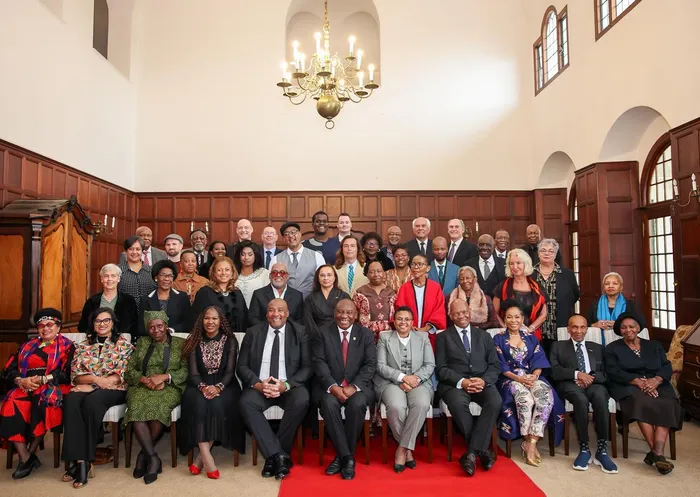
President Cyril Ramaphosa presented Mmagauta Molefe with the Order of Luthuli in silver, a high honor that formally acknowledges her profound contributions to the struggle for democracy and nation-building. The award ceremony was a moment of national recognition for her sacrifices and enduring legacy. Molefe's activism led to her detention at John Vorster Square, now known as Johannesburg Central police station, a notorious site of political imprisonment and torture during apartheid. She was also detained at Fort Prison No 4, which is currently part of the Constitution Hill Human Rights Precinct, a powerful symbol of South Africa's journey from oppression to democracy. Her defiance also resulted in multiple expulsions from Turfloop University; she was initially expelled in 1974, readmitted with conditions in 1975, and then expelled again at the end of that year after ignoring the imposed terms. These repeated expulsions highlight the relentless pressure exerted by the apartheid state on student activists and Molefe's unwavering commitment to her principles.
Reflecting on the current state of affairs in South Africa, Molefe expressed concern that the country's situation is deteriorating. She attributed this decline to a complex interplay of factors, including worsening economic conditions globally, ongoing wars in various parts of the world, and actions taken by America, suggesting a global context to national challenges. Molefe advised that individuals must take initiative and become active to rectify societal issues, stating her belief that the government would not act on their behalf. Her call to action echoes the spirit of self-reliance and community mobilization that characterized the anti-apartheid movement, emphasizing the power of collective citizen engagement in shaping the nation's future. She firmly believes that citizens hold the ultimate power to drive positive change and address the challenges facing the country today.