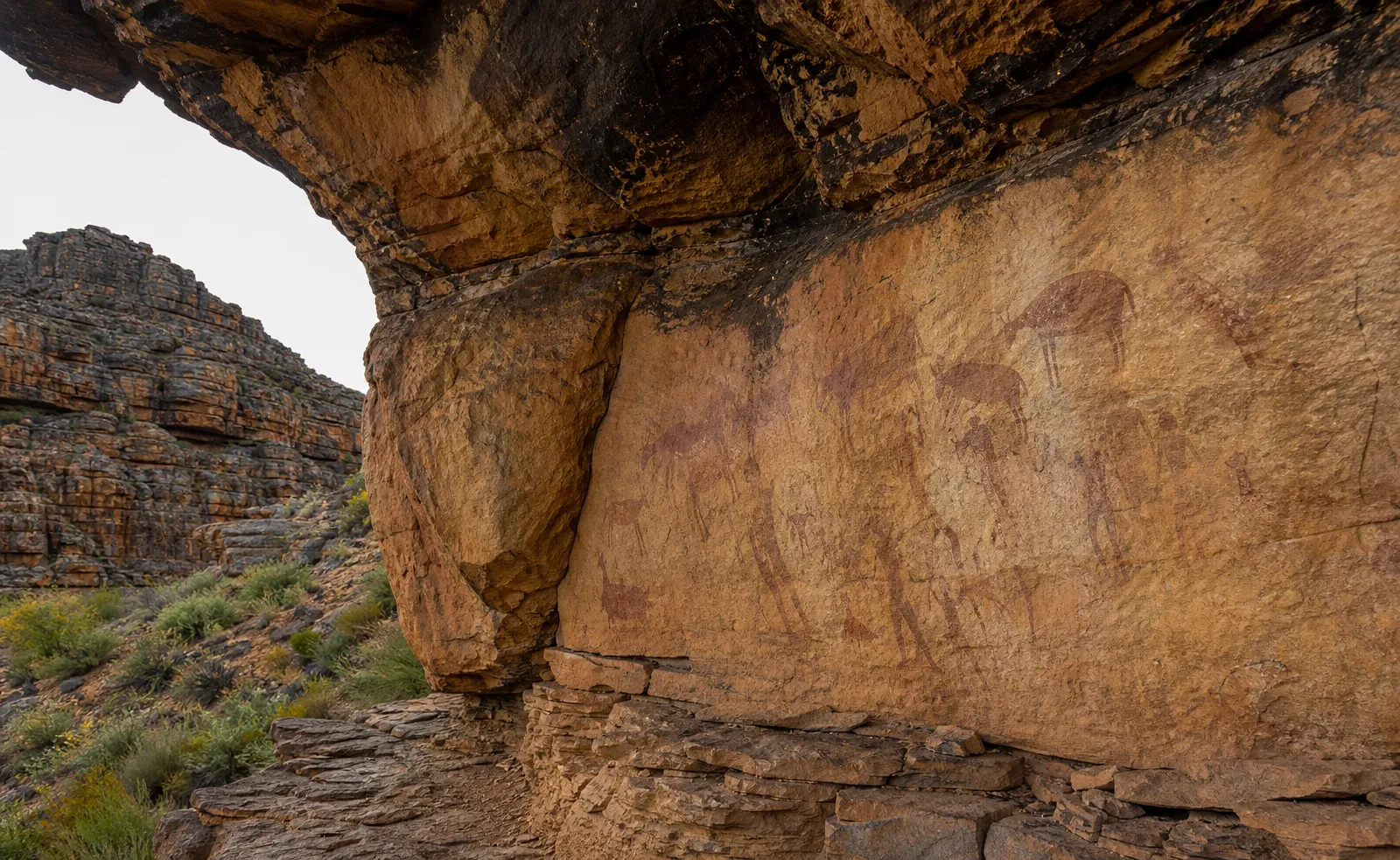
Numerous rock paintings, created by people who lived in the region over thousands of years, have been preserved in the Agter-Pakhuis area, located in the northern part of South Africa’s Cederberg Mountains. These ancient artworks offer a profound glimpse into the cultural heritage of the area and the lives of its past inhabitants. The paintings are primarily associated with the |Xam, San, and Khoikhoi peoples, reflecting their historical presence and rich artistic expressions within the rugged Cederberg range. These sites serve as invaluable historical documents, illustrating the deep connection these communities had with their environment and their spiritual beliefs.
Artistic Creations and Materials
The sandstone walls within the Agter-Pakhuis area feature diverse depictions, including a wide array of animals, human figures engaged in various activities, ceremonial processions, and detailed hunting scenes. The artworks also include intricate patterns whose original meanings are frequently not understood by contemporary observers, adding to their enigmatic appeal. To create these enduring images, the artists utilized natural pigments sourced directly from their immediate environment. The careful selection and preparation of these materials show the sophisticated artistic practices of these ancient communities.
Red and yellow hues were primarily derived from ochre, a naturally occurring earth pigment abundant in the region. Black colors were obtained from substances such as manganese oxides, which provided deep, lasting tones, while white pigments were typically sourced from kaolin and other light-coloured minerals available in the local geological formations. These raw, ground pigments were then carefully combined with various binding agents to create a workable paint that could be applied to the rock surfaces. Researchers suggest these binding agents may have included animal fat, blood, plant sap, or other organic components, which played a key role in helping the pigments adhere firmly to the porous sandstone and ensured the remarkable longevity of the artwork, allowing it to survive for millennia.
Historical Context and Preservation
The precise age of the Cederberg paintings remains a matter of debate among researchers, but archaeological evidence suggests they were likely created over a very long period, indicating continuous artistic activity spanning thousands of years. This long timeline notes the enduring cultural significance of these sites for successive generations. Evidence of human interaction with the sites extends beyond the artworks themselves; on the generally rough sandstone surfaces, places where people most often held on with their hands or stood with their feet have been polished smooth by the repeated touch of many generations, a testament to continuous visitation and reverence. Some of the ancient rock art sites are accessible approximately a 20-minute walk or drive from Perdehoek Cottage, making them relatively reachable for visitors. However, without a knowledgeable guide, these precious sites are easily overlooked amidst the complex folds and natural outcrops of the sandstone landscape, emphasizing the need for expert interpretation and guidance to fully appreciate their significance.
Legacy and Loss of Peoples
The |Xam communities in the Cederberg region faced immense challenges, ultimately leading to their destruction or dispersal. Historical accounts indicate that their traditional weaponry, consisting of bows and spears, including poisoned ones, proved tragically unable to match the superior firearms of Dutch and later British forces during colonial expansion. As a direct consequence of these conflicts, along with other pressures such as disease and displacement, the |Xam language eventually ceased to be spoken, representing a profound cultural loss. Despite the extinction of the language, a significant repository of their cultural heritage remains. The Bleek and Lloyd Archive at the University of Cape Town preserves thousands of pages of invaluable stories, testimonies, and conversations that were meticulously recorded in the 19th century, offering unparalleled insights into the |Xam people's history, traditions, beliefs, and way of life. These archives are key for understanding the rich legacy of the people who created the Cederberg's ancient rock art.