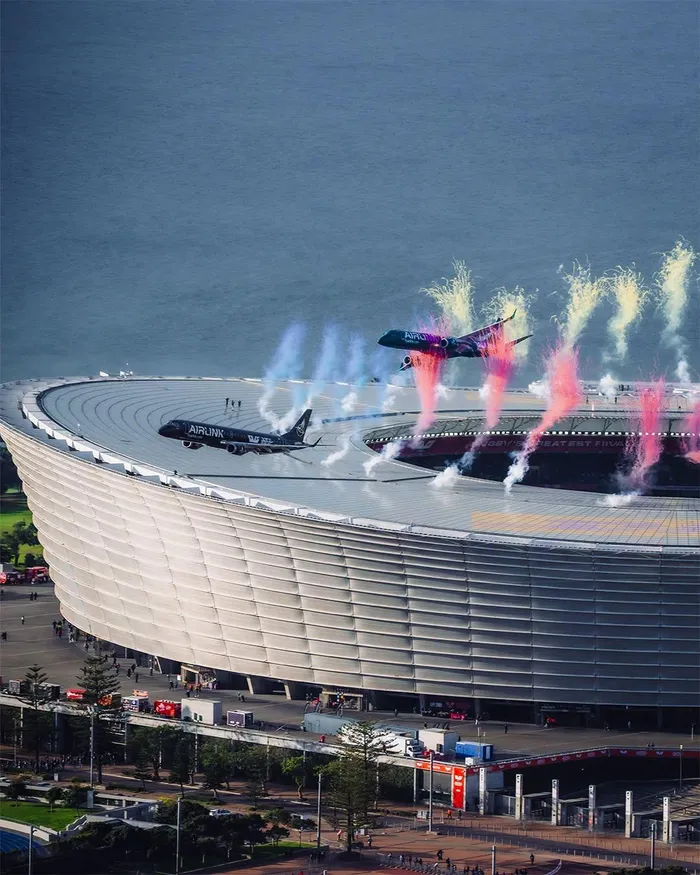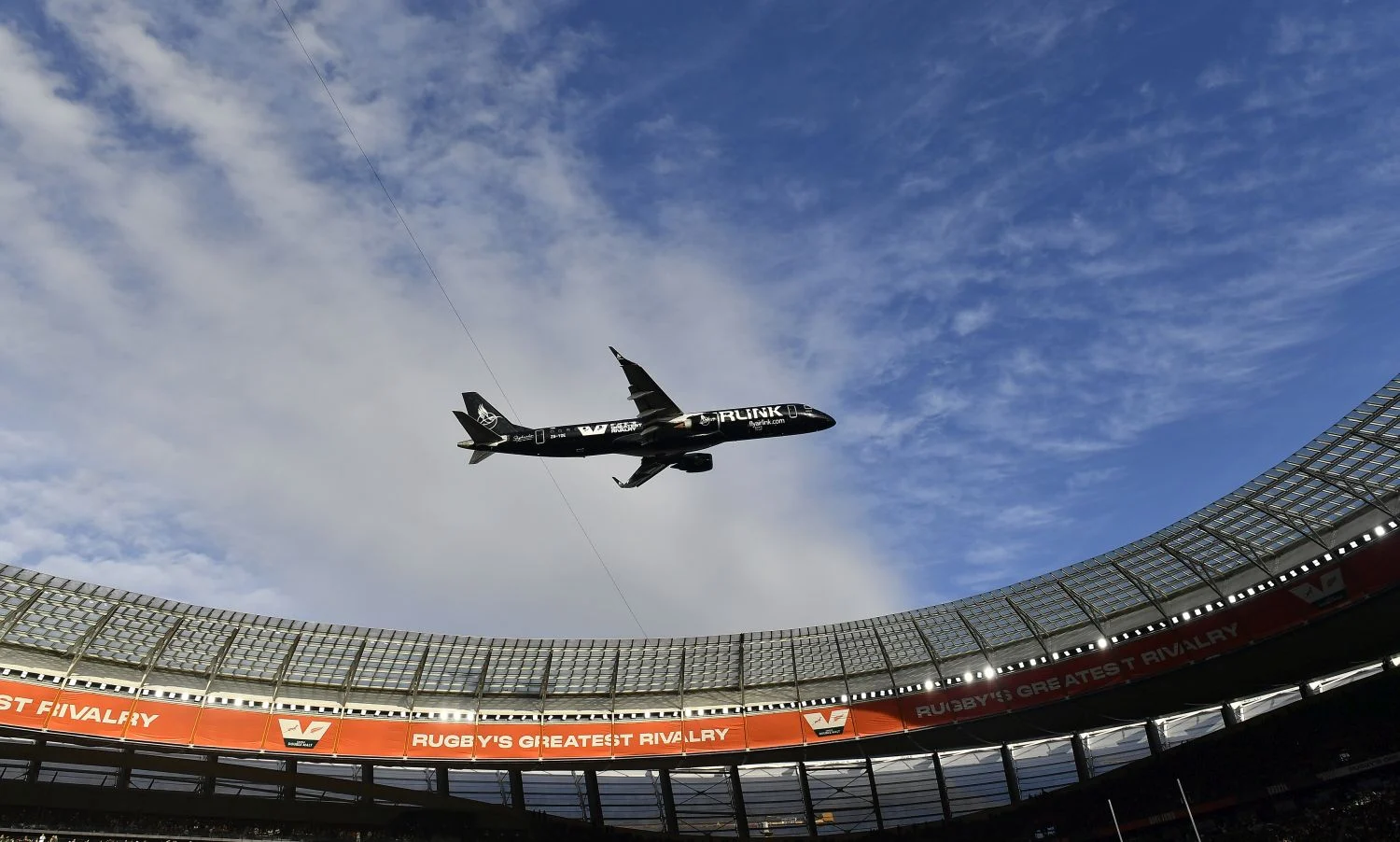
Two Airlink jets conducted a flyover above Cape Town Stadium on Saturday, August 31, 2026, an event that subsequently led to videos of the aerial display going viral across various social media platforms. The flyover, which featured the commercial aircraft, drew significant public attention after footage began circulating online shortly after the event occurred. The spectacle involved two distinctively liveried jets, one emblazoned in green-and-gold, representing South Africa, and the other in all-black, mirroring New Zealand's iconic All Blacks rugby team. This visual element added to the dramatic impact of the event, contributing to its rapid spread and discussion online. The widespread sharing of these videos quickly propelled the flyover into a subject of intense public debate, particularly concerning the safety implications of such a low-altitude maneuver.
Safety Concerns Raised
The flyover occurred approximately 12 meters above the roof of Cape Town Stadium. This remarkably low altitude immediately became a focal point of concern. Critics of the aerial maneuver swiftly warned of the inherent risks associated with such an event, noting the potential dangers of operating commercial aircraft so close to a major public venue and a large gathering of people. The proximity of the aircraft to the stadium structure and the spectators below fueled a significant public discussion regarding aviation safety standards and their application in public displays.
Civil Aviation regulations specify a minimum altitude of 1,000 feet (305 meters) for aircraft operating over built-up areas. For flights over open-air assemblies, where crowds are gathered, the regulations stipulate an even higher minimum altitude of 3,000 feet (900 meters). The significantly lower altitude of the Airlink flyover prompted immediate discussions regarding adherence to these established safety standards. The stark contrast between the reported altitude of 12 meters and the regulatory minimums for built-up areas and open-air assemblies became a central point of contention. This incident has brought regulatory compliance and the discretion exercised in planning such public displays under intense scrutiny. The debate centers on whether the flyover maintained adequate separation from ground structures and individuals, aligning with the prescribed safety margins for such environments. The inherent risks, as articulated by critics, included the potential for unforeseen circumstances or equipment malfunction at such a critical altitude, raising questions about the risk assessment process undertaken for the event. The visual impact of the jets flying so low was undeniable, but for many, it also showed a perceived disregard for standard safety protocols designed to protect the public.
Official Justification and Defense
The Airlink jet flyover occurred on Saturday, August 31, 2026, generating public discussion regarding its execution and safety. In response to the growing concerns and public discourse, Airlink subsequently issued a statement indicating that the flight required careful planning and extensive rehearsal, particularly as it navigated at a low altitude. The airline emphasized the rigorous preparation involved, suggesting that such a maneuver was not undertaken lightly.
Airlink further noted the caliber of its flight personnel, asserting that the two aircraft involved were piloted by highly experienced crews. Each plane, according to the airline, was manned by three senior captains, showing the depth of expertise brought to the operation. This detail was presented to reassure the public about the professional capability overseeing the complex aerial display. The airline also stated that flight data confirmed the maneuvers were performed strictly within the safety altitude and speed limits that had been approved and rigorously rehearsed by the South African Civil Aviation Authority (SACAA). This assertion directly addressed the core safety concerns by claiming full compliance with regulatory oversight.
Airlink asserted that both the SACAA and Air Traffic Navigation Services (ATNS) provided full guidance, explicit approval, and ongoing support for the flyby. This official backing suggests the event was not merely sanctioned but actively supported by relevant aviation authorities, despite the public debate surrounding its safety implications. The involvement of these key regulatory and operational bodies was presented as evidence of the flyover's legitimacy and adherence to established aviation protocols. Airlink's consistent message was that every precaution was taken and every necessary approval secured, transforming what appeared to many as a risky stunt into a meticulously planned and officially sanctioned aerial demonstration. The airline's defense rested on the pillars of expert piloting, thorough planning, and explicit regulatory approval, aiming to counter the narrative of recklessness that had emerged in public discussions.
International and Local Reactions
The Airlink jets featured distinct liveries, with one branded in green-and-gold, representing South Africa, and the other in all-black, mirroring New Zealand's All Blacks. This striking visual element contributed significantly to the event's international appeal. Following the flyover, the dramatic footage and subsequent debate captured the attention of global media outlets. International news channels, including prominent networks such as Fox News and Sky Sports, reported on the event, noting both the spectacle and the controversy surrounding its safety. Australia’s Channel 7 also commented on the aerial display, with its broadcast remarking, "As sporting stunts go, what you’re about to see will be hard to top." This comment showed the extraordinary nature of the flyover, acknowledging its impact on a global stage. The international coverage amplified the discussion, drawing comparisons and opinions from a worldwide audience accustomed to various forms of aerial displays.
Domestically, the flyover drew significant support, particularly from government officials. Public Works and Infrastructure Minister Dean Macpherson publicly backed Airlink, stating, "You don’t see headlines about our pilots being drunk and disorderly like you do in other countries. We are just fine here in South Africa." His comments framed the incident as a display of national capability and professionalism, contrasting it with perceived issues elsewhere. Sports Minister Gayton McKenzie also vehemently defended Airlink, asserting, "It’s a well-known fact that we have the best pilots in the world, that was spectacular. Next time, I will ask the pilots to land on the field. Prepare to be amazed further." Minister McKenzie's remarks not only praised the pilots but also adopted a defiant tone, suggesting a desire for even more audacious displays in the future.
On social media platforms, South Africans widely defended Airlink and the nation’s honor in various comment sections. The online response was overwhelmingly supportive, with many citizens expressing pride in the pilots' skill and the spectacle they created. Many South Africans also used humor to support the pilots involved in the flyover, employing wit and national pride to counter the safety criticisms. This widespread public endorsement, particularly from government figures and the general populace online, indicated a strong sense of national pride associated with the event, often overshadowing the regulatory concerns raised by critics. The flyover, therefore, became not just an aviation event but a moment of nationalistic expression and debate, both locally and internationally.