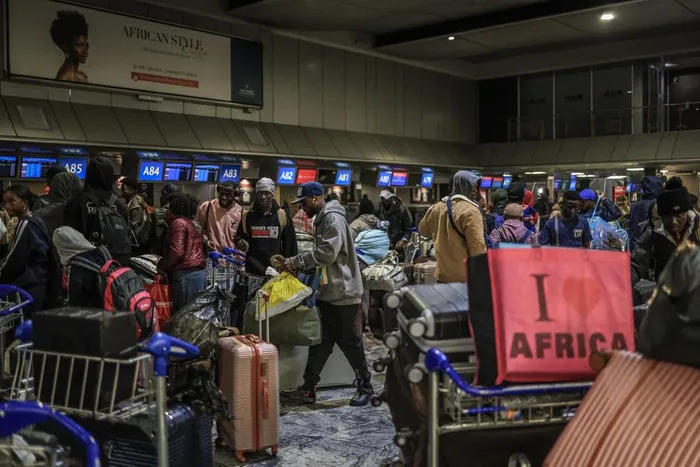
African nations are repatriating citizens from South Africa amidst rising tensions and a deadline set by an anti-illegal migrant group for undocumented individuals to depart. The group has been active, going around different cities across South Africa, demanding that undocumented migrants leave by June 30. This ultimatum has further intensified the situation, prompting swift responses from various governments. Following these developments, President Cyril Ramaphosa affirmed that the Department of Home Affairs, the Border Management Authority (BMA), the South African Police Service (SAPS), and other law enforcement agencies will escalate efforts to identify and deport undocumented foreign nationals. In a related event, a group of 141 Mozambican nationals departed South Africa on Sunday, utilizing the Lebombo Port of Entry for their return to Mozambique. This movement shows the immediate impact of the heightened immigration enforcement and the ongoing repatriation efforts.
Presidential Address and Enforcement Measures
On Sunday, President Cyril Ramaphosa addressed the nation amid growing tensions over illegal immigration. During his address, President Ramaphosa criticized individuals who were taking the law into their own hands and attempting to enforce immigration regulations. He emphasized that such actions undermine the rule of law and the state's responsibility for immigration management. President Cyril Ramaphosa further criticised those taking the law into their own hands and attempting to enforce immigration laws, showing that the state alone holds the mandate for such enforcement. This firm stance from the President aims to reassert governmental authority over immigration matters.
The South African government's stance comes as other African nations initiate repatriation efforts for their citizens. Nigeria's President Bola Ahmed Tinubu approved five evacuation flights for Nigerian citizens from South Africa, signaling a significant move to bring nationals home. These flights are intended to facilitate the voluntary return of Nigerians wishing to leave South Africa due to the prevailing climate. The Nigerian government has confirmed it will be repatriating 1,000 of its citizens from South Africa, indicating the scale of this planned operation.
President Ramaphosa's remarks followed earlier assurances that the Department of Home Affairs, the Border Management Authority (BMA), and the South African Police Service (SAPS) would intensify efforts to identify and deport undocumented foreign nationals. President Cyril Ramaphosa stated that the Department of Home Affairs, the Border Management Authority (BMA), the South African Police Service (SAPS), and other law enforcement agencies will intensify efforts to identify and deport undocumented foreign nationals residing illegally in South Africa. These measures, officials stated, are part of a structured approach to enforce immigration laws, contrasting with unauthorized enforcement actions. The directive from President Tinubu for evacuation flights indicates a proactive response from Nigeria to ensure the safety and return of its citizens as tensions surrounding immigration policies continue to develop in South Africa.
Repatriation Efforts Underway
A total of 150 Malawian nationals began their journey back home from South Africa, participating in a coordinated voluntary repatriation exercise. The first two buses facilitating the return of Malawian nationals departed from the Western Cape on Saturday, June 6, 2026. These departures marked a concrete step in the repatriation process for Malawian citizens, responding to the escalating situation and ensuring their safe return. Separately, the Nigerian government confirmed its plans to repatriate 1,000 of its citizens from South Africa. The Nigerian airlift operation, initially expected to commence on Monday, was subsequently postponed until Wednesday, June 10. The first Nigerian evacuation flight is anticipated to transport over 270 passengers. This operation notes the significant scale of planned repatriations by Nigeria, aiming to assist a substantial number of its citizens.
The Border Management Authority (BMA) reported on other repatriation movements. BMA spokesperson Mmemme Mogotsi stated, "On Saturday, June 6, 2026, a group of 332 Ghanaian nationals was brought to OR Tambo International Airport by the Ghanaian High Commission in Pretoria for repatriation." Of the 332 Ghanaian nationals processed for repatriation, 170 were traveling on Ghanaian ordinary passports, while 162 utilized Emergency Travel Certificates issued by the Ghanaian High Commission in Pretoria. This breakdown illustrates the different forms of documentation used by the repatriating citizens. During the immigration processing for these Ghanaian travelers, 321 were found to have overstayed their allocated period of stay in South Africa by 30 days or longer. This statistic shows the prevalence of immigration violations among those being repatriated, a key factor in the heightened enforcement efforts. The BMA's detailed reporting provides critical insights into the logistical challenges and legal complexities involved in these large-scale repatriations.
Mmemme Mogotsi also provided details regarding Mozambican nationals. "Of the Mozambican nationals processed, 141 individuals, comprising 97 males and 44 females, were undocumented and were accordingly deported in terms of the Immigration Act," Mogotsi said. A further eight Mozambican nationals were in possession of valid passports and were processed for lawful departure. The group of Mozambican nationals processed for departure or deportation included a total of 19 minors. The inclusion of minors in the group processed for departure or deportation notes the humanitarian aspect of these repatriation efforts, requiring careful consideration during the process. The departure of 141 Mozambican nationals through the Lebombo Port of Entry on Sunday further illustrates the ongoing nature of these movements, reflecting the continuous efforts by authorities to manage the situation.
Context and Broader Implications
President Cyril Ramaphosa emphasized that every individual residing in South Africa, whether working or operating a business, must be present in the country legally. President Cyril Ramaphosa stated that every person in the country needed to be here legally, whether working or operating a business, reinforcing the government's commitment to upholding immigration laws. The President also asserted that illegal immigration should not be solely blamed for all of the country's challenges and problems. He characterized immigration as a global phenomenon, not an issue exclusive to South Africa. President Cyril Ramaphosa said illegal immigration was not the cause of all the country's challenges and problems, adding that immigration was a global issue and not one faced by South Africa alone, seeking to provide a broader perspective on the matter. This perspective aims to temper local anxieties while acknowledging the need for legal compliance.
Meanwhile, Nigeria's repatriation efforts are progressing, with more than 500 individuals expressing a desire to leave South Africa having undergone screening and been cleared for return. This substantial number of screened individuals indicates the considerable demand for repatriation among Nigerian citizens, showcasing the urgency felt by many to return home. These measures align with Nigeria's initiative to facilitate the voluntary return of its citizens amidst the prevailing situation. The ongoing repatriations and official statements highlight the complex interplay between national immigration policies and the broader regional and international context of migration. The actions taken by both the South African government and the governments of other African nations reflect a dynamic and evolving situation, with significant implications for regional relations and the lives of thousands of individuals. The targeted deadline of June 30 by the anti-illegal migrant group continues to loom, adding urgency to the ongoing efforts by various governments to manage this complex and sensitive issue.