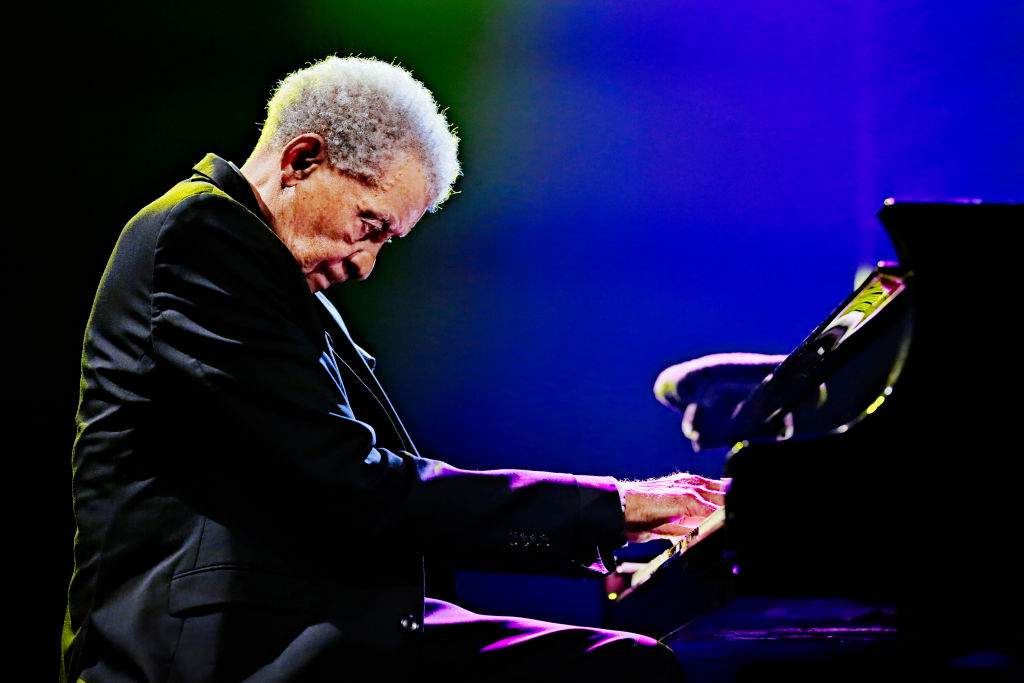
Abdullah Ibrahim, the celebrated South African jazz pianist and composer, has died at the age of 91. His passing was reported on Sunday, though a cause of death was not immediately provided. The office of President Cyril Ramaphosa formally announced Abdullah Ibrahim's death on Monday, acknowledging the profound impact of his life and work. Ibrahim, also known by his birth name Adolph Johannes Brand and later as Dollar Brand, was a towering figure in South African music and a vocal opponent of apartheid. His artistic contributions spanned decades, blending traditional African rhythms with modern jazz sensibilities. He spent decades in exile, using his music to champion the anti-apartheid cause on the global stage, becoming a powerful cultural ambassador for his homeland. His compositions often carried messages of resilience, hope, and resistance, resonating deeply with those fighting for freedom and equality.
Early Life and Musical Beginnings
Abdullah Ibrahim was born Adolph Johannes Brand in 1934 in Cape Town, South Africa, a city whose vibrant cultural tapestry would deeply influence his musical journey. His early life was marked by tragedy when his father was murdered in a bar brawl at the tender age of four. This profound loss undoubtedly shaped his formative years. Brand was raised under the belief that his mother was his sister, a complex family dynamic that added another layer to his childhood. Despite these early challenges, his innate musical talent began to emerge. Friends from his youth, recognizing his distinctive personality and perhaps his early entrepreneurial spirit, began to nickname him 'Dollar', a moniker that would eventually become a significant part of his public identity and musical persona. As a teenager, Adolph Brand fully embraced this nickname, becoming widely known as Dollar Brand, a name that would soon echo through the burgeoning jazz scenes of South Africa and beyond.
His musical journey began to formalize in 1958 when he established the Dollar Brand Trio. This initial ensemble laid the groundwork for his future explorations in jazz. The following year, the ensemble expanded, evolving into the Jazz Epistles, a group that would achieve legendary status in South African music history. This seminal group included notable figures in jazz, such as the trumpet great Hugh Masekela, whose collaboration with Ibrahim would become a cornerstone of the South African jazz sound. The Jazz Epistles released a self-titled record in 1960, which is widely recognized as the first jazz album recorded by a Black South African ensemble. This landmark recording not only showcased their innovative sound but also served as a powerful statement of artistic independence and cultural pride during a period of escalating racial oppression under the apartheid regime. The album's release marked a key moment, establishing the Jazz Epistles as pioneers and setting a high standard for future generations of South African musicians.
International Acclaim and Activism
The increasingly oppressive political climate in South Africa under apartheid forced many artists and intellectuals to seek opportunities abroad. Faced with the harsh realities of racial segregation and limited artistic freedom, Abdullah Ibrahim made the difficult decision to leave his homeland. During this period, he underwent a significant personal and spiritual transformation, embracing the Muslim faith and adopting his new identity as Abdullah Ibrahim. This change reflected a deeper spiritual journey and a commitment to a new path. He and vocalist Sathima Bea Benjamin, who would later become his wife, settled in Zurich, Switzerland, a neutral ground where their artistic pursuits could flourish away from the immediate pressures of apartheid. It was in Zurich that the reassembled Dollar Brand Trio caught the attention of the legendary American jazz musician, Duke Ellington. Ellington, renowned for his discerning ear and his support of emerging talent, was profoundly impressed by their performance, recognizing the unique blend of South African melodicism and jazz improvisation in Ibrahim's music. He extended a key invitation to the trio to record. The resulting album, 'Duke Ellington Presents The Dollar Brand Trio', was released in 1964, marking a significant milestone in Ibrahim's international career and propelling him onto the global jazz stage. This collaboration with Ellington not only provided invaluable exposure but also cemented his reputation among the jazz elite.
Brand and Benjamin married in 1965, solidifying their personal and artistic partnership, and subsequently relocated to New York, a global epicenter of jazz. In the United States, Ibrahim's musical journey continued to expand, allowing him to immerse himself in the vibrant and diverse American jazz scene. He performed with the Duke Ellington Orchestra, further solidifying his connection with the jazz legend who had championed his early work and became a mentor. Beyond his collaborations with Ellington, Ibrahim also engaged with other prominent figures in the avant-garde and free jazz movements, demonstrating his versatility and willingness to explore new musical territories. He played with Ornette Coleman, known for his pioneering work in free jazz, whose revolutionary approach to harmony and structure deeply influenced the genre. Ibrahim also collaborated with saxophonist John Coltrane, a towering figure in the genre whose spiritual and modal explorations pushed the boundaries of jazz. His collaborations extended to Archie Shepp, another influential saxophonist associated with the avant-garde, known for his powerful and politically charged music. Ibrahim also performed with Pharaoh Sanders, Cecil Taylor, and Elvin Jones, further showcasing his versatility and deep immersion in the diverse tapestry of American jazz. This period of intense collaboration and performance in New York deepened his international profile and broadened his musical influences, allowing him to absorb and integrate various styles into his unique sound. Despite his growing international acclaim and extensive engagements abroad, Abdullah Ibrahim returned to Cape Town in 1968, marking a temporary return to his homeland amidst the ongoing political struggles of apartheid. His return demonstrated a persistent connection to South Africa despite his global career, a testament to his enduring commitment to his roots. The period in New York allowed Ibrahim to forge connections with some of the most innovative and respected musicians of his time, contributing significantly to his evolving musical style and his role as a cultural ambassador for South Africa.
Legacy and Later Years
Abdullah Ibrahim’s unwavering commitment to his homeland continued even during his lengthy exile, using his music as a form of protest and cultural preservation. His compositions often carried the spirit of South Africa, keeping its struggles and hopes alive on the international stage. His return to South Africa coincided with a key moment in the nation's history when Nelson Mandela was freed from prison in 1990, signaling the beginning of the end of apartheid. This significant event ushered in a new era for South Africa, and Ibrahim marked it with his powerful musical presence. He performed at Mandela's inauguration as president in 1994, a profoundly symbolic moment that celebrated the country's transition from apartheid to democracy and showed the role of art in social change. This performance was not just a musical act but a powerful affirmation of freedom and national unity.
Throughout his later years, Ibrahim maintained an active musical career, continuing to compose and perform internationally, inspiring new generations of musicians and listeners. His final album, titled '3', was released in 2024, showcasing his sustained artistic output into his nineties and demonstrating his enduring creative vitality. Ibrahim's personal life saw important milestones and losses. He had two children, a son named Tsakwe and a daughter named Tsidi, who continued his family legacy. His wife, the acclaimed vocalist Sathima Bea Benjamin, passed away in 2013, marking a significant personal loss for the jazz maestro, yet he continued to create and perform. Despite these personal changes, Ibrahim remained a prominent figure, continuing to influence generations of musicians and listeners with his unique blend of jazz, African rhythms, and classical influences. His extensive discography and numerous performances cemented his status as a global music icon and a cultural ambassador for South Africa, whose work transcended musical genres and political boundaries.
Tributes and Reflections
The office of President Cyril Ramaphosa formally announced Abdullah Ibrahim's death on Monday, acknowledging the passing of a national treasure. Ibrahim's personal journey included giving up smoking and alcohol, a decision that reflected a deeper search for meaning and well-being. He found spiritual solace in Islam, a faith that profoundly influenced his worldview and, at times, his musical expression. His musical impact was profound, particularly with the 1974 release of 'Mannenberg – "Is Where It's Happening"'. The album’s defiant title track, 'Mannenberg', quickly became recognized as an anti-apartheid anthem, its haunting melody and powerful message resonating deeply with the oppressed people of South Africa and their allies worldwide. It became a symbol of resistance and hope, played in homes and at clandestine gatherings. Its enduring legacy was noted when 'Mannenberg' was played at Zohran Mamdani's inauguration as New York mayor in 2026, a testament to its universal appeal and timeless message of freedom. In a significant act of activism that showed his unwavering commitment to the struggle, Ibrahim staged an illegal benefit concert for the African National Congress in 1976, risking severe repercussions from the apartheid government. This courageous act demonstrated his belief in the power of music as a tool for social justice. UK-based jazz pianist Pete Letanka, who worked with Ibrahim and was deeply influenced by his artistry, also offered reflections on his passing, mourning the loss of a mentor and a legend. Ibrahim's life was a testament to the power of music to transcend boundaries, challenge injustice, and inspire change, leaving an indelible mark on the world.